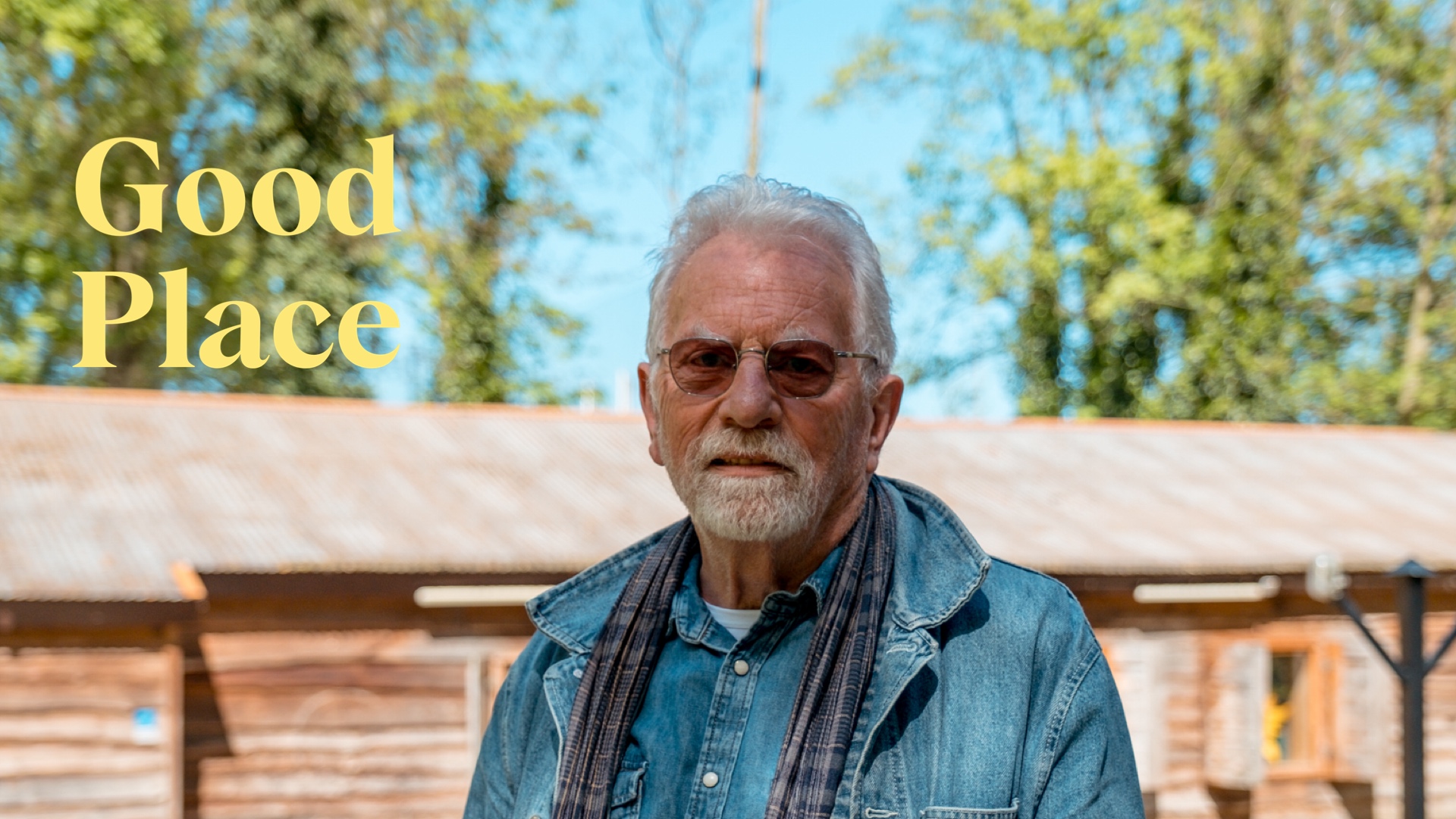
A retired entrepreneur on swapping his company for a youth space in Loosduinen, why "hanging youth" need a place of their own, and how the media gets teenagers wrong.
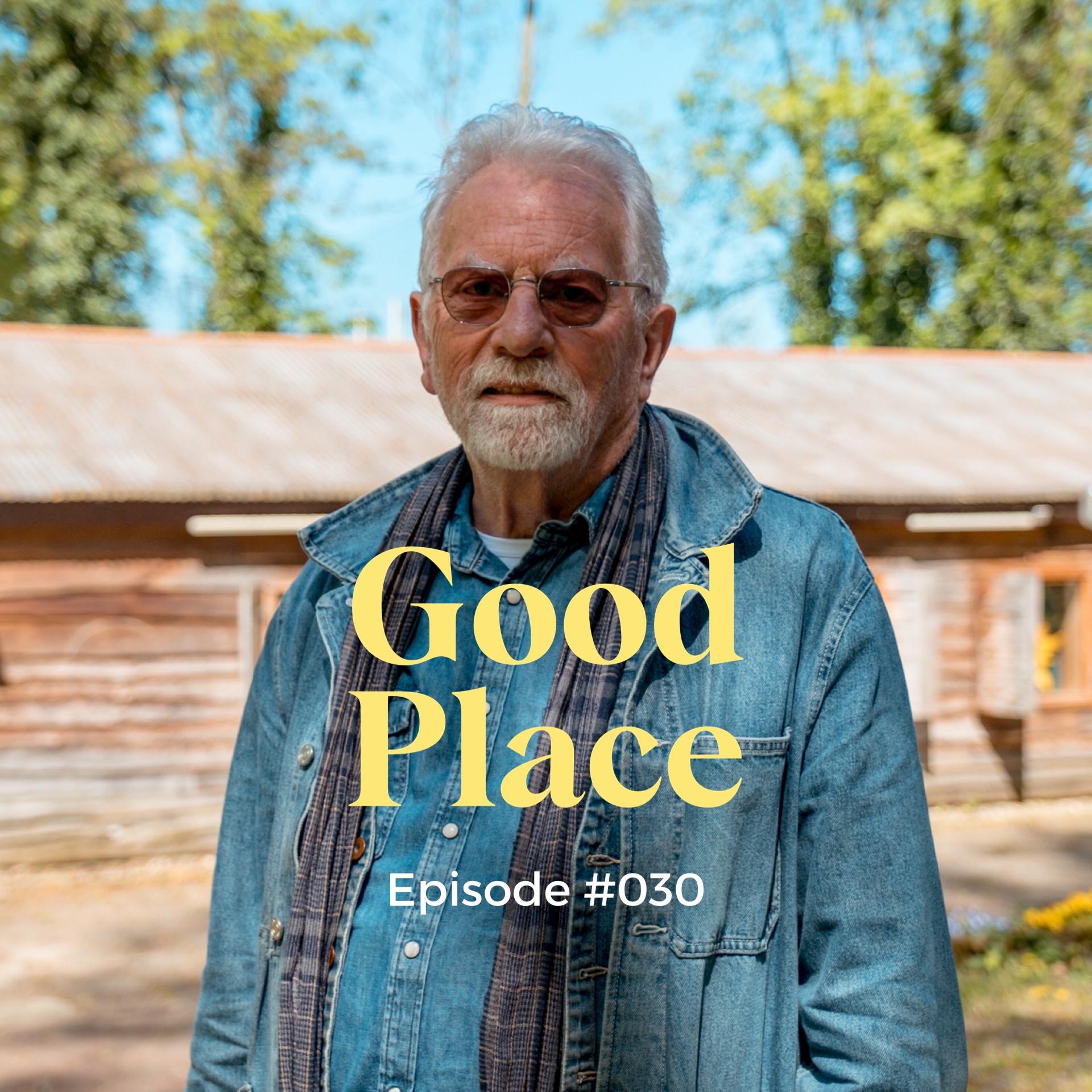
We recorded this on a quiet Monday in Loosduinen, outside a wooden building called De Plek, "The Place". Jan Janssen is seventy-three, and he told me, with some pride, that his wife says he's away from home more now than when he ran his own company. He sold that company at sixty-five and decided he wanted to do something for the community, something that wasn't about making money.
From the sand to the turf, and back again
Jan was born in Schilderswijk, one of the poorest neighbourhoods in The Hague. He explained to me a distinction every local knows: a Hagenaar lives near the beach and the sand, in fine houses; a Hagenees comes from a neighbourhood where there wasn't much money. He's a Hagenees, he said, though he's "almost upgraded" now, having lived the last twenty years in Loosduinen after a few years in Zoetermeer.
Loosduinen, he told me, is part of The Hague, though plenty of older residents don't see it that way, much as people in Scheveningen don't. He's watched the area change since the sixties and seventies: the old centre is gone, the buildings are new, and the population is mixed, with many residents from abroad. He doesn't think that's wrong. The old houses were bad and had to change. What he likes about Loosduinen is the green space. The older residents are a strong community, and the area needs more young people, which, he says, is slowly happening.
A place of their own
De Plek is his answer to a problem he sees everywhere. Young people, he said, are seen as noisy, bullying and a nuisance on the street corner. His view is that at fourteen they have a right to a place of their own, not somewhere adults tell them is theirs, but somewhere they build themselves. He works in the evenings, since that's when volunteers and young people are free, and it's slow, because teenagers are on their phones and computers and are hard to reach.
The place has an atelier and a small theatre, and sits near the beach and the woods. Around forty young people are involved through the Dutch community service programme, and they work with schools and local organisations, including the international school. They aren't only serving Loosduinen, he said, because it's too small to fill the place by itself. To get young people through the door, he's found the simplest tactic works: open on a Saturday and offer free pizza. On New Year's Eve, they held a party with fifty young people, no alcohol and no drugs. They danced, it was busy, and it worked.
What he remembers of being fourteen
I asked what the fourteen-year-old Jan would have said. He was fifteen in 1965, he said, and the whole generation was caught up in Flower Power, new music, and telling older people they wouldn't listen. Nothing changed that way, so they had to build community, on the street, and have fun. That's what he wants to do now. Back then, he told me, people who fought against the government were told that at forty you were too old to matter. He too demonstrated against the government. "Learn from it," he tells the young people he meets. He added, with a grin: don't attack old ladies.
The Dutch word for the teenagers who gather outside is hangjongeren, hanging youth. When he was young, he said, he'd play outside for an hour after dinner. It was the same activity, with a different name. His conclusion: we have to give young people a platform, a place to be.
The story the newspapers didn't print
Jan is blunt about the media. He told me about a group of teenagers in Loosduinen who rode bikes into a shop, making a noise and scaring people. It was in the paper and the news. What wasn't reported was that the next day they came back with flowers and apologies. If something goes wrong, everybody talks about it, he said. If something goes right, you never hear about it. That's the reason a platform for positive stories matters, I told him. Positivity connects us. Negativity doesn't.
His motto for De Plek is that the youth of today are the leaders of tomorrow. If they are given the chance to be leaders, they can build their own future.
Enjoy it, and keep climbing
When I asked what a good place means to him, he said it's about making your own choices and enjoying what you do. You live maybe eighty, eighty-five, or a hundred years if you're lucky, and you hope not to get ill, so you should enjoy it. He pointed out that expectations often shape our choices, especially when we have children, whose arrival changes everything: no more spontaneous nights out, and someone has to get up at three in the morning. He told his wife a hundred years ago that whoever feeds the baby has to clean it, an argument she didn't accept.
The deeper lesson came from his years running a company, and from being the front man for the neighbourhood board. Everyone has a moment when it all goes down and they lose everything, in a job, in a relationship, in sport. Then you have to climb back up, learn from it, and keep going.
What he hopes for
His dream is simple: that De Plek stays. It's on a contract, and when it ends, the plan is to build houses on the site. He'd like the municipality to recognise the work and support it. If they don't, they'll have to stop at the end of the year, which would be very sad for the young people, he said, "not for me". He joked that what he'd really like is a statue of Jan. Then he thanked us and went back to work.
Watch the full conversation on YouTube, or listen on Spotify. Want to go deeper into building your own sense of belonging, wherever you live? The Good Place to Start workbook series walks you through it — get it here.
And you? Is there a group in your neighbourhood that deserves a place of its own?