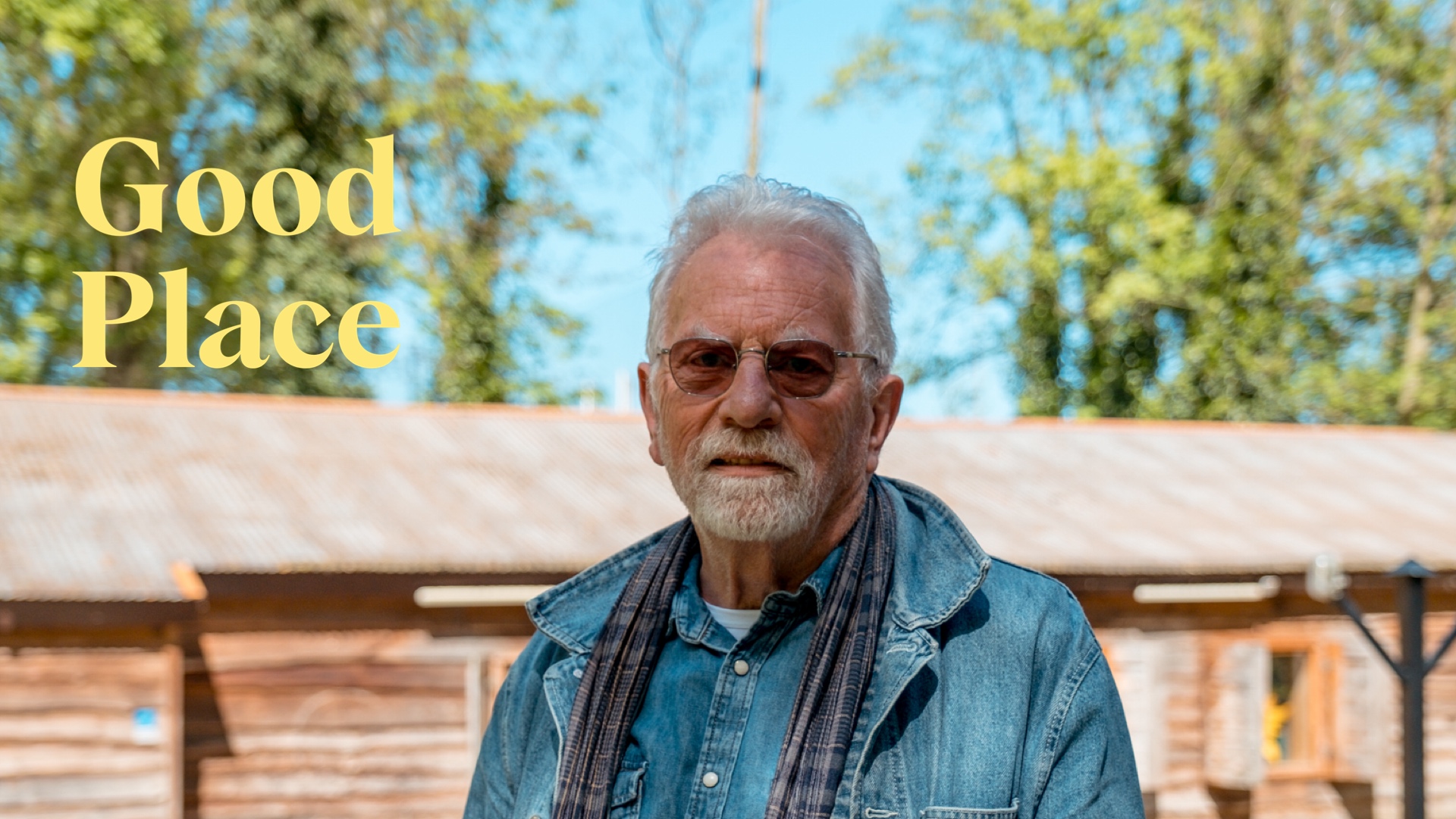
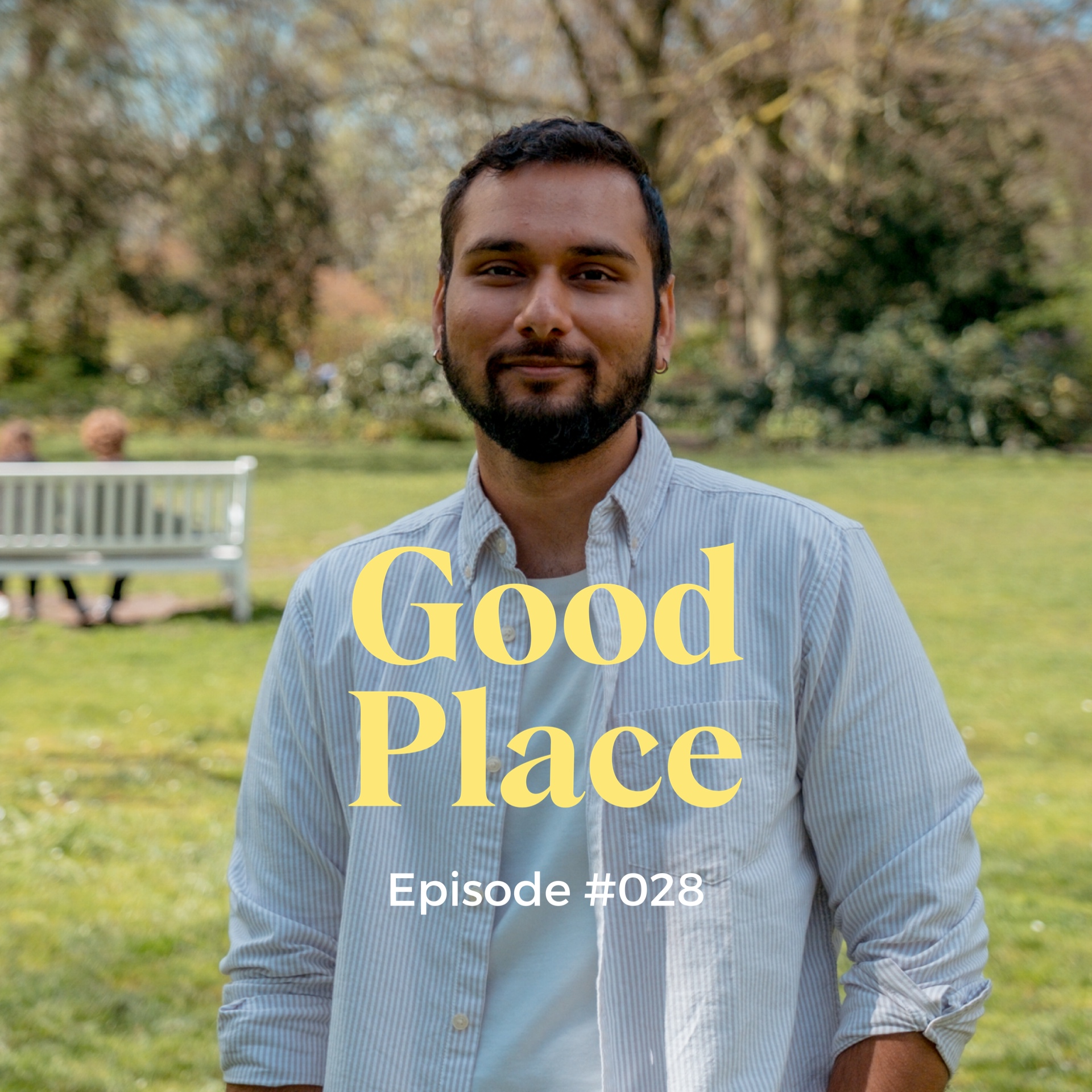
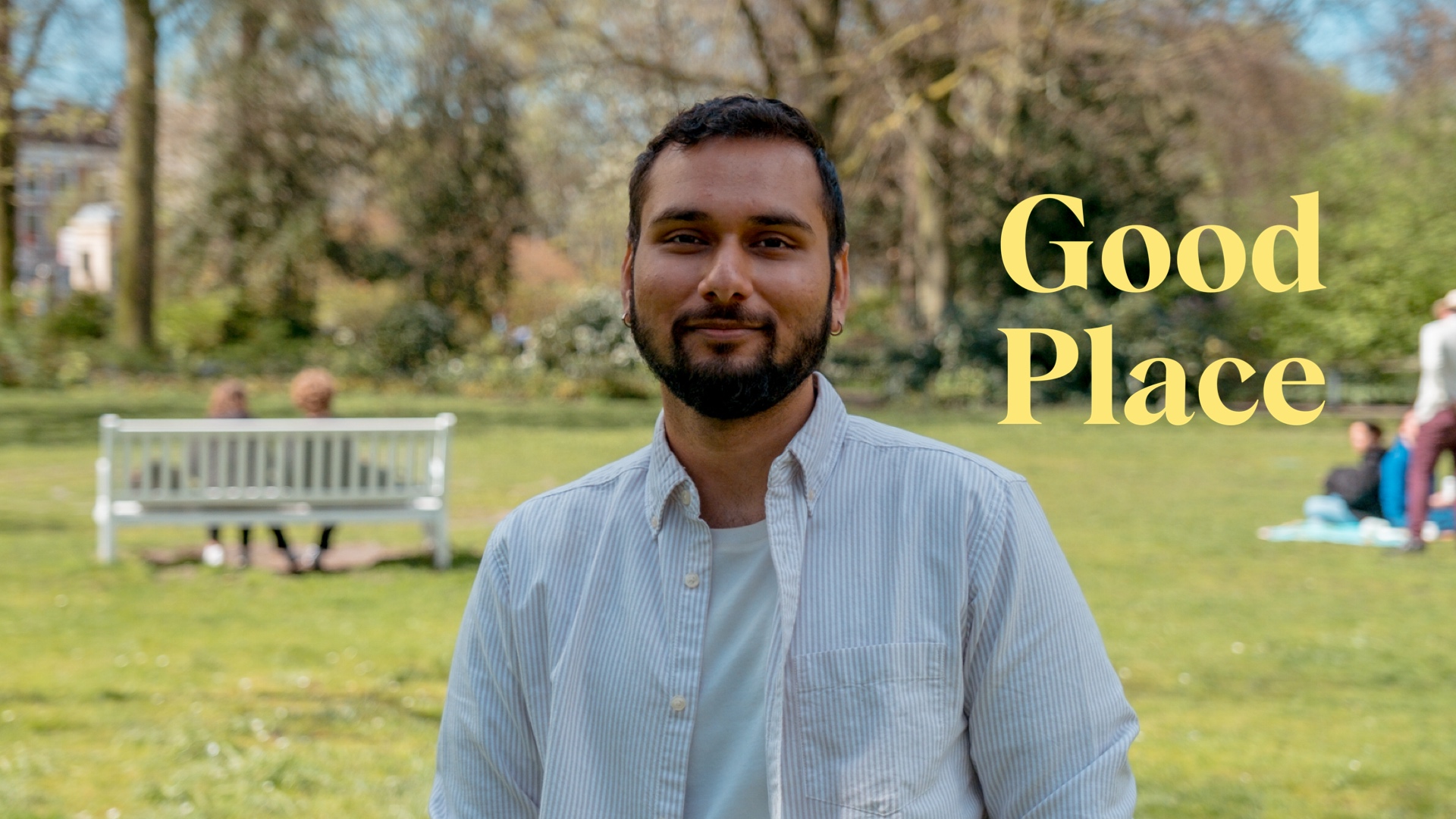
An Indian filmmaker and newcomer comedian on arriving in The Hague with no circle, the content project that became a community, and the one piece of advice he'd give anyone moving somewhere new.
Sid had just finished interviewing me for his own channel when we moved to the white bench behind the palace to record mine. It was the first time I'd done two interviews in a day, and it felt fitting: Sid, a Mumbai-born storyteller, makes cosy films of The Hague and interviews the people he meets there. We'd found each other through the circle he built.
An accidental route to Europe
Sid grew up in Mumbai, a city whose population, he told me, is larger than that of the Netherlands. After his bachelor's degree, Covid struck, and the American universities that had accepted him said they couldn't offer scholarships. A junior suggested Charles University in Prague, which had the master's he wanted. He knew almost nothing about Prague or the Czech Republic. He Googled it, and the first thing he learned was that the Czech word for hello is "ahoj", which struck him as strange for a landlocked country.
It turned out to be the best decision he ever made. Europe, to someone from India, had been something seen in films, and the reality, people who are laid back and enjoy small things, won him over. Prague even gave him his first job, at a Dutch company, which later offered him a role in The Hague. He had once been accepted at a Dutch university but chose another, so the Netherlands kept turning up. He moved in July 2023.
His first day in Europe is a story he tells with relish. European buses have stop buttons, and Mumbai's do not. He sat on the bus from the airport with his luggage, waiting for his stop, and it never stopped. He was carried three or four stops past it and had to walk back to his dormitory with all his bags.
The lonely part
When we spoke he'd been in The Hague for seven months, and he used the word "rollercoaster". The low was loneliness. Sid describes himself as an extrovert who likes meeting people, and he had assumed that moving for work would feel like moving for study. It didn't. When you study, the university hands you a social circle. When you move for work, you have to build your own, and the people you meet are often people you don't connect with. For the first two months he struggled to meet people, and for the first four or five months he missed what Prague had given him: bumping into someone on the street who says, "How have you been? Do you want a beer?"
A circle, then a platform
Sid's answer was to make something. In Prague, he'd started a student community to bridge international and Czech students, called the Circle, and it's still running under people he handed it to, which he finds the best thing to look back on when he's going through a bad patch. In The Hague, he first thought he'd leave the idea behind. Then he began filming the city in a cosy, cinematic way: people walking down Lange Voorhout and Buitenhof, having an ordinary day. After that he started a Humans of The Hague-style interview series. He tells people they don't need to be a creator, just to be willing to have a conversation.
He doesn't present it as a clever strategy. He wanted to meet people, and to understand the city he now lives in. In the beginning it was slow, with little traction. Then people started saying they liked what he'd made. "I would never have met you," he said to me, "if I hadn't started the Hague Circle."
I told him that most people who struggle to make friends in a new city complain about it. He'd created a vehicle for doing something about it. A public bench, in my case, works the same way: a reason to sit down together.
A comedian, and the Dutch
Sid is also a new stand-up comedian, and he's found Dutch people unexpectedly good-humoured. They don't mind being teased. They tend to say, "you're right". The Dutch friends he's made have been welcoming, and they're the reason he fell in love with the city. He took a Dutch friend to a pub, where a group of old men were complaining about exactly the same things that expats complain about, only in Dutch.
His first Dutch Easter was at a Dutch family's home. He loved the food and found the egg hunt in the garden "interesting", a word I pointed out is the politically correct answer. He has no plans to leave, and he knows there will be things he likes and doesn't like about the place he's chosen to stay.
Overlapping communities
I asked whether he seeks out other Indians in Europe. The good thing about being Indian, he said, is that you don't have to look: they will find you, because we are everywhere. He's glad of the support network that means, people you can text on WhatsApp at any time and who will simply say "yes, of course". He sees it as the strength of the community he grew up with, especially in India's rural areas, where it's your duty to know your neighbours, give them gifts at festivals, and visit them during religious events. He joked that in Mumbai he'd have to start with street circles.
The part of the conversation I took away was about plurality. A person doesn't have one community. I'm part of a photography community; he's part of a creative one, an Indian one, a Dutch-friends one. His definition of a good place followed from that: a place you create, where multiple communities overlap with you at the centre.
Take the first step
His closing advice was the simplest and the hardest. Moving to a new place and finding a community takes vulnerability, and it's difficult to put yourself out there. But, he said, if you take the leap and say to people, "this is my first time here and I want to find a circle", it always works out. People are not going to come to you. You have to take the first step, and then you'll have beautiful friends.
Watch the full conversation on YouTube, or listen on Spotify. Want to go deeper into building your own sense of belonging, wherever you live? The Good Place to Start workbook series walks you through it — get it here.
And you? How many overlapping communities do you belong to, and which one have you not yet built?