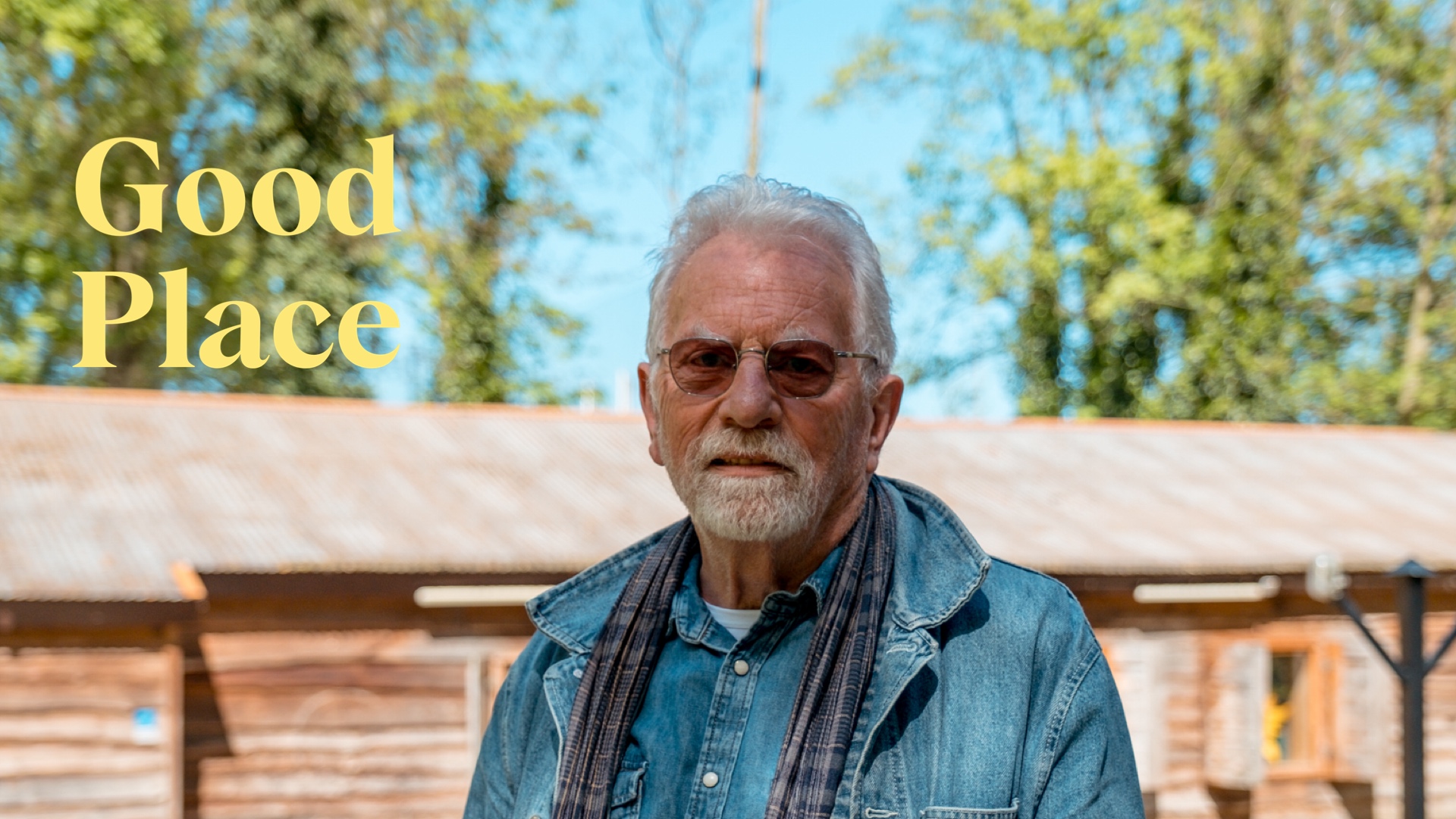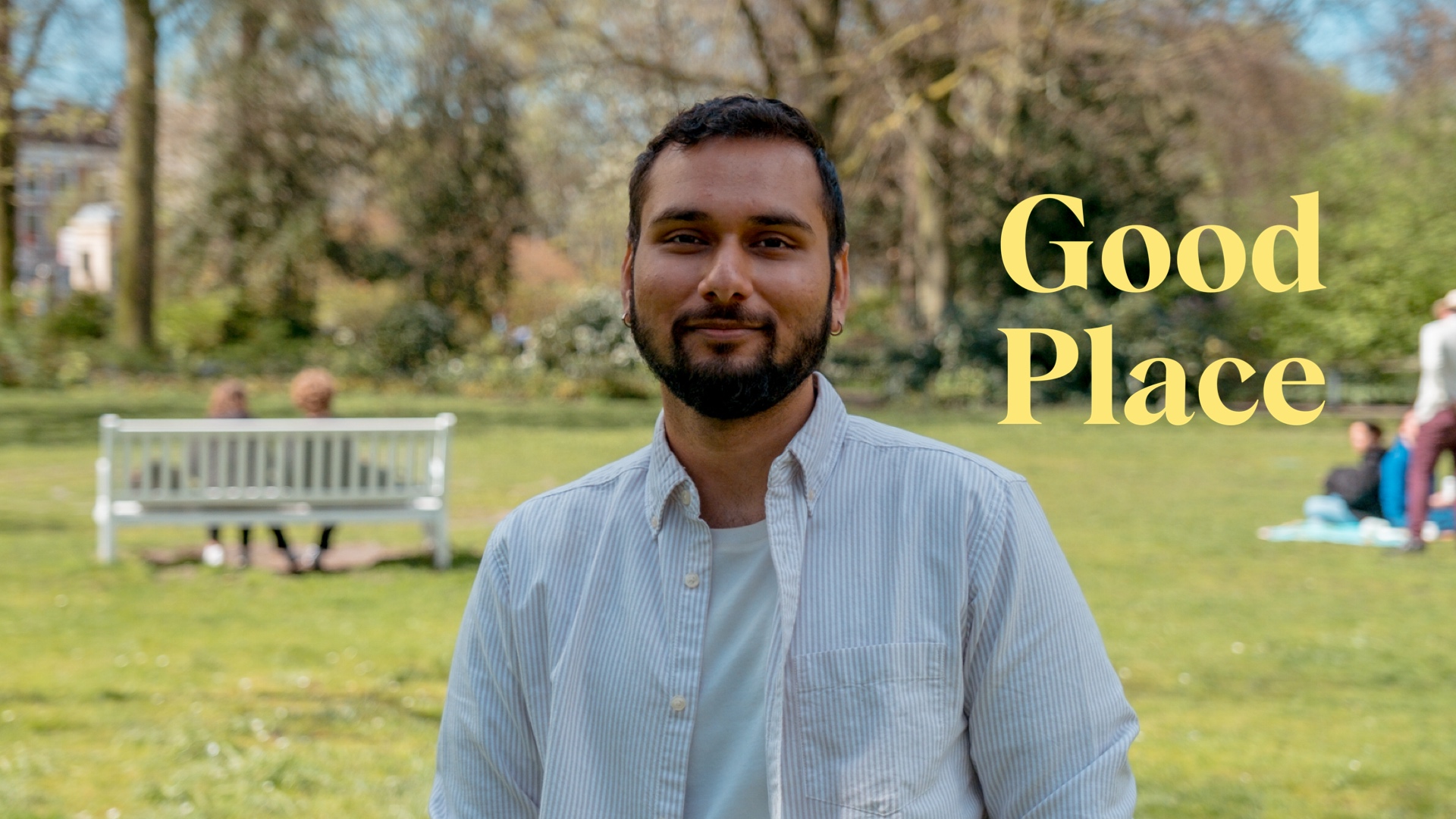


A Dutch-Korean street photographer on picking the best of two cultures, using humor to unsettle bias, and why the best place he knows is a dinner table.
Caspar Gim's Instagram is a catalogue of strangers. He photographs people in Amsterdam, usually in black and white, looking for what street photographers call the decisive moment: a couple in stylish clothes eating fried fish from paper at a market, looking for all the world like they're dining somewhere much grander. We sat on a bench in a quiet corner of Amsterdam, and by the end of the conversation, the title he suggested for the episode was the one that fitted best: "We are not strangers anymore."
Dutch on paper, Korean by blood, and neither as a problem
Caspar grew up in the Netherlands, with a few childhood years in Germany along the way, to South Korean parents. His father is a pastor in the Korean church in Amsterdam, which gives him easy access to a community he mostly stays out of, apart from Sundays. He is Dutch on paper, he says, and when people ask what kind of paper he means, he's happy to explain.
What he describes is a deliberate cultural fluency rather than a divided identity. With Dutch friends, he says he can be quite Korean, polite to a degree that startles colleagues: he bows to them in the morning. With Korean relatives, he can be strikingly Dutch: direct, blunt about what he does and doesn't want. He doesn't feel pulled between the two. "I just picked the most interesting parts of both cultures and made it my own," he said, using one or the other when it suits him.
He's met other Korean people who grew up in the Netherlands and wrestle with the question of which one they are. His take is simple: if you make it a problem, it's a problem. If you treat it as an icebreaker, it becomes one. He also thinks his unsettled childhood is part of the reason. He never had the kind of childhood friend you'd tell stories about, because he never stayed in one place long enough.
Humor as a way to answer bias
Caspar spends part of his working week in meetings with shop managers: older, suited, fifteen or twenty years in the same role. He's young, Asian, wears glasses and has a fashionable haircut, and he can feel the room decide not to take him seriously. His solution is to open with a German joke, one that tends to confuse everyone in the room for a moment and then break the tension. He's also learned to deflect the most frequent assumption by pointing out that he's Korean, not Chinese, and that he should have ordered different food.
Underneath the jokes is a sharp observation. People like to put you in a box, he said, but they rarely put in the energy to understand the box. His approach is to point out that it isn't a corner, just another flavour, and he's discovered that a person who isn't offended by the box takes away much of its power. He also credits his upbringing for the thick skin: he doesn't think he'd be quite so unbothered if he had arrived in the Netherlands as a teenager.
A marriage built on time
Caspar met his wife when he was twenty-one. She had come to the Netherlands as a student, is six years older than he is, and was, as he says with a smile, his first girlfriend and first wife. He credits her patience. At twenty-one he had few fixed ideas about how life should be, which made it easy to grow into a shared life instead of resisting it, and she gave him the time to do it without telling him he was doing it wrong. She's also, he says, a quick adapter, curious about new things, and has never taken him up on his regular offer to move back to Korea.
Strangers, one frame at a time
On the street, Caspar looks for stories he can fit into one frame. Birds, he said, are full of stories too, but they're technically harder, and his tall lens is longer than he is. People are more interesting. Recently, he's started doing something he finds both frightening and rewarding: asking strangers directly if he can take their picture. So far he's had one refusal, outside a K-beauty shop, from a well-dressed man who said, politely, that he did mind. Caspar thanked him and said he'd come back another time.
He avoids the crowds outside the major sights. Tourists, he notes, are only visiting. He's more interested in the quiet corners where he can meet locals and recent arrivals and hear their stories. It's why he opens with a compliment, something he really saw, and why he asks for an email address afterwards so he can send the picture. What he gets in return is energy: the messages from people who've tried his approach and want to know how he did it.
The best place is a dinner table
When I asked Caspar if he was in a good place, he said yes, with one condition. His wife and two young children were in South Korea at the time, and he was in Amsterdam without them. If they were with him, he said, he'd be in a very good place regardless of where. He used to be sceptical of how emotional people got about family. Now he understands it, as a kind of sparkling feeling in the body that he can only call love or happiness.
For those who have a family, he said, the best place to be is the dinner table, even when the children are throwing food and his wife is giving him a look that means do something. It's the place he'll always go back to.
Watch the full conversation on YouTube, or listen on Spotify. Want to go deeper into building your own sense of belonging, wherever you live? The Good Place to Start workbook series walks you through it — get it here.
And you? When someone puts you in a box, what do you do?