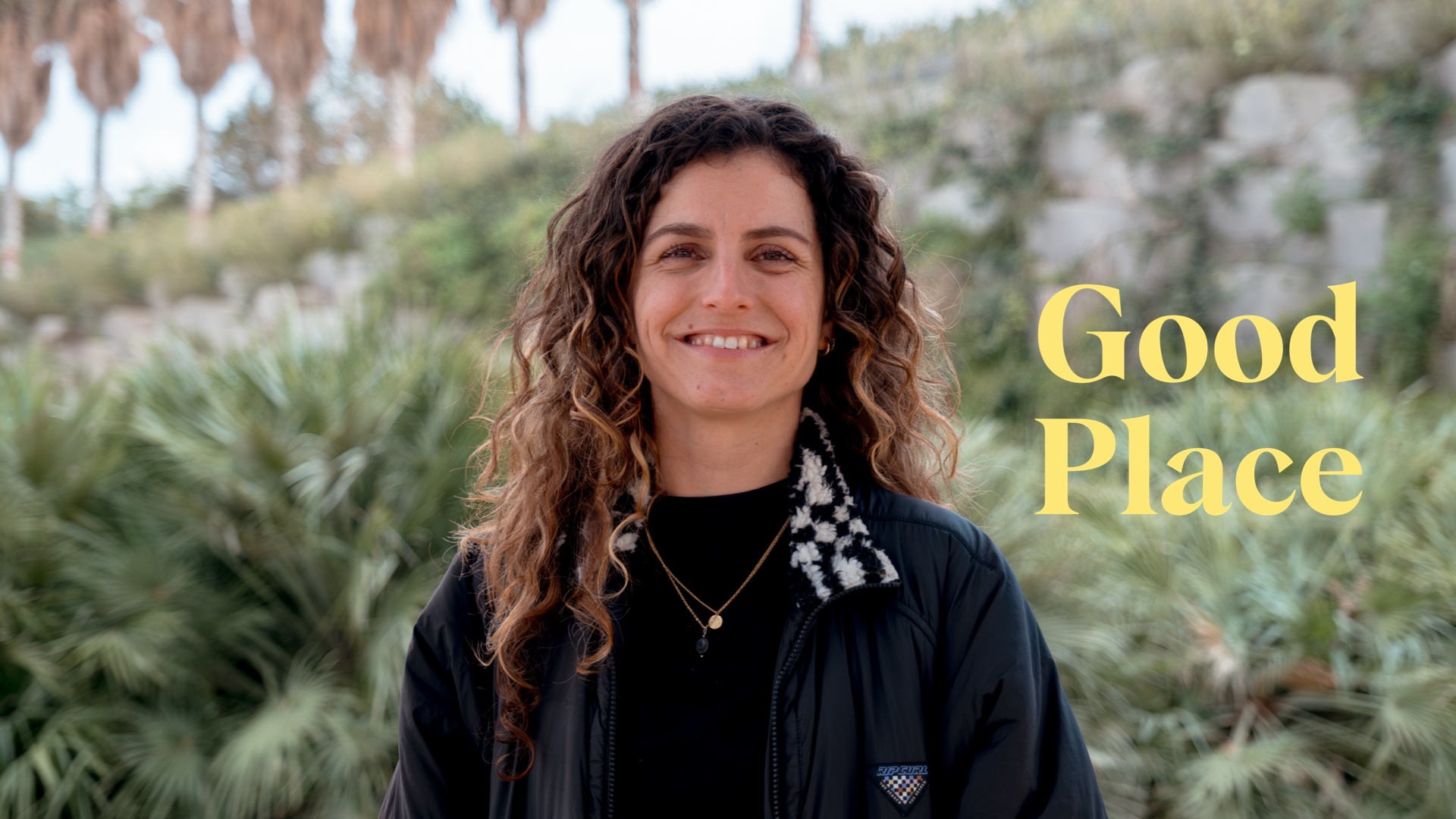


A writer and photographer on comparing cities to relationships, falling for a house in a single afternoon, and what gets harder to rebuild the second time you move.
Dana Marin has a habit of describing cities the way other people describe exes. Bucharest, where she lived for five years before leaving Romania. Amsterdam, nine years, intense and exciting and eventually too much. Alkmaar, where she’s been for four years now, which she calls, without hesitating, “a quiet, more relaxed boyfriend after you’ve been in a crazy relationship with someone else.”
It’s a playful comparison, but she means it. And once she’d said it, I couldn’t stop thinking about what it implies: that choosing where to live might have more in common with choosing who to love than we usually admit.
Falling for a house in an afternoon
Dana didn’t plan to leave Amsterdam. After nine years there, following thirteen in the Netherlands overall, she started feeling what she described as crowding, a city that had grown busier and more demanding than the “village” it felt like when she first arrived from Bucharest. Buying a home in Amsterdam had become close to impossible, so she started looking outward, checking a few places and eventually landing on Alkmaar almost by accident, on a single open-house day in October.
She hadn’t been house-hunting with any seriousness. The trees were turning yellow, the light was right, and the small studio she walked into sat on a narrow canal. “I fell in love with the place,” she said. It was the first house she viewed, and she decided then and there. Four years later, she still marks the anniversary in October, not December when she officially moved, because October is when she first met the place.
Moving alone into a pandemic
The timing turned out to be almost nothing like what she’d pictured. Dana moved to Alkmaar specifically seeking something quieter, consciously avoiding the countryside because she worried about loneliness, moving as she was by herself. She found a smaller city instead, with forest nearby and the sea within cycling distance. Then the pandemic arrived almost immediately after she’d unpacked.
For nearly two years, her entire social world in a new city consisted of one couple, friends of a friend from Amsterdam who happened to live nearby. Restaurants and bars were closed. Travel back to Amsterdam felt risky enough that she avoided the train. What should have been the hardest stretch of isolation produced an unexpected side effect: she started waking up at five or six in the morning, watching the sunrise over the city from her window, feeling, in her words, fresh, curious about what the day held. She’s not sure why. It hasn’t fully continued since, though she still wakes earlier than she used to in Amsterdam.
Friendship that doesn’t follow nationality
I asked Dana whether she gravitated toward a Romanian community in her new city, the kind of shared-origin network many expats lean on. She hasn’t, not deliberately. She’s active in a Romanian organization in Amsterdam and has plenty of Romanian friends there, but in Alkmaar her closest connections came from elsewhere entirely: a Dutch class, a shared blog about photography that turned out, by coincidence, to also be written by a fellow Romanian, friends of friends who became what she calls “bonus friends” rather than direct ones.
She doesn’t speak fluent Dutch and avoids Dutch-only social events as a result, which she thinks partly explains why most of her closest friendships formed around shared interests and language rather than shared nationality. It wasn’t a strategy. It simply happened that way, built from blogging, from language classes, from small coincidences that turned into something lasting.
What moving costs a friendship
Dana was unusually honest about what happens to friendships once distance enters the picture, even distance as modest as a Dutch train ride. In Amsterdam, meeting a friend for a spontaneous coffee meant sending a message two hours ahead. From Alkmaar, the same plan requires actual planning, checking train schedules, working around delays. “You cannot do that when you’re half an hour away by train,” she said. The connection doesn’t disappear. It just stops being spontaneous, and spontaneity, she’s found, is hard to replace once it’s gone.
Some friendships survived the distance easily. One friend from Romania sends her a photo every morning with a good-morning message, a small habit that’s kept their bond close despite years and countries between them. Others faded, not from any falling-out, just from the slow erosion that happens when you’re no longer on each other’s daily radar. She’s also lost some of the creative network she’d built in Amsterdam, the makers, writers, and photographers she used to cross paths with regularly, simply by no longer being visible in that scene week to week.
A different kind of inspiration
Alkmaar hasn’t replaced Amsterdam’s creative energy so much as offered a different register of it. Dana still does most of her street photography in Amsterdam, where crowded streets give her subjects. Alkmaar, by contrast, empties out early, and she’s found a quieter kind of image there instead, nearly deserted canals at ten at night, nobody around but the moon and the water.
She’s since taken on a personal project cataloguing Dutch provinces, aiming to visit one a month and managing five of the twelve in her first year. North Holland remains her favorite for its density of beautiful places, from the smallest village to bigger cities, though she also liked North Brabant a lot and could imagine living in Amersfoort. People say the Netherlands is more or less the same everywhere, she told me. It isn’t, she said, but you only see the differences by going.
What makes a place good, and how that changes
Dana’s criteria for a good place have shifted over the years. When she was younger, she wanted proximity to nightlife, even though she was never really a clubbing person herself. Now she wants beauty, safety, and everything within walking or cycling distance, qualities Alkmaar delivers reliably where Bucharest, for all the energy a short visit still gives her, no longer could. She was blunt about a small city she once lived in back in Romania that lacked any of this: ugly buildings, few friends, nothing that made it feel worth staying.
Water matters to her too, something she didn’t expect to care about until she had it. Canals, a park, some way to escape the pace of a place, even a quiet one. She’s clear that quietness itself isn’t the whole answer. It’s quietness paired with beauty and enough people worth knowing.
In a good place, mid-transition
Dana described her current life as both good and genuinely difficult, two things she doesn’t see as contradictory. She recently left a stable corporate job for freelance work in writing, photography and social media, something she’d wanted for years and is only now pursuing. “I think this is a very challenging moment,” she said, “but it’s also a good moment in my life, because it’s something I wanted for a long time, and now it’s finally happening.”
It’s a fitting place to end a conversation built around the idea of cities as relationships. Dana’s current one, with Alkmaar, is calm and steady. Her relationship with her own career, by contrast, is the exciting, slightly chaotic one right now, and she seems entirely at peace with needing both at once.
Watch the full conversation on YouTube, or listen on Spotify. Want to go deeper into building your own sense of belonging, wherever you live? The Good Place to Start workbook series walks you through it — get it here.
And you? If your city were a relationship, would you call it calm, chaotic, or somewhere in between?