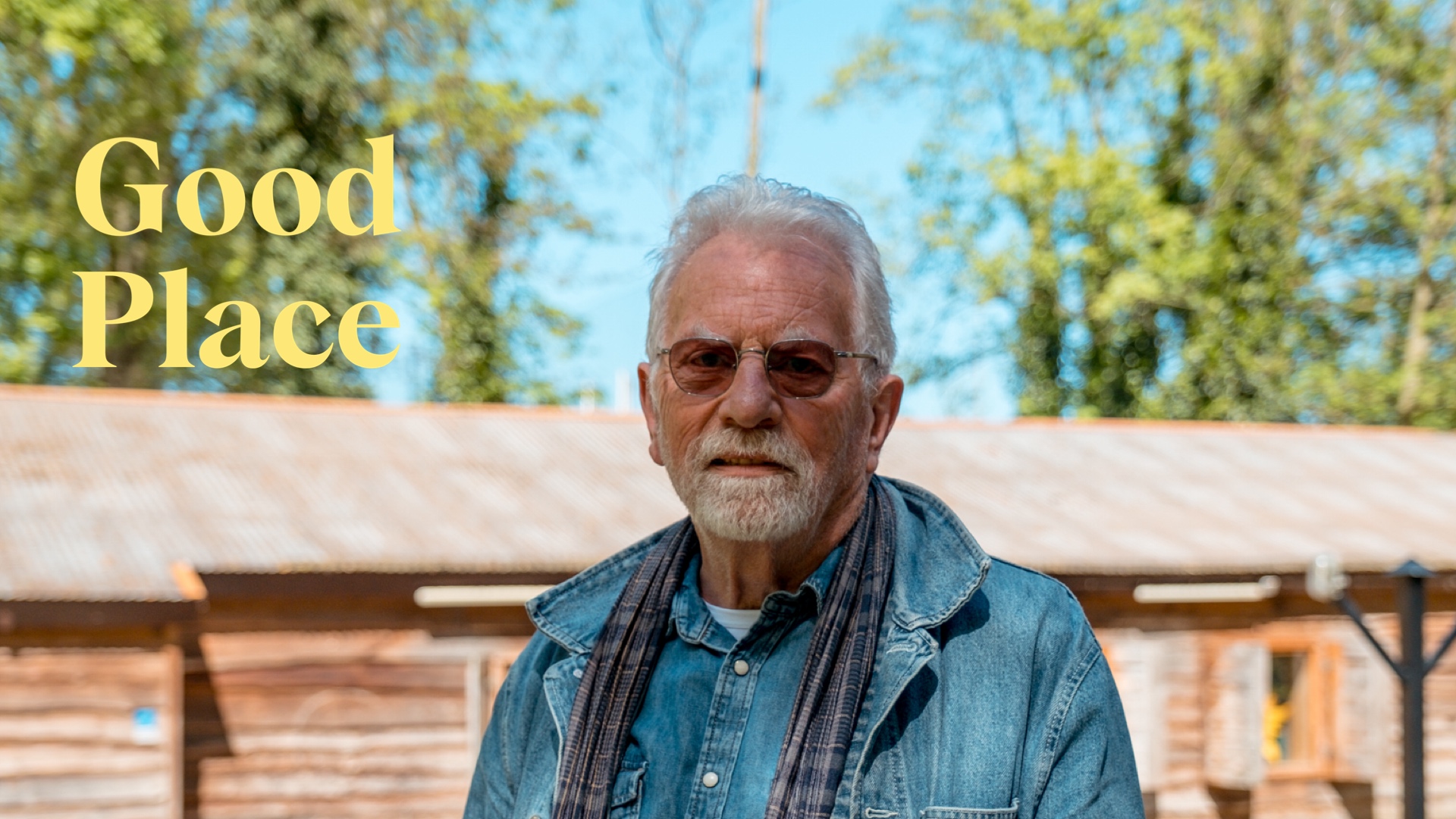

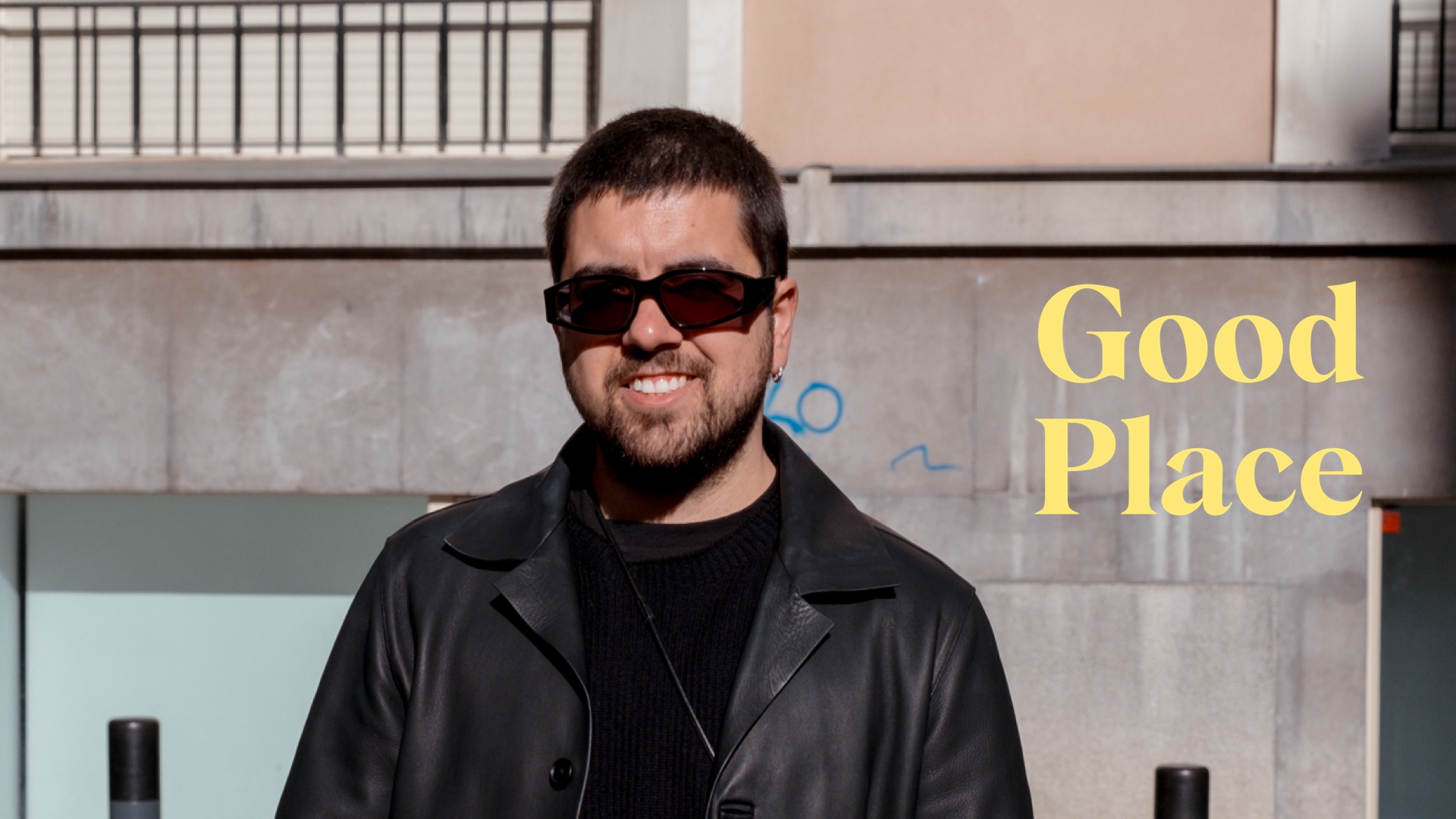
A Galician entrepreneur on burnout, years of therapy, the support network that keeps him upright, and the half-joking plan to move his closest friends to Portugal together.
Román Iglesias grew up surrounded by forest and coastline in Galicia, and arriving in any city, buildings, traffic, noise, was genuinely difficult for him at first, not a minor adjustment but a real challenge for someone whose nervous system was built around nature. Ten years, several exchanges, and one German business school later, he's run creative companies in Madrid long enough that the city's noise barely registers anymore. What he's still actively working out is whether all of that has left him in a good place or just a functional one.
Not the best place, a good place today
Asked directly whether he's in a good place, Román gave an answer unusually precise about its own limits. Not the best, he said, but a good place, today, after what he described plainly as a lot of therapy. Running multiple companies in a demanding, high-stimulation environment, he admitted, can make it genuinely hard to notice whether you're doing well or simply moving fast enough not to stop and check. He's since found more balance. He was careful not to claim he'd arrived anywhere permanent.
A support system he had to learn to build
The clearest thread in our conversation was Román's deliberate construction of a support network, something he said didn't come naturally and took years of adult effort to prioritize over work. Three or four close friends, regular evenings over wine, usually starting around nine once everyone's finished their own work, a sister and brother-in-law who live nearby. He described Spanish social culture as built around exactly this: talking constantly, often about nothing in particular, not seeking advice so much as simply making a weight lighter by naming it out loud to someone else.
He connected this directly to something he called energy, checking in on how people around him are actually doing, not performatively but as a real practice, and credited vulnerability itself as the thing that makes the connection stronger rather than weaker. Without that network, he said bluntly, he doesn't think he could keep running his companies at all.
A city nobody's actually from
Román offered an observation about Madrid that reframed everything else he'd said: almost nobody there has roots going back generations. Unlike a city like New York, where plenty of people can trace family back decades, Madrid's population skews heavily toward people who arrived as adults, for work, for opportunity, for the city's particular energy. The effect, he argued, is a kind of structural openness. Nobody is defending Madrid as exclusively theirs, so newcomers aren't experiencing a closed insider culture, just an unusually fast, unusually easy path to real friendship, sometimes within a single evening at a bar.
He was equally clear that this comes with churn. People arrive, build a life, and often leave again once something, usually proximity to the sea or to nature, starts to matter more than the city's constant social offer. He suspects he'll be one of them eventually, not soon, but eventually.
The commune that started as a joke
Toward the end of our conversation, Román mentioned something his friend group jokes about constantly: moving together to Portugal, somewhere near Troia or Setúbal, and effectively building a small commune, raising children together, staying as connected physically as they currently are through group chats and nine o'clock wine. When I pushed him to actually describe what such a place would need, he answered with more seriousness than the joke suggested: proximity to real nature, sustainability understood as genuinely circular rather than as a marketing word that's lost its meaning, and friendships built on honesty and empathy rather than convenience.
He gave it a loose timeline, ten years, he said, feels about right, while laughing at himself for setting any date at all. It's not a plan with a deed and a spreadsheet behind it. But it's clearly not pure fantasy either, something closer to a shared aspiration his whole friend group keeps returning to, half in earnest.
What he's learning from the generation below him
Running a young team has given Román an unexpected vantage point on generational change. The employees around him, mostly younger than he is, set boundaries he and his peers never thought to set at the same age, and define themselves by multiple interests and disciplines rather than a single job title the way his own generation still instinctively does. He finds this genuinely admirable, not a loss of work ethic but a different, possibly healthier, relationship to identity and ambition, one he suspects the generation after it might carry even further.
Work hard, and be kind
Asked for a closing thought, Román circled for a moment before landing on something unpolished but sincere: work hard, and be kind, in every situation, using humor where it helps and honesty where it doesn't. He wasn't certain it qualified as wisdom. It read, instead, like the actual operating principle of someone who spent the rest of the conversation describing, in very concrete terms, what happens when you try to run a company and a life without either one.
Watch the full conversation on YouTube, or listen on Spotify. Want to go deeper into building your own sense of belonging, wherever you live? The Good Place to Start workbook series walks you through it - get it here.
And you? Is there a friend group you half-joke about building a future with, somewhere else entirely?