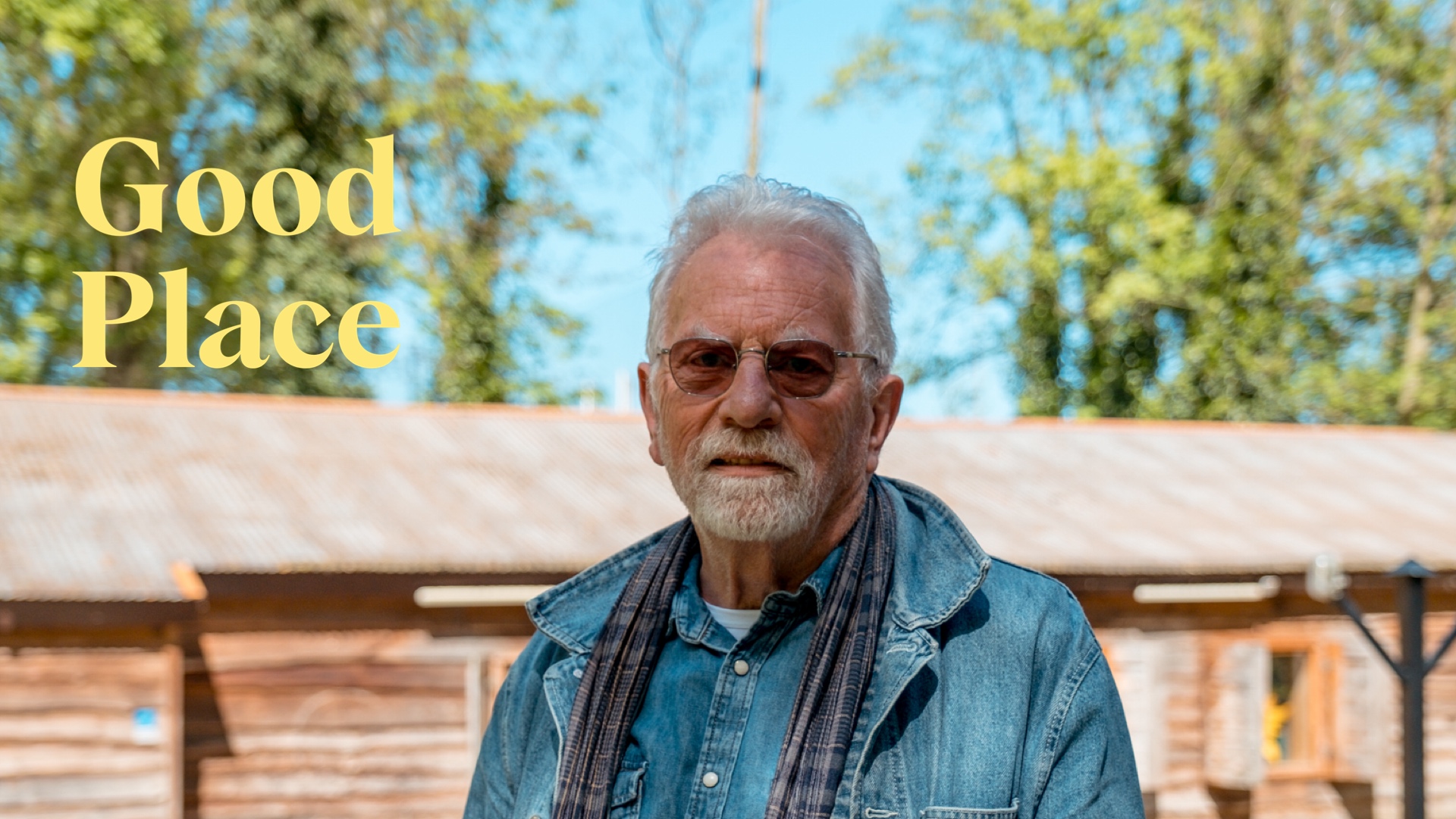
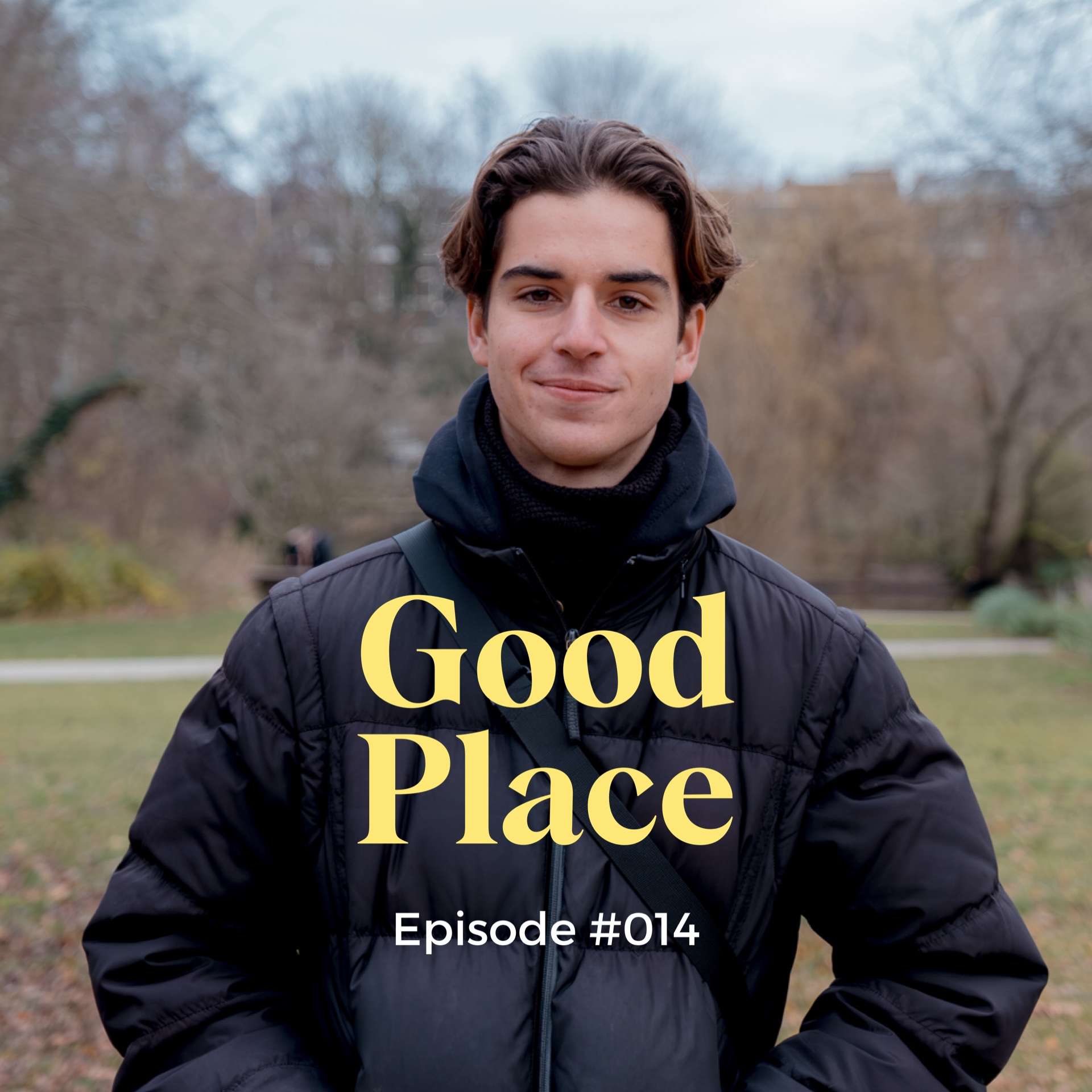
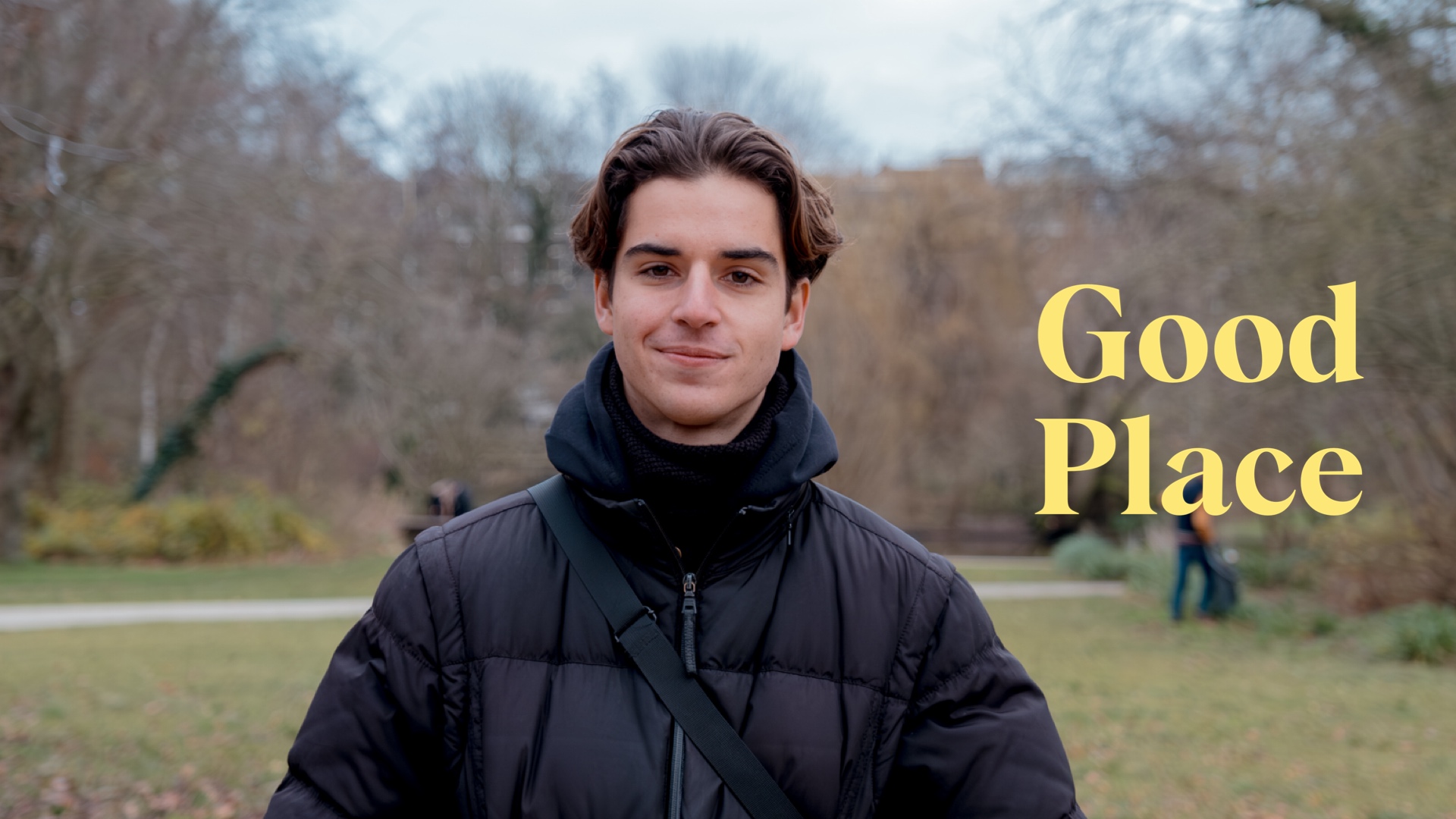
A 22-year-old who's already lived on three countries' worth of childhood on what it's like to have no single home, speaking a different language as a different person, and the question he turned back on his interviewer.
Taki Bruinsma was born in Japan, moved to Luxembourg at a year and a half, to Barcelona around age five, and to Amsterdam two years ago at twenty. He doesn't remember Japan at all, not really, only the photographs he's seen enough times to mistake for memory. He's the youngest guest this series has had. He's also, by his own account, already run out of certainty about where home is.
A childhood assembled from other people's decisions
None of Taki's early moves were his to make. His parents separated in Japan; his mother took him and his sister to Luxembourg to be closer to her own family. His mother took them to Barcelona, where she remarried, giving him a stepfather and two younger siblings, and where he spent the years he actually remembers growing up. Two years ago, the family moved to the Netherlands, a country his mother had left at nineteen. It was a family decision, driven largely by his American stepfather, who wanted to experience Dutch culture. Taki, finishing school, came along.
He's candid that this makes his relationship to place different from someone who chose to emigrate as an adult. He didn't lose a hometown. He never quite had one long enough to call it that. "Home is where your family is," he said, which sounds tidy until you notice it means home has moved four times already, and he's only twenty-two.
An accent that gives you away, eventually
Taki forced himself to speak only Dutch when he first arrived, despite having grown up largely in English and Spanish. For months, Dutch people would hear him start a sentence and switch to English before he finished it, a habit he found more frustrating than kind. He thinks it's less generosity than efficiency, Dutch directness wanting to get the conversation moving rather than wait out his grammar.
Now people don't switch anymore, at least not immediately. He's picked up a Dutch accent in his English, which irritates him more than he expected. And in longer conversations, something in his Dutch eventually gives him away as not quite local, not an accent exactly, just a flicker that makes people ask where he's really from. He's noticed the same thing happening in reverse: Amsterdam, he suspects, has become so international that even Dutch people increasingly can't order a coffee without lapsing into English, something he finds both validating and faintly worrying, a city potentially losing its own local texture by trying to speak everyone else's language at once.
What different languages let you be
Taki described something that stuck with me: he feels like a different person in Spanish than in Dutch. Not performed, exactly, just genuinely shifted, a confidence and ease in Spanish he doesn't fully have in Dutch yet, where he's aware of his own imperfection. He misses Barcelona's laid-back pace, a quality of unhurriedness he hasn't found an equivalent for in Amsterdam, which he experiences as smaller, more contained, easier to map in full than the sprawling, explorable city he grew up in.
He was equally honest about what he doesn't have: a single place that unambiguously feels like his. He wasn't fully Spanish in Barcelona, and he isn't fully Dutch in Amsterdam either, something he can sense in small moments even after two and a half years. He calls this both a good thing and a bad thing in the same breath, good because he thinks it means he can make anywhere home quickly, bad because it also means nowhere holds him completely.
Getting out of his own way, on camera
Before this conversation, Taki had already built something of his own: Humans Talk Humans, a project born after a previous version of his online presence, a Spanish-language TikTok account that briefly hit millions of views, stopped feeling like the right fit. The new project is deliberately smaller in scope and larger in risk: approaching strangers on the street, asking them one unscripted question, and letting their answer stand alone.
He was unusually honest about how uncomfortable this still sometimes is. His rate of people agreeing to answer has improved with practice, but he still gets refused regularly, and he's learned to let a "no" go without pressing. What he's taken from a year of doing this is a small but durable shift in his own life: strangers, he's decided, are mostly not as frightening as they seem, and reaching out to one, even in an unrelated context like a restaurant or a queue, has gotten easier the more he's practiced it on camera.
The question he turned back around
Near the end of our conversation, Taki asked me something that stopped me mid-sentence: when you go somewhere, do you only take from it, or do you also give something to it? It's a question he'd heard me use myself, in an earlier framing about tourists and residents alike, and he handed it back without an answer of his own ready yet.
It's a fair question to leave a twenty-two-year-old with four cities and one language-switching accent to carry. He doesn't have a single home to defend or improve, which could easily become an excuse to stay a permanent visitor everywhere. But the project he's built, strangers' voices, collected with care, shared back to a community rather than hoarded for himself, suggests he's already answering it in practice, even without having said so out loud.
Watch the full conversation on YouTube, or listen on Spotify. Want to go deeper into building your own sense of belonging, wherever you live? The Good Place to Start workbook series walks you through it — get it here.
And you? When you arrive somewhere new, do you take more than you give, or the other way around?