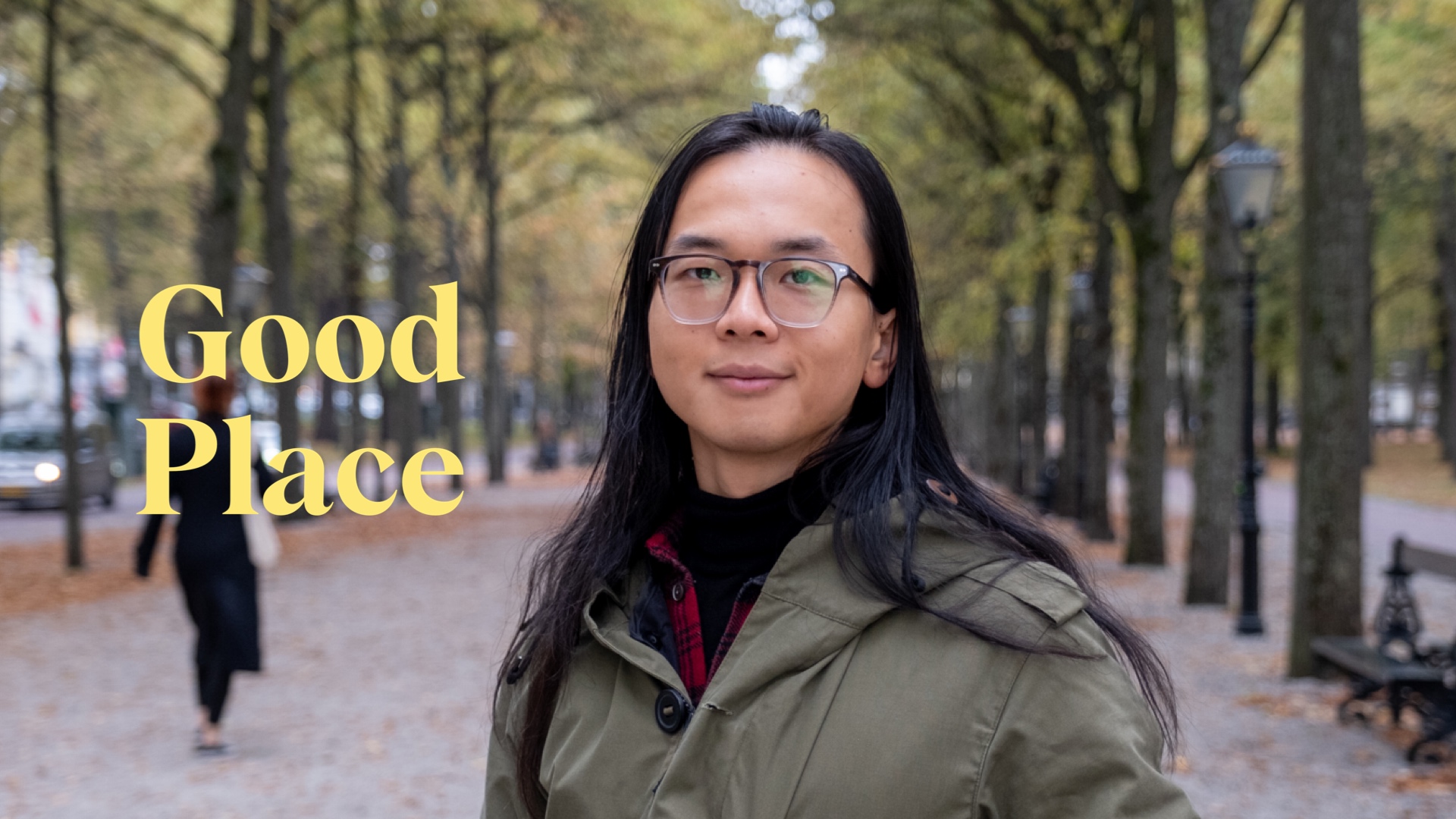
A software engineer on choosing The Hague over Amsterdam on purpose, why he's studying for a citizenship exam, and what separates someone passing through from someone who's actually staying.
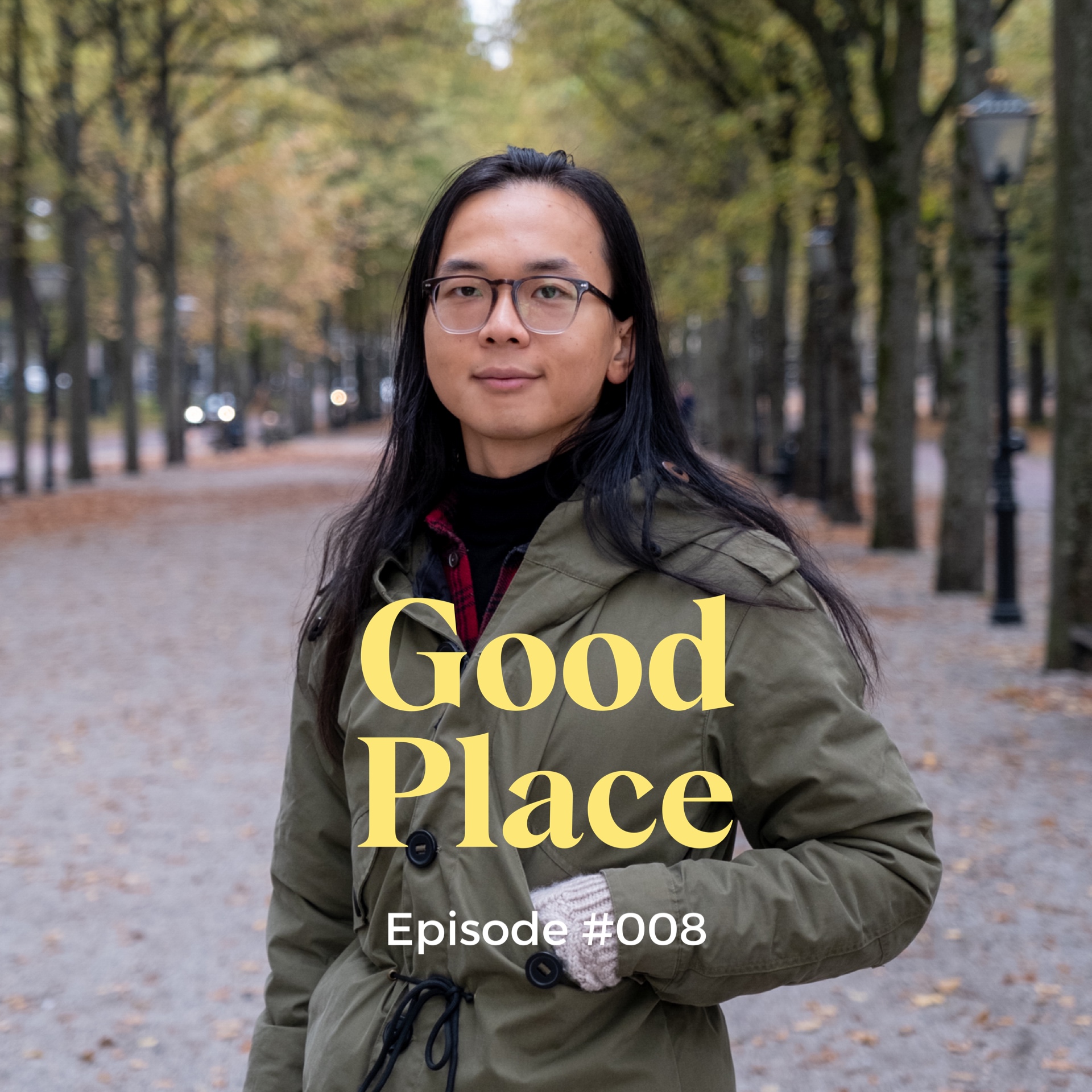
Xiao Dong, 28, works for a company in Amsterdam and has never felt any pull to live there. He commutes nowhere, works fully remote, and chose The Hague specifically, after his first job here convinced him to stay even once his second job moved to Amsterdam. "I'm not moving to Amsterdam," he told himself, and six years later he hasn't.
From pandas and pepper to a near-miss with Prague
Xiao grew up in Chongqing, an industrial city in southwestern China near Sichuan, home, he's quick to clarify, to both pandas and the region's famous peppers. He spent four years studying in Chengdu before applying abroad, landing on two options: Delft or Prague. Prague had the romantic pull, the castle, the old city, the images everyone carries of it. His family pushed him toward the Netherlands instead. He followed their advice, and now half-jokes that somewhere in an alternate version of his life, he's doing this same interview on a bench in Prague instead.
He arrived in the Netherlands in 2017, moved from Delft to The Hague in 2020, a few months before the pandemic reached Europe. He'd been back in China on a visit just before it started and made it out ahead of the lockdowns, which he describes, carefully, as considerably more authoritarian than anything the Netherlands imposed. What counted as a strict measure here, he said, often amounted to a strong suggestion. What counted as a rule back home did not.
A deliberate choice, not a default
Most people who end up living somewhere other than where they work do so by circumstance. Xiao's version was a decision, made early and never revisited. Amsterdam, he readily admits, has more going on, more culture, more of everything, by most people's account including his own. But The Hague hits what he calls a sweet spot: enough happening to never feel bored, calm enough to never feel overwhelmed. Amsterdam, by his account, tips into the latter.
The pandemic sharpened the decision further. Working from anywhere during lockdown taught him and people like him that geography had stopped being fixed to a job. "If I don't like it after six months," he said, "I could go somewhere else. Nobody stops me." He's exercised that freedom by staying exactly where he already was, which is its own kind of answer.
A single afternoon that explains an entire city
Ask Xiao for a defining Hague memory and he goes straight to Lange Voorhout, the avenue we recorded on, during a break between lockdown waves when the city allowed outdoor gatherings again. A Ukrainian folk band, newly famous after Eurovision, played a free outdoor set at the end of the street. He remembers it as the first moment he actually felt the city's cultural pulse, strangers gathering because something good was simply happening nearby, free, unplanned, and over almost as soon as it started.
It's a small story, but it's doing real work. For someone who'd been locked inside through the worst of the pandemic, that one afternoon became the proof that The Hague had the kind of life he was looking for.
An expat is someone who's leaving
I pushed Xiao on a distinction he clearly cares about: whether he considers himself an expat. His answer was precise. An expat, to him, is someone who knows, even unconsciously, that they're here temporarily. He doesn't feel that way about himself, and he doesn't think I do either, after two and a half years in the city myself. He's working toward Dutch citizenship, in part, he said bluntly, "so I can get rid of my Chinese passport." His girlfriend, from London, may need to relocate for a PhD that requires lab access she can't get remotely. If that happens, he'll likely follow. If her program lands in Leiden or Amsterdam instead, they'll happily stay exactly where they are.
He was candid about why the distinction matters socially, not just personally. He's noticed that Dutch locals keep a certain distance from people they assume are leaving eventually, and close that distance faster once someone's intentions read as permanent. The word "expat" isn't neutral. It changes how much effort the people around you are willing to invest.
Friends found through fencing, not through China
Xiao was equally direct about something he didn't expect to have to explain: he hasn't made a deliberate effort to connect with the Chinese community in The Hague, for reasons he described as partly cultural, partly political, and left there without elaborating. His close friends are a scattering of nationalities, mostly met through Meetup in his early years and, more recently, through a fencing club where he's the only member who doesn't speak Dutch, and where the sport, not shared background, is what holds the group together.
He noted something else in passing that stuck with me: he doesn't actually know anyone in his social circle who was born and raised in The Hague. Everyone he knows "imported" themselves from somewhere else, Dutch and international alike, which says something about who ends up building a life in this particular city.
Wanting more and being satisfied, at the same time
When I asked if Xiao was in a good place, he gave an answer that doubled back on itself twice before landing. Yes, he said, and then: I have to keep reminding myself of that. He's ambitious, wants to advance his career and his skills, and catches himself sometimes believing the real good place is still out there somewhere, that he should be exploring rather than settling. He recognized that same restlessness in himself when he first arrived in The Hague, a low-grade resentment that the city wasn't quite enough, before it slowly gave way to something closer to attachment.
His closing thought was the most considered of the conversation: that wanting to become a better version of your life and recognizing you're already in a good one aren't contradictory. They're supposed to coexist. It's a tidy answer from someone who spent the rest of the interview demonstrating exactly how much work it takes to actually believe it.
Watch the full conversation on YouTube, or listen on Spotify. Want to go deeper into building your own sense of belonging, wherever you live? The Good Place to Start workbook series walks you through it — get it here.
And you? Do you know anyone who was actually born in the city you live in now?