An Italian NGO founder on choosing València after a one-week trial, why living far from family can mean better time with them, and a project that helped people over sixty-five make friends across languages.
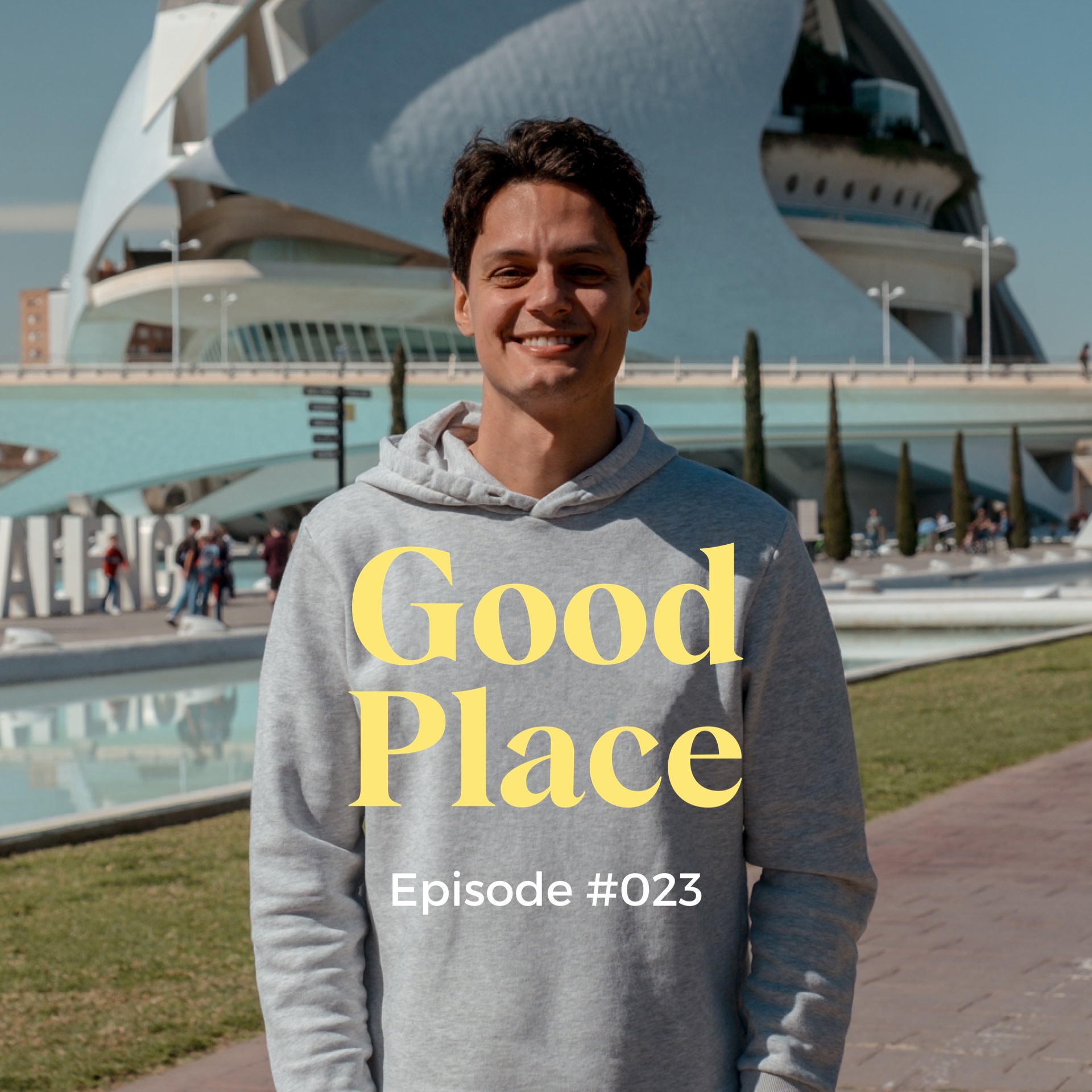
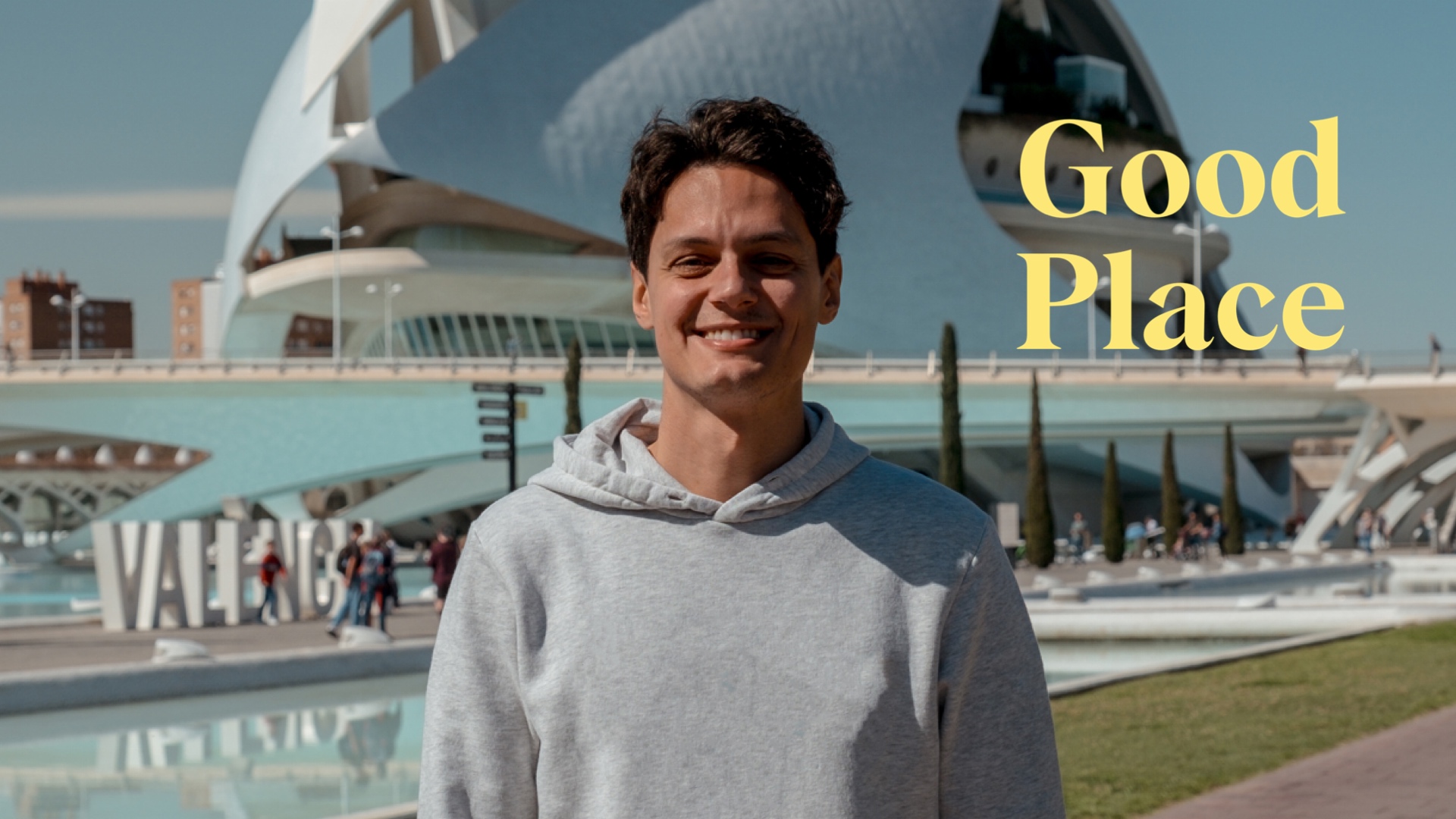
We recorded this on the 29th of February, in front of València's City of Arts and Sciences, in 22 degrees of sunshine. Patrizio Ricci was sweating in a sweater. He had a reason to be pleased: he and his wife had chosen the weather, among many other things, on purpose.
A one-week trial
Patrizio and his wife met in Italy twelve years earlier, and for most of that time, hardly spoke. He texted her now and then; she ignored him, which, as he admits, only made him want her more. Five years before our conversation, he was living in Lithuania and about to move to Gran Canaria for work when he stopped in Rome and they finally reconnected. She moved with him. A year later they were in Sardinia, again for work, and then they decided to move back to Spain, for quality of life.
What they wanted was a city where they didn't need a car, with green space and a relaxed pace, and a short flight back to Italy for ageing parents. Patrizio had been to València once on a five-day holiday ten years earlier and remembered it fondly. His wife had never been. They agreed to try it for a week, and keep looking if it didn't work. On the first night she said they could live here. The city's position also suited the work they wanted to do. After a week, "all the planets were aligning." They've been there for two years, with their young son.
Quality of life isn't a list
I asked Patrizio what quality of life means, since it clearly means different things to different people. His answer was a long list that sounded like a personality test: family, friends, colleagues, financial stability, can I walk, can I bike, can I run, is there an airport. But he doesn't make a pros-and-cons list. He asks what he values most at this point in his life.
For him, the clearest example is Rome, where he grew up. When he goes back for a week, he said, it's very stressful: chaotic traffic, long journeys, snapping at the first thing someone says. He could be closer to his family and, because of the traffic, see them less, or see them stressed and tired. Living in València, with a calm daily routine, gives him better time with them than proximity would. His parents are healthy; he assumes there's time. In five years the answer might be different. Five years ago, he says, he thought he'd never marry or have children.
Home, and the thing you're escaping
Patrizio's years of travel taught him what "home" actually feels like. The place that felt most like home was Glasgow, where he'd gone to study. He was working, had an apartment and friends he liked, and was ready to stay. Three months later he was in Florence, because another course came up that was exactly what he wanted. Brexit was part of it: he works with European institutions, and he realised the opportunities he wanted would be limited in the UK. Glasgow stopped feeling like home, though it still holds a special place for him.
I'd just been sent a quote by Naguib Mahfouz, shared by an earlier guest, Ben: home is where all your attempts to escape cease. Patrizio didn't think he'd escaped Glasgow, so much as followed a mission. He'd met someone there who sparked in him the wish to work towards European unity, peace and open borders.
Not an expat
He's sometimes called an expat. He understands why, but uses the word carefully. In València, he said, the word has become loaded. The city has received a great deal of good publicity, including European Green Capital and several years as one of the best cities in the world for quality of life, and many people from northern Europe, North America and Australia have moved there on foreign salaries. Local people see their city changing, in good ways and bad. The sentiment towards expats is a bit frowned upon.
He and his wife set up their organisation here. Their son goes to school here. They live and work here, and they see themselves as Valencianos. They have no plan to leave, and expect to stay as long as it feels like home.
A project about making friends at seventy
The organisation he and his wife founded with a friend is called Asociación Uno. It's an NGO funded largely by European money, and it works on social inclusion of marginalised groups, sustainability, and social-emotional skills. "Uno" means one in both Italian and Spanish. The idea is that nobody can solve these problems alone, and a society can't solve them if it leaves anyone behind.
One of the projects he's proudest of taught painting to people over sixty-five as a way of expressing themselves and fighting the social isolation that often follows retirement. It was a transnational project, with groups in València, Naples and Dublin who travelled to meet each other. The Italian and Spanish participants shared no language, and often neither spoke English, yet they bonded. One participant told him she was in touch with three of the Italian group and wanted to visit them in Naples. "Making friends at seventy-something and then travelling," Patrizio said, and I watched his face light up. Members of the group still come to his home for lunch, and one family had them for Easter.
He believes in lifelong learning. The brain keeps learning until the day you die, he said. It might take seven classes to learn what you'd once have learned in three, but it's always possible.
A city with a heart
I asked why I should move to València. Warm weather and a flat, easy 10-kilometre run through the old riverbed park were on the list, but his real answer was that València has a heart. In the places he's lived where he felt at home, like Glasgow and Las Palmas, you could feel it immediately. Hong Kong, a wonderful city where he met nice people, felt empty to him, at least for what he was looking for at the time. In València, he said, you go out, talk to anyone, and people are welcoming and open to letting you into their lives.
A dream, and a discomfort
His dream, when I asked, was personal. He wants to let go of the things he can't control. For years, he said, his happiness depended on outside judgement: at work, at school, at university. Since the pandemic, he's become more philosophical and done a lot of therapy, and he feels he's getting closer but isn't there yet. He wants to be a good parent, not pass his own trauma on to his son, and be as much himself as possible.
He ended with a message for anyone on the edge of a move, or in the discomfort of one. In his first years abroad there were lonely and difficult moments that humbled him, but he now thinks they were necessary. There is a lot of life, he said, on the other side of the discomfort.
Watch the full conversation on YouTube, or listen on Spotify. Want to go deeper into building your own sense of belonging, wherever you live? The Good Place to Start workbook series walks you through it — get it here.
And you? Does your city have a heart, and how can you tell?