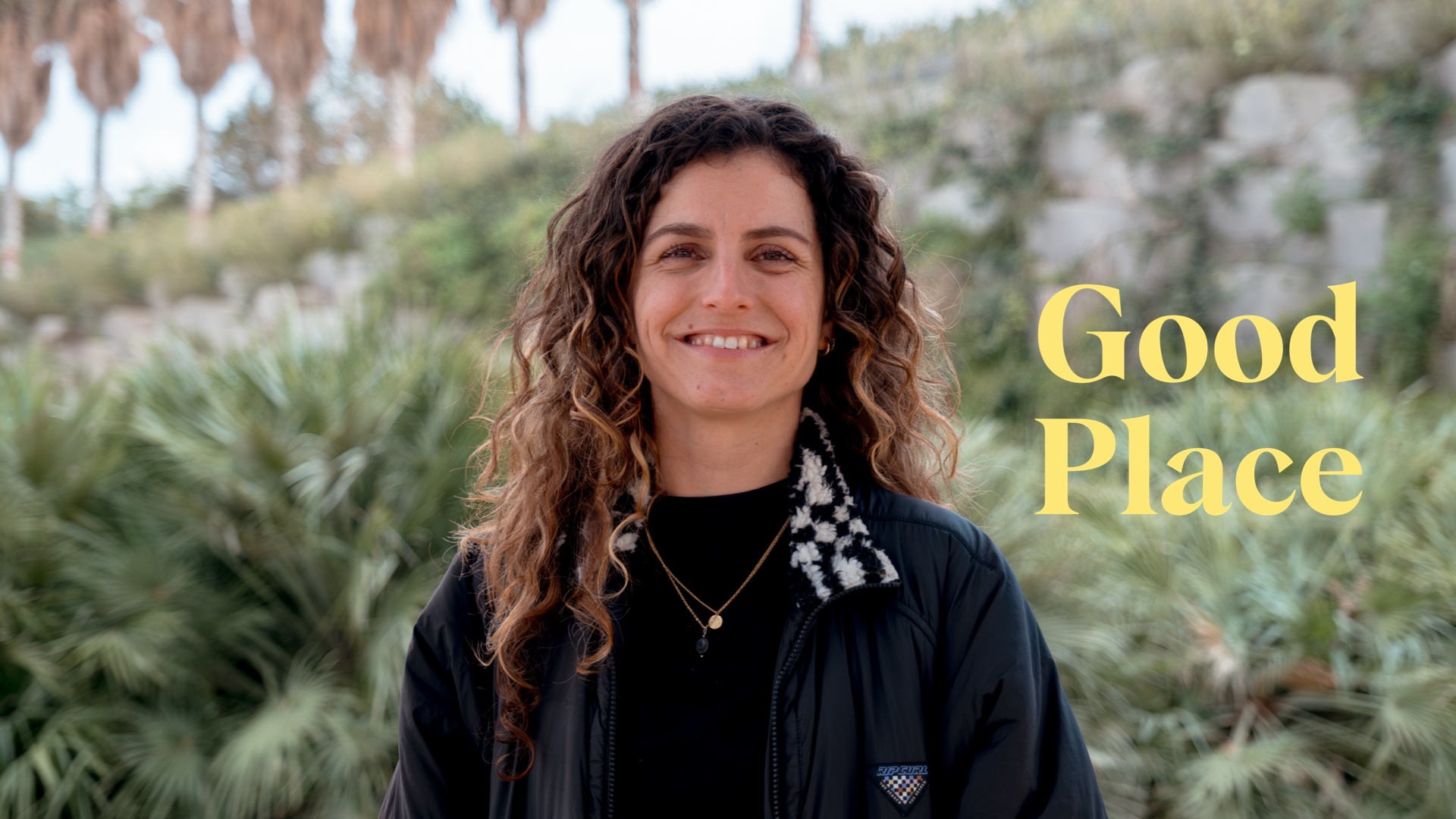

A Spanish podiatrist on moving to London just before the pandemic, finding her first friends in a local pub, and how a lonely start taught her to look after her mental state.
Marta Bueno was talking about the series that brought us together on a bench in a tiny park in South Kensington when she said something that stayed with me: when she first moved to London, a podcast like this would have helped. Not because it would have had answers, but because it would have shown her she wasn't the only one going through it. Four years on, she's a podiatrist working in the NHS, with an English boyfriend, a believable British accent, and a city she's started to call home. It didn't start that way.
Now or never
Marta always wanted to live abroad. A six-month stay in Ghent, Belgium, as a student had taken some of the fear out of it. After university, she was freelancing in Spain, where building a career as a young person takes years, and she realised that if she waited until she had a business and a settled life there, she would never leave. London was the obvious option: a job interview was on offer, and English was easier than Dutch. She came, in her words, now or never.
The timing could hardly have been worse. She arrived shortly before the pandemic, and she had also broken her leg. She knew a couple of friends in London, but they lived hours away across the city, and she was living on the outskirts. For a while, she says, she was isolated.
A receptionist, a flat and a pub
Her first lifeline was a colleague, a receptionist at the private practice where she'd interviewed. When Marta got the job, with no flat and no contacts, the receptionist offered to help. She went to view the flat on Marta's behalf, which Marta rented from Spain. The flat was in the village where the receptionist lived, and on Marta's first weekend, she took her to the local pub and introduced her to everyone.
Marta's English was weaker then. She smiled along while people made jokes about the new girl in town, and she was handed her first Guinness, which she says she didn't enjoy. But she went back the next Saturday, and the one after. The pub gave her something that's hard to create in your twenties after university: a place where you can turn up alone without it being strange, where you know you'll recognise someone. The manager, closer to her age, became a friend, and his friends became hers.
It's a reminder of how little the first step needs to be. One person with a spare Saturday and a local pub can anchor a newcomer's whole social life.
The city isn't the point
When I asked Marta why London was a good place, she answered with a distinction I haven't heard put so plainly. It's been a good place and a bad place for her, she said, and it's the same city. At the beginning she was lonely and far from her family, and then the pandemic meant she couldn't see them for nearly two years. What London was for her depended on what she was going through.
The experience taught her something she didn't expect: how important it is to be in a good place mentally before you can enjoy a good place physically. She calls the person she was before and after two different people. She doesn't wish the hard part away. Anything bad that happens to you ends up good, she said, because you survive it and become a better version of yourself.
The world gets smaller
Having moved once, she told me, moving again no longer scares her. The world looks smaller. She doesn't want to travel constantly, as she puts it, she's too lazy for that. But she does want to live somewhere else at some point, for the comparison. When you step outside your bubble, she said, new opportunities, points of view and people come up, and they change how you see things for good.
Her work reinforces this. As a podiatrist in the NHS she meets patients of every background and age, and they've sharpened her English. She sees people she'd never otherwise meet, and each one is a reminder that life is not just the way you experience it. A recent trip to Thailand did something similar: a culture shock that, once she started talking to people, made them more human, and made her think "that could have been me."
Home is still Málaga, and London is home too
Asked where home is, she says Málaga, immediately, because her family is there. But London feels like home now as well. She belongs here in a way she can't quite explain, with more opportunities for work and for the music she loves. She doesn't plan to leave any time soon but is open to wherever life takes her.
She found part of that belonging in small, regular things: the woman at her coffee place who turned out to be from Italy, the shopkeeper who knows her usual order. Nothing dramatic, but it's the community she's built.
A tip for anyone in the middle of it
Her closing advice was for anyone adapting to a new place or a new situation. Hang in there, surround yourself with good people who can help, and work on yourself. Things get better, she said. Don't get down about having a tough time right now. It will change.
Watch the full conversation on YouTube, or listen on Spotify. Want to go deeper into building your own sense of belonging, wherever you live? The Good Place to Start workbook series walks you through it — get it here.
And you? Is there a "regular" place where someone already knows your order?