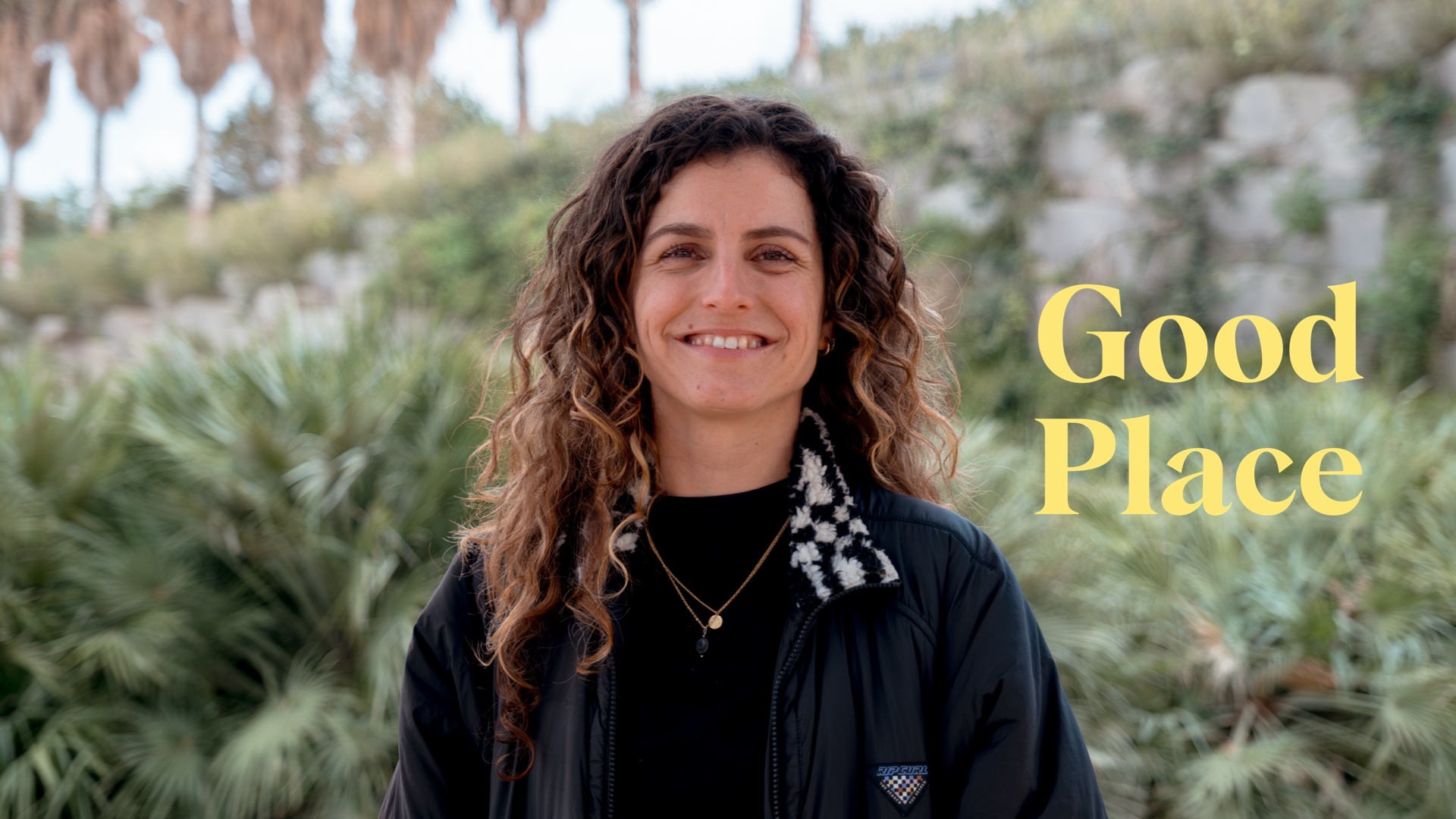


A Brazilian psychologist on realising a dream city after retirement, what freedom feels like after São Paulo, and the friends she found through a study group.
It was ten degrees on the day we sat on a bench in Oosterpark, and the wind was sharp. Angelica Pretel put on her gloves, announced that the sun was shining, and told me about the dream she'd been holding since 1998.
A weekend in 1998
Angelica was living in Germany when she came to Amsterdam for a weekend and fell in love. The weather was milder than she'd expected, and the park was full of people. For a woman from São Paulo, where parks are far apart and everything requires a car, Amsterdam felt like an international village: a place where you could have everything, and a quiet, easy life too. She told herself she would live there one day.
She had a full life in Brazil, a psychologist's career, a big house she loved, a wide circle of friends. The dream waited. When she retired, a part of her life stopped, she said, and she was free to do what she wanted. At sixty-one she moved. She did not sell her house in Brazil. Her friends told her she was crazy, and she admits it wasn't easy to start again.
Her daughter and grandson had already moved to Amsterdam, which made the decision easier. But she said she would have come anyway, if only as an experiment. She arrived with the intention of staying for good.
Freedom, measured in car windows
When I asked what Amsterdam gives her, the first answer was practical. She doesn't need a car. In São Paulo, she needs one for everything. Here, it's like a vacation, even in winter.
The second answer was freedom, and she explained it with care. Brazil has great inequality, and with it, a lot of robbery. She described the constant low-level alertness of life there: not using your phone on the street, not opening the car window, telling your daughters to be careful where they stop. It isn't always dangerous, she said, but the sensation is always there, and it's stressful. Her own children grew up in a closed street where only residents could enter, and had a wonderful childhood. But it was a protected place, and it took knowing the right places. In Amsterdam, she said, she feels free and has no fear. It's what she considers the principal point.
Making friends at sixty-one
She had friends in Brazil from childhood and teenage years. That's impossible to replicate, she said, so she set about making new ones deliberately. When she arrived she told herself: I left my friends, I need to make other friends. And she was clear that she didn't want to depend on her daughters. She wanted her own life.
She found a study group on existentialism and spirituality online, and joined. It's where she met her two best friends in Amsterdam, both also over sixty and, as it happens, Brazilian. They travel together and play cards. She says the group includes friends of all ages. In Brazil, too, she'd found her friends through a club and a circular dance group. The lesson, she says, is the same in both countries: you need a special place to meet people, a group built around something you care about.
A psychologist who works in her own culture
Angelica is retired in Brazil but not in Amsterdam. She still works as a psychologist, and for her, psychology isn't work but a pleasure. She sees only Brazilian clients, because she believes a psychologist needs to share a client's culture to understand how it shapes their life. She doesn't know how Dutch culture influences a Dutch person's life, but she knows how Brazilian culture influences a Brazilian's.
Feeling local without the language
She doesn't speak Dutch, which she calls terrible. But she feels local. The proof, she said, was a week earlier, when something at a venue didn't work, and she knew how to solve it. She felt proud. Knowing how to get around, left and right, is what makes a place feel like yours, even at almost sixty-eight.
Her advice for anyone moving to a new place: it must be our home, and when we have a home, we take care of it. We should treat the place we live as if it belongs to us, feel part of it, and add some value. She thinks her value to Amsterdam is, in part, her work: helping people concentrate on themselves so they can live better in the city. Another part is the way she talks about it. When she tells Dutch people how wonderful everything is, they ask, really? And she says yes.
Good morning, Amsterdam
When I asked if she was in a good place, she answered without hesitation. She says "good morning, Amsterdam" every single day when she opens her curtains. She takes pictures of it, she said, like a tourist, a local tourist. She calls herself a proud Amsterdammer and an addict of the city. I told her I might start greeting my own city in the morning, too.
Her closing words were simple. Believe in your dreams. They can come true, even if you're not so young.
Watch the full conversation on YouTube, or listen on Spotify. Want to go deeper into building your own sense of belonging, wherever you live? The Good Place to Start workbook series walks you through it — get it here.
And you? When did you last say good morning to the place where you live?