

A Serbian podcast producer on leaving Amsterdam as it gentrified, finding Rotterdam more genuinely mixed, and the moment he realized a new country isn't a substitute for therapy.
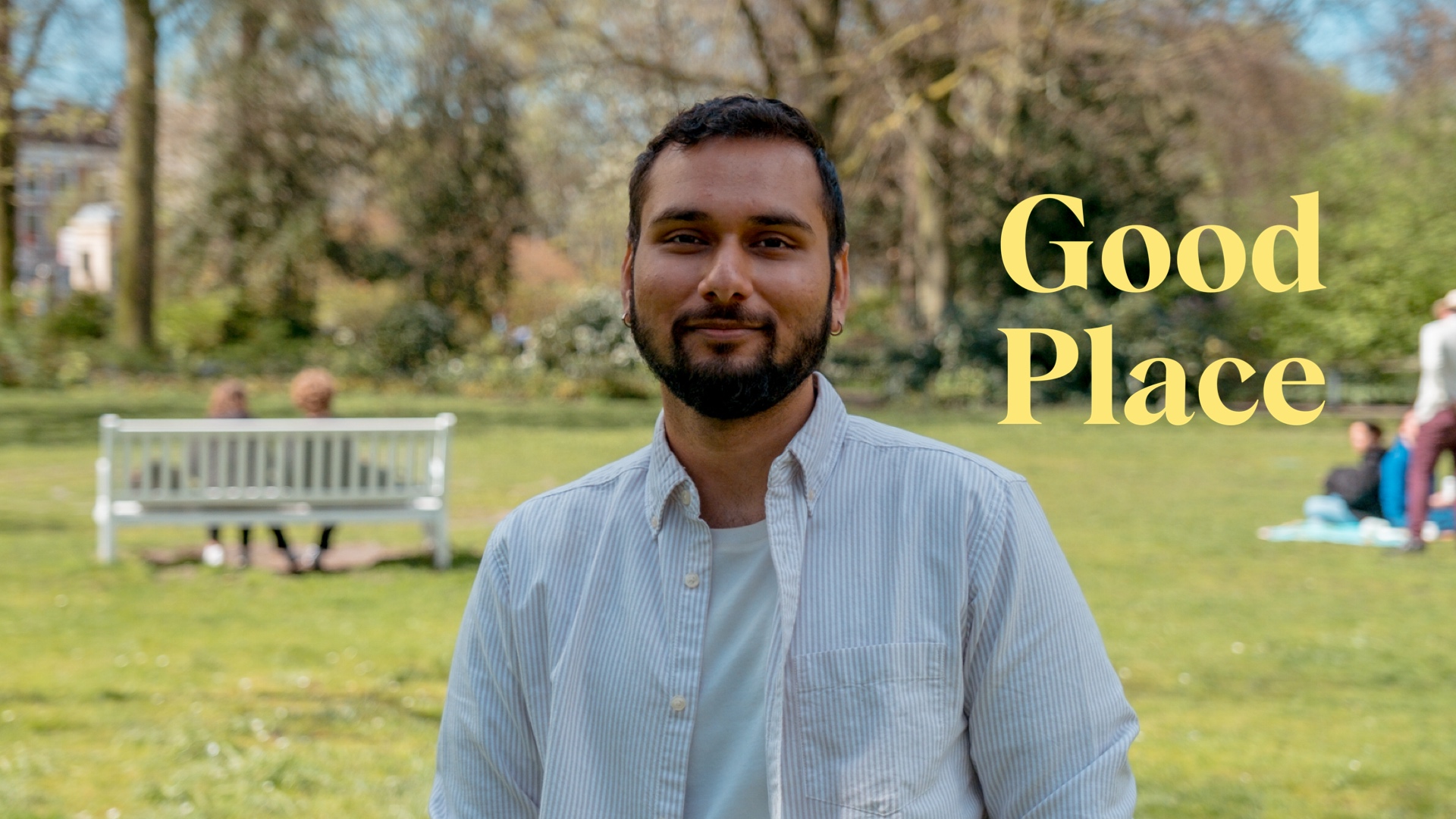
Jan Arsenovic arrived in the Netherlands because of Couchsurfing, the free-stay website, not a job offer or a university program. He hosted a Portuguese traveler in Belgrade in 2013; she happened to live in Amsterdam; a visit to see her became his and his partner's first real exposure to the city. Neither of them thought much of it at the time. A couple of years later, they moved there anyway.
Leaving because the vibe moved on
Jan and his partner left Amsterdam for Rotterdam around 2018 or 2019, not because anything went wrong, but because the city's atmosphere had shifted under them. Amsterdam's reputation as a city of squats and alternative culture, he said, hadn't fully disappeared, but it was being pushed out of the center while struggling to establish itself anywhere else, caught in a transitional period dominated increasingly by tourism, waffle shops and high-end boutiques. Rotterdam, at the time, was earlier in that same cycle, a creative food scene, museum exhibitions, music festivals, the kind of texture Amsterdam seemed to be losing.
He's watched the same forces catch up with Rotterdam since. Restaurants built around genuine experimentation have closed as rents climbed. Entire blocks are being demolished for mixed-use towers, displacing social housing tenants in the process. He's not against change in principle; he's specific about which parts of it concern him, and he's realistic that Amsterdam and Rotterdam are simply at different points on the same curve, not different stories entirely.
A city's real diversity versus its visible diversity
One of the sharper distinctions in our conversation was between a city that looks diverse and one that's actually mixed. I told Jan that where I live, in The Hague, the city is diverse overall but its neighbourhoods are not mixed: you cross a street and enter a different bubble, almost like being abroad. Rotterdam, Jan said, struck him differently from his very first visit, with friend groups that actually span ethnicities and neighbourhoods that are more mixed, even if full integration remains out of reach there too. He finds Amsterdam's neighbourhoods more mixed than The Hague's as well.
He connected this directly to something personal. He and his partner, a gay couple, never experienced serious difficulty in the Balkans, he was careful to note, but that depended heavily on which part of the Balkans; bigger cities were fine, smaller towns considerably less so. Part of Amsterdam's early appeal was never having to explain to a landlord, passport in hand, why two men wanted to rent one apartment together. A mixed, melting-pot city wasn't an abstract preference. It was a practical relief.
The target that keeps moving
Jan was unusually self-aware about a belief he used to hold and has since let go of: that changing countries would make him a fundamentally different person. "It's like, no, actually you need therapy," he said, flatly, without self-pity. He described the same pattern surfacing in other parts of his life, a pivot from a decade in broadcasting into photography, then a pandemic that cancelled every booked shoot overnight, then a quiet slide back into broadcasting-adjacent work, now podcast and video production, almost without deciding to. Somewhere in there he also went back to vocal training after a producer told him his mixes sounded great but he clearly wasn't a trained singer, and he started a Serbian-language podcast aimed squarely at the Yugoslav diaspora, the first sustained Serbian he's spoken since 2014.
None of these pivots, he was clear, fixed anything by relocating him. What actually changed was slower and less geographic: therapy, mostly, and the gradual acceptance that the goal he's chasing keeps redrawing itself no matter where he's standing when he chases it.
Decisions made together, mostly
Jan and his partner make big decisions collectively, he said, with one notable exception: a stretch of unhappiness with his career that led him to secretly apply for jobs in the United States without telling his partner. Nothing came of the applications, and the pandemic arrived almost immediately after, but his partner found out anyway and was furious, extracting a promise that it would never happen again without a shared conversation first. They now explicitly revisit the "where do we want to live" question every couple of years, a practice Jan recommends generally, regardless of whether the honest answer changes anything in the short term.
Right now his partner works in Amsterdam and commutes from Rotterdam; Jan, self-employed with no fixed Dutch client base, could technically work from anywhere, and has, spending three months in 2022 simply travelling while working remotely. He's weighing a return to Amsterdam, a possible move to an English-speaking country for broader career opportunities, or, only half-joking, a cabin in the Swedish woods with a decent internet connection.
A good place, with room still open
When I asked if Jan was in a good place, his answer came without hesitation on the work front and with a knowing shrug everywhere else. Work is going well, built almost entirely on referrals rather than active marketing. Could it be better? Sure, he said, he could be in a forest in Sweden. But he's made peace with the fact that the target moving is simply how this works now, a departure from his parents' generation's single-job, single-city, thirty-year arc, replaced by a looser, more improvised version that trades security for range.
His closing thought doubled as a quiet rebuttal to anyone using age as an excuse: try things. People in their fifties become parents. People in their nineties, apparently, still bungee jump, medical clearance permitting. He wasn't prescribing recklessness. He was describing a life built, deliberately, out of repeated small experiments, rather than one big relocation he expected to solve everything on its own.
Watch the full conversation on YouTube, or listen on Spotify. Want to go deeper into building your own sense of belonging, wherever you live? The Good Place to Start workbook series walks you through it — get it here.
And you? Have you ever expected a new place to fix something that wasn't really about the place at all?