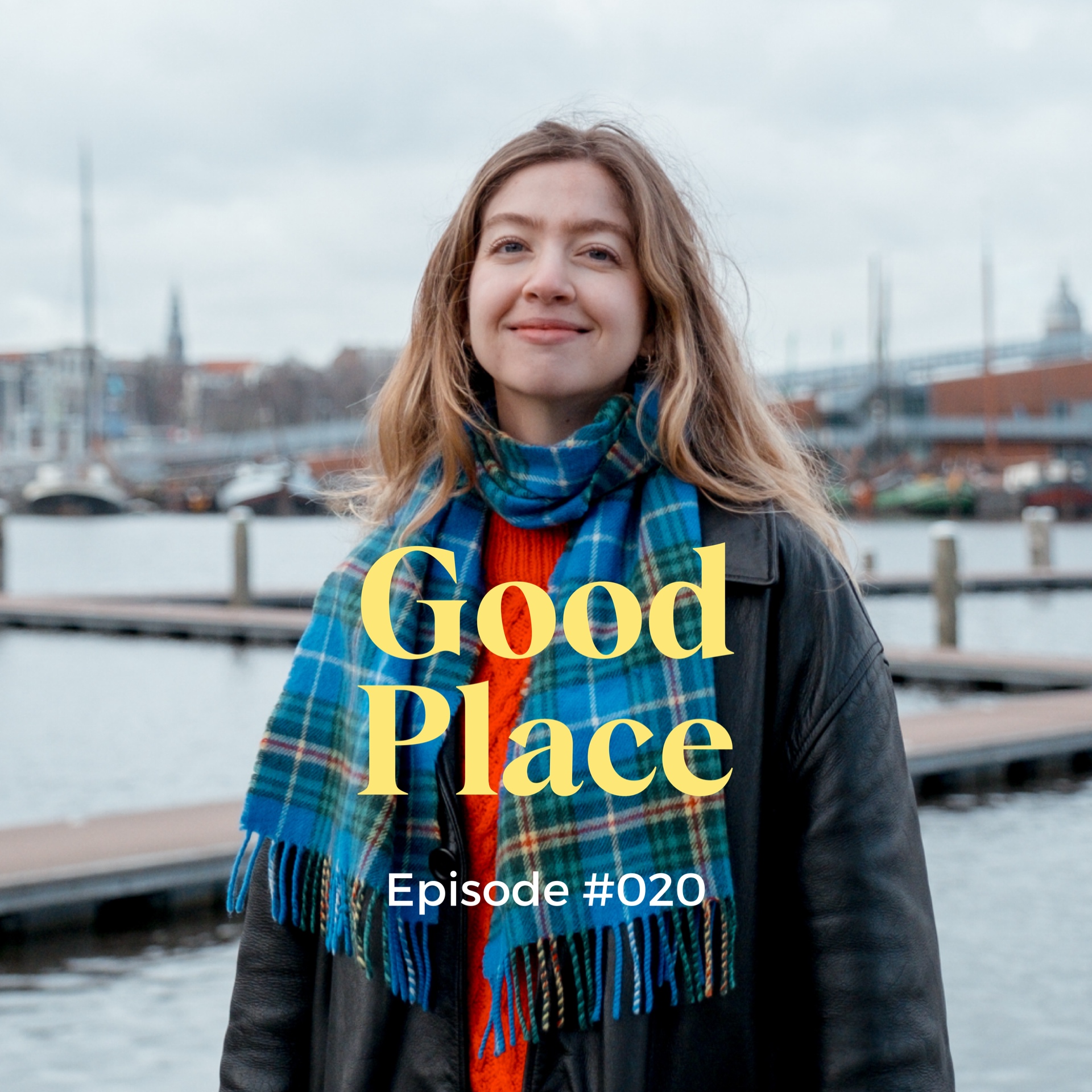

A Canadian placemaker on empty buildings, benches that invite rather than repel, and a language-exchange meetup where mistakes are the point.
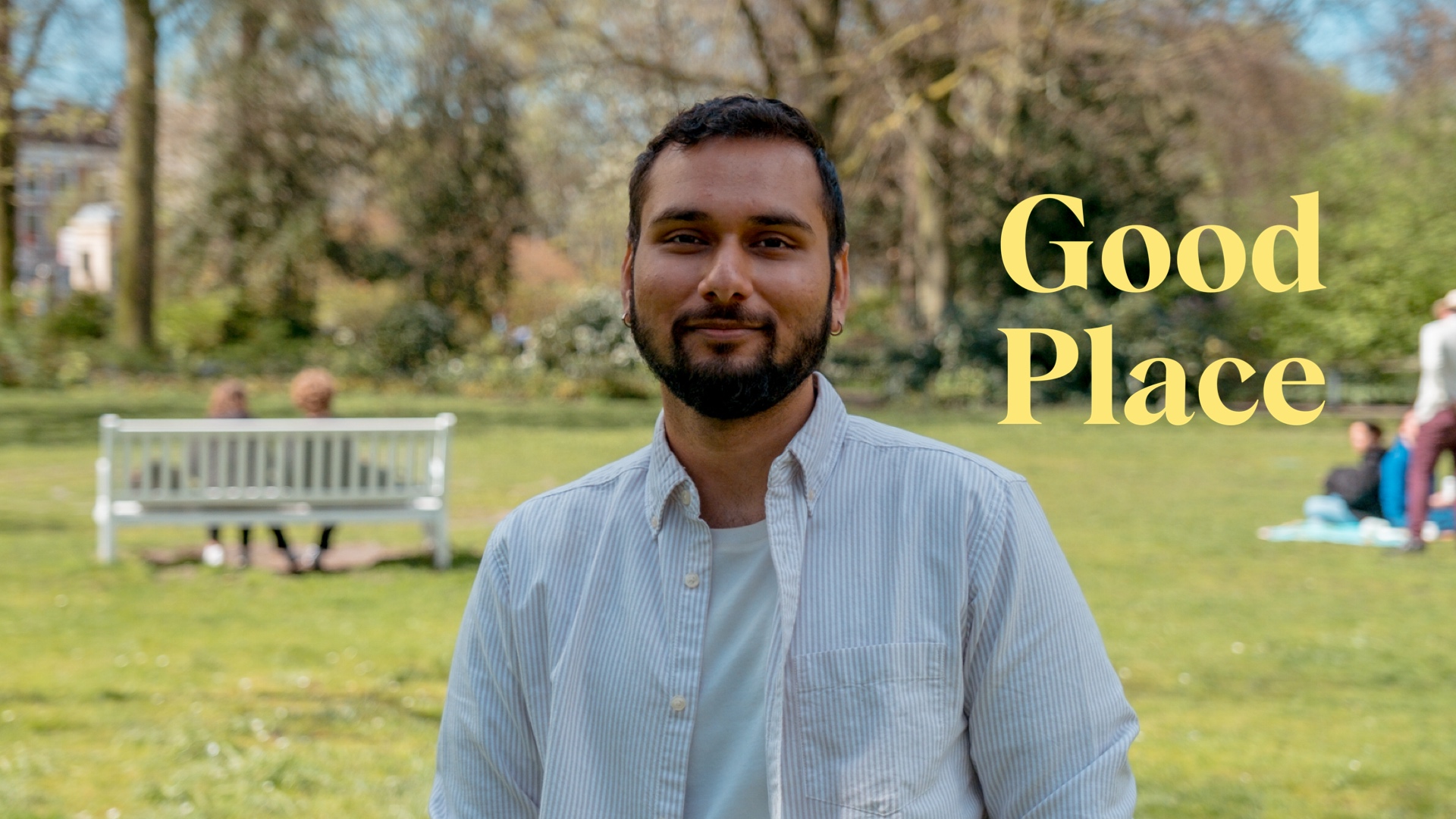
Kristen Zupancic brought tea. That made the first-ever picnic bench on this series, at the Marineterrein in Amsterdam, a good deal warmer. The Marineterrein is a former naval site now being turned into an innovation district, and it was a fitting place to talk to a placemaker, since the whole area is an experiment in what a city can do with space it already has.
From Stoney Creek to a six-month working holiday
Kristen grew up in Stoney Creek, Ontario, now part of Hamilton, and studied in Toronto. A friend who lived abroad in Spain told her she would love Amsterdam: friendly people, cycling, green space, music. Kristen was ready to live abroad for a while, so she took a six-month working holiday and, in her words, the rest is history. She went home to Canada to arrange the right to return, and was back within a year. She's been in Amsterdam for five and a half years, after an earlier stint when we first met through the magazine this project grew out of.
A city with plenty of space
Back in Amsterdam, Kristen worked in co-living and co-working spaces and at a think tank researching shared space: hybrid hospitality, shared working, public squares. After some years, she wanted to get her hands dirty, and she started Plot Twist Placemaking, to activate vacant and underused spaces.
Her central claim is one I'd like to see repeated by every city council: there is no lack of space in cities, only a lack of smart use of it. Her phone is full of photographs of empty office buildings on weekends and rooftops with untapped potential. A space can be a workspace in the morning, a class in the afternoon and a gathering at night. What matters is who uses it, and who comes into contact with whom.
What the Dutch already know
Kristen admires how much autonomy the Dutch take over public space. In spring and summer, families take over the pavement for a birthday party, and people hold baby showers and anniversaries in the park, probably because their homes are too small to host everyone. Placemaking professionals try to build that kind of ownership through facilitation. In the Netherlands, she said, people are often already doing it on their own.
I admitted I'd held my daughter's first birthday in a park for exactly that reason, and it worked perfectly.
Lessons from Bryant Park
Her favourite public space is Bryant Park in New York City. She admires how small, practical tactics create comfort: mobile furniture, games for all ages, food and drink, programming, and a five-star public bathroom that keeps people in the park instead of leaving to find somewhere to go. The space works for children, for seniors, and for people who want to put their feet up.
She contrasted it with the trend of hostile architecture, the extra armrests on benches that prevent anyone lying down. Designed to keep out people who sleep on benches, they make a bench less welcoming to everyone. Bryant Park does the opposite: put something good there, and trust that people will treat it well. Not everything will be trashed, she said. We should incorporate more trust when we think about shared spaces.
Her list of wishes is practical and charming: a covered, indoor public bench for rainy winter days; shade and free Wi-Fi in parks so people can work outdoors; and a library shelf at the bus stop, turning a place people wait into a third space where they linger.
Coffee, croissants and mistakes
Kristen's own project in the city is a language exchange for Dutch learners and Dutch speakers, held in public spaces so there's no barrier to entry. She's at B2 level in Dutch herself, and started it after talking with classmates about the fear of making mistakes. At the meetup, mistakes are expected: everyone knows someone will speak with lots of grammar errors, and everyone understands them anyway. Sometimes she facilitates with games, sometimes it's just casual croissants. The group now has a WhatsApp chat and organises itself, which she says is the best outcome: people proposing, "shall we meet on Sunday?"
It's placemaking in miniature. She listened to the needs of a group, created an activation in a public place, and let it grow.
A good place is a safe place
When I asked her to define a good place, Kristen said it's a safe one. For a nature lover, that means a park with proper lighting and comfortable seating, an open layout with few enclosed corners, and easy access. It should be welcoming to children and seniors. Programming, a music performance or a neighbourhood yoga class, is a bonus.
She's in a good place, she said, in part because of the simple things: tea on a sunny Monday afternoon. She starts each morning with a coffee in Oosterpark, where regulars exchange nods. She walks her dog, thinks too much, and finds that carrying a camera makes her present. And she loves seeing people dance in public. After a floating DJ on the water once got a whole crowd moving, we decided someone should organise a Good Place disco.
Get outside, and make mistakes
Her closing advice: get outside. In the Netherlands people complain about the rain, but being outdoors, whatever the weather, is good for you and keeps you present. Maybe you'll meet someone under a covered bus shelter. And make mistakes. Please.
Watch the full conversation on YouTube, or listen on Spotify. Want to go deeper into building your own sense of belonging, wherever you live? The Good Place to Start workbook series walks you through it — get it here.
And you? What's one empty space in your neighbourhood that deserves a plot twist?