

A designer of urban futures on why her first attempt at Berlin failed, what changed the second time, and why the right neighborhood can matter more than the right city.
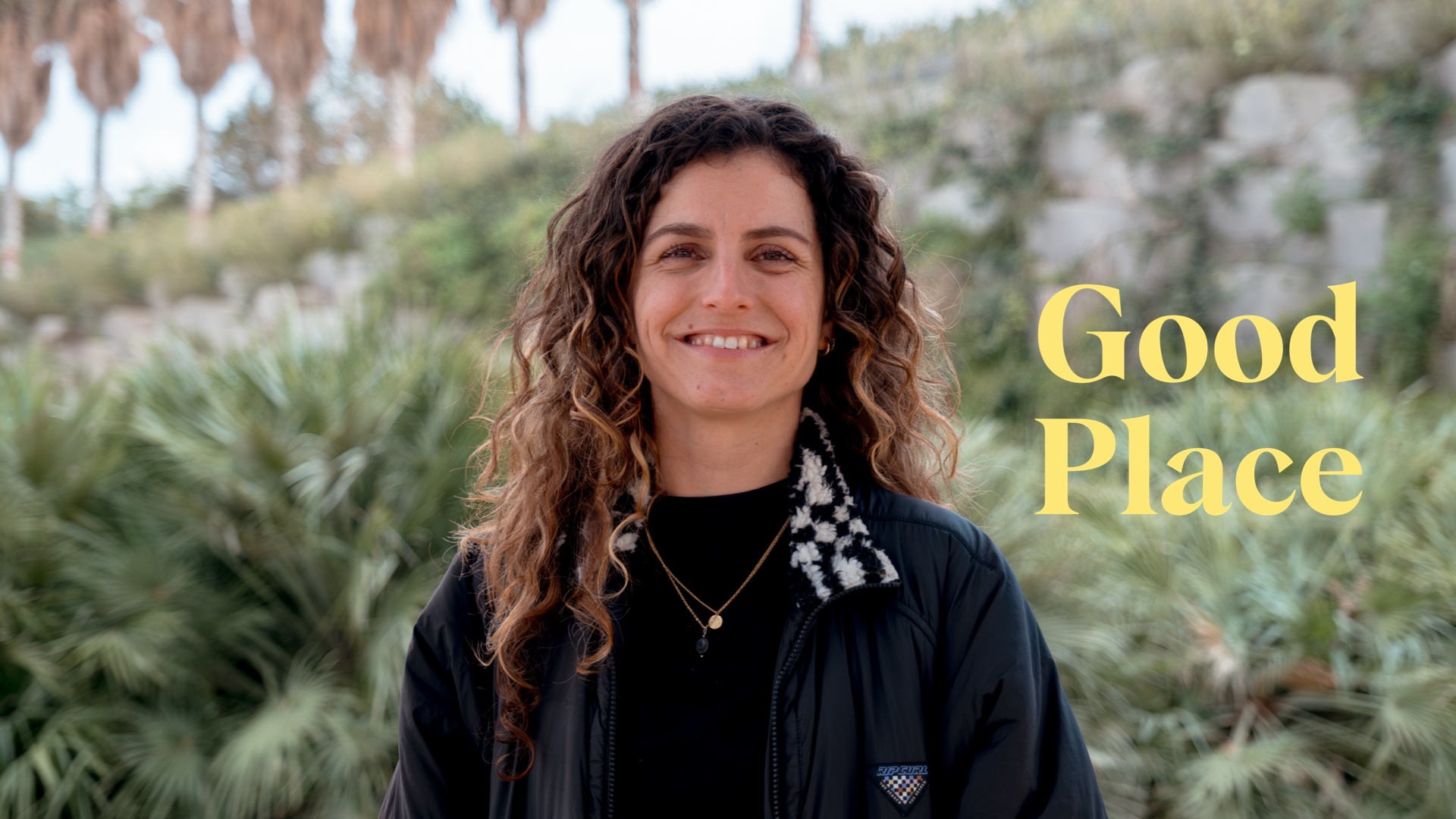
Regina Schröter had already lived in Berlin once before she actually moved there. That sounds like a contradiction, but it isn’t. The first time, during a master’s program in Urban Futures, something didn’t click, and after a year she went back to Amsterdam, a city she’d already called home twice. It took a second attempt, in a different part of the city entirely, for Berlin to finally become hers.
The first move that didn’t work, and why
Ask Regina what went wrong the first time and she doesn’t point to Berlin itself. She points to an address. She took the first flat she could find, in Charlottenburg, convenient for commuting to university but disconnected from anywhere she actually wanted to be. “It wasn’t really where the life was,” she said, “and that made a big difference.” She built some friendships, but never quite found the community she’d hoped for, and after a year she left.
Looking back, she describes it as both a mental and a literal displacement. The city was right. The specific five minutes around her front door were not.
What a Kiez actually means
Berliners have a word for the kind of neighborhood Regina was missing: Kiez, something smaller and more intimate than a district, closer to what urban planners now call a fifteen-minute city, a cafe around the corner, a bakery, a supermarket, a metro stop, all within a short walk. “We’ve been doing the fifteen-minute city already,” she said, “before the concept was even developed.” When she finally moved to Prenzlauer Berg, a Kiez some might call quiet or even a little boring, she found the version of Berlin that actually fit her. Demand for the right Kiez is so intense, she said, that people post on Facebook hoping to find an opening in the neighborhood everyone already wants.
What struck me was how literally physical her sense of belonging turned out to be. It wasn’t about Berlin as an idea. It was about whether she could walk out her door and reach the five or six things she needed without thinking about it.
Cycling as a way of owning a city
Regina didn’t start cycling seriously in Berlin until well into her second stint there, partly out of caution after Charlottenburg, partly out of habit. Once she did, something shifted that she struggled to fully explain. The metro, she said, is efficient but disconnecting, a dirty, stressful tube between two points with nothing in between. On a bike, she started noticing what sat between her stops, the backyards, the construction, the slow accumulation of a mental map built from actually passing through a place rather than skipping under it. “I don’t feel like the city is controlling me,” she said. “I’m in charge of the routing I want to go.”
It’s a small shift with large consequences. The same city can feel like something imposed on you or something you move through on your own terms, and for Regina the difference came down to whether her feet, or her wheels, touched the ground in between.
Friendship as a deliberate practice, not an accident
Regina was candid about how much harder community gets to build once you’re past the stage of life where it happens automatically. University and early internships hand you proximity and energy for free. Adulthood doesn’t. What she’s built in Berlin instead is a set of small, repeated touchpoints: a gym instructor she knows by name, café staff who recognize her, a running club she joined on something close to a whim and now attends weekly, alongside more than a hundred other people doing the same thing. None of these are close friendships in the traditional sense. All of them, she said, contribute to a feeling of ease and security that matters just as much.
Her advice on building any of it was specific: don’t join a running club to make friends. Join it because you want to run, and let the friendships follow. “You shouldn’t do a pottery class just to find friends,” she said. “You should really do it because you want to try something.” The connection, when it comes, is a side effect of doing something you’d have wanted anyway, not a goal pursued directly.
A city big enough to offer both
Much of our conversation circled a single tension: how much stimulation a good life actually needs, and how that need changes with age. Regina loves that Berlin can give her a major cultural event, a techno festival, a new photography museum, whenever she wants one. She also loves that she can ignore all of it entirely and stay within her own Kiez without missing anything essential. She skipped Pride this year, not out of indifference, but because the timing wasn’t right for her, and the city let her opt out without cost.
She contrasted this with somewhere like London, which she finds intimidating to imagine moving to precisely because of how relentlessly it demands choice. Berlin, by comparison, lets her dial the intensity up or down depending on the week, the mood, or the life stage. That flexibility, more than any single feature, is what she now looks for in a place: not excitement itself, but the ability to choose how much of it you want on a given day.
Trusting the process
Regina closed our conversation, recorded in an on-and-off summer drizzle she’d debated cancelling for, with a line that doubled as life advice. Sometimes, she said, you just go with something and trust the process, rain included. You don’t have to overhaul a city, a job or a hobby to make things better. Sometimes the good things arrive simply because you kept doing what you were already doing, and let enough time pass for it to settle into place.
It’s a fitting note from someone who needed two attempts at the same city to get it right, not because Berlin changed, but because she eventually found the few streets inside it that were actually hers.
Watch the full conversation on YouTube, or listen on Spotify. Want to go deeper into building your own sense of belonging, wherever you live? The Good Place to Start workbook series walks you through it - get it here.
And you? Is it the city that’s wrong, or just the five minutes around your front door?