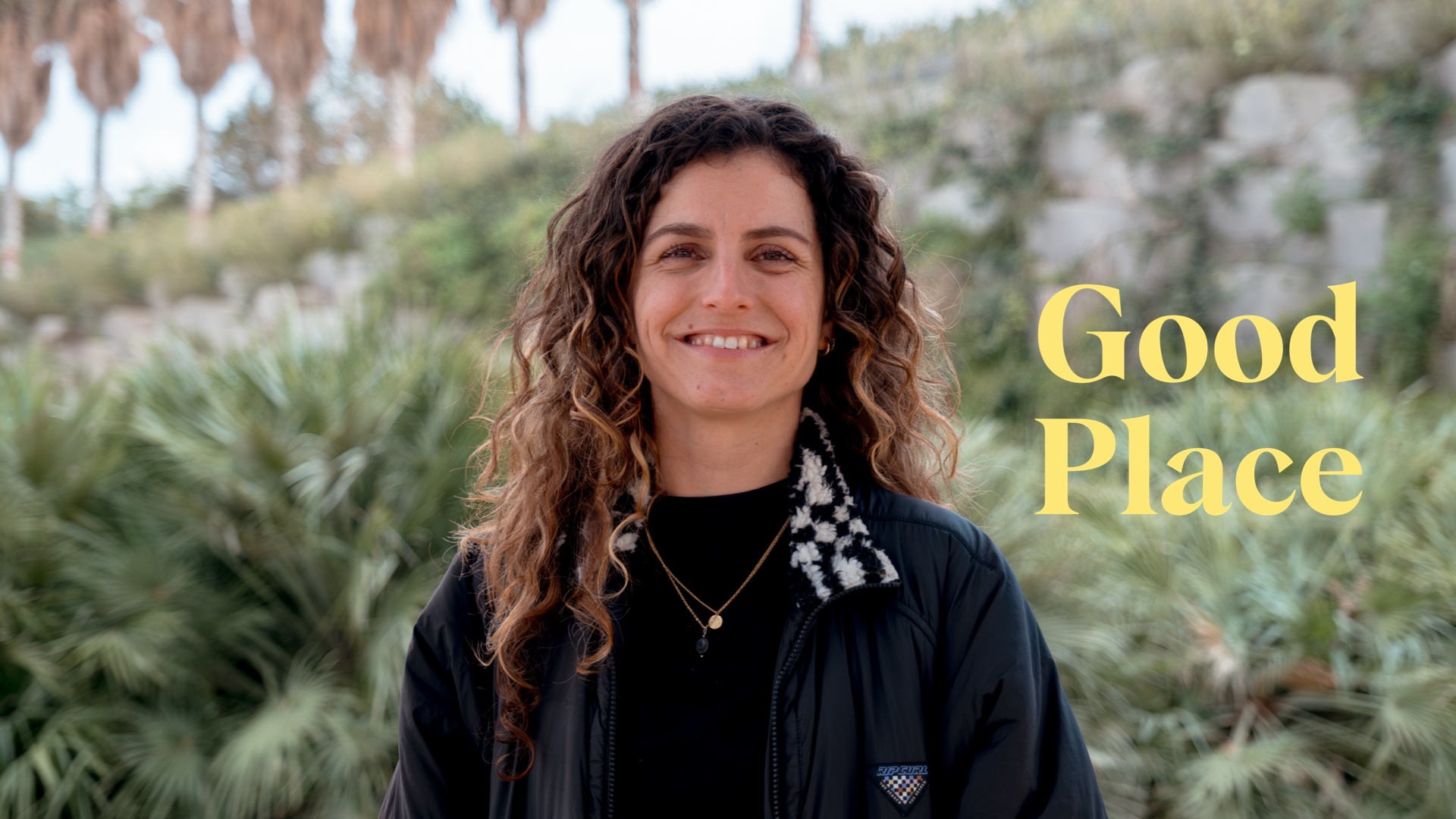


An urbanist with Dutch roots on what it means to feel safe in a new city, and why the instincts built somewhere less safe don’t disappear just because the danger did.
Lucia Schlemmer’s move to Amsterdam wasn’t really a first move. She’d lived there before, during a master’s in spatial, transport and environmental economics, and had already fallen for the city once. Her mother is Dutch, which made the return feel less like emigration and more like something she describes simply as “coming back to my roots.” A year before we spoke, after a few years back in Cape Town, she made it permanent.
A decision made of several reasons at once
Lucia resisted giving me one clean answer for why she moved. It wasn’t nostalgia alone, or career alone, or family alone. Her mother’s side of the family lives in Amsterdam, and being close to them mattered more than she expected it to. Her field, urbanism, has far more opportunity in the Netherlands than in Cape Town. And the city itself, she said bluntly, is “the most incredible city in my opinion,” alive in a way she finds impossible to overstate. Three separate pulls, arriving at the same conclusion.
What safety actually changes, and what it doesn’t
The part of our conversation that stayed with me longest wasn’t about architecture. It was about walking. In Cape Town, Lucia told me, she never went out without a group, or at minimum one other person. Certain areas were fine; most required constant awareness of who else was on the street, how dark it was, what was happening around her. Moving to Amsterdam changed the facts on the ground. It didn’t fully change the habit.
She still finds herself scanning a street as she cycles, still registers who else is around, still carries a kind of spatial awareness most people who grew up somewhere safer never had to develop. She was careful to frame this as neither complaint nor fear, just an honest account of what doesn’t switch off the moment the danger does. As a woman, she added, that vigilance runs a layer deeper than it might for others making the same move. Freedom, in her case, is something she’s still learning to fully trust, even while living inside it.
Starting a social life again, with better luck than most
Lucia was candid that rebuilding a social network has been the hardest part of the move, not because Amsterdam makes it difficult, but because Cape Town had made it invisible. She’d had the same friends since childhood there, the kind of automatic network you stop noticing because you’ve never had to build it. Starting over meant noticing the work for the first time in years.
She got lucky in ways she’s aware not everyone does. A roommate, an expat of eight years, who kept pulling her into his own circle. A couple of Cape Town friends who happened to move to Amsterdam the same year she did, entirely by coincidence. A few Dutch friends with their own history of living in Cape Town, who could show her the city from the inside. Between work, a gym, and an urbanism talk series at a local architecture institute, the pieces have slowly assembled themselves. She speaks Dutch, which she credits as a real advantage in finally making local, not just expat, connections.
A city built for being seen
Ask Lucia what makes Amsterdam work as a place and she starts with access: nearly everything she needs within five minutes of her door. But what she returned to again and again was something harder to plan for, vibrancy, the simple fact of a street that’s actually being used.
She contrasted this directly with Cape Town, where she felt life retreat into private spaces, restaurants and bars, rather than spilling onto the street itself. In Amsterdam, she and her roommate put a small table outside their front door and eat dinner there when the weather allows, alongside neighbors doing the same thing up and down the block. Strangers stop to talk. Curtains, she pointed out, are rare, an entire city choosing visibility as a kind of default. It produces exactly the sort of spontaneous encounter that denser private living tends to eliminate.
What she still misses
For all her enthusiasm, Lucia didn’t pretend the move was a clean upgrade. What she misses most is nature on demand, the ocean and mountains that sat at Cape Town’s doorstep, available for a hike or a swim without planning. She’s found her own small version in Amsterdam, a daily walk to Westerpark when she’s working from home, but it’s a substitute, not a replacement, and she’s candid that it isn’t quite enough.
More surprising was her second regret: the neighborhood she lives in now, affluent and heavily expat, lacks the diversity she had in her previous one, Bos en Lommer, a genuine mix of backgrounds and income levels. She’s not nostalgic about every part of that life, some of it frustrated her at the time, but she misses what it gave her: a sense of being embedded in a real cross-section of society rather than a filtered version of it. It’s something she’s already thinking about for any child she eventually raises there, a wish not to default into a single-culture upbringing just because it happened to be convenient.
In a good place, with work still ahead
Lucia answered without hesitation when I asked if she was in a good place. Living in Amsterdam has been a long-held dream, now realized, close to family she’s watched grow older across years of visits, working in a field that finally matches her interests. What’s missing, she said plainly, is depth of connection, the kind of friendship that only accumulates with time, which she knows she can’t rush no matter how determined she is.
Her closing advice wasn’t about cities at a grand scale. It was about her own street: getting to know the neighbor who’s lived downstairs for almost forty years, the people above her who’ve been there their whole lives. Investing in the specific place you’re actually in, she said, matters more than she expected it to. Connection, in the end, doesn’t require a dating app or a five-year plan. Sometimes it’s just the people who already live two floors away.
Watch the full conversation on YouTube, or listen on Spotify. Want to go deeper into building your own sense of belonging, wherever you live? The Good Place to Start workbook series walks you through it — get it here.
And you? How well do you actually know the people who live on your own street?