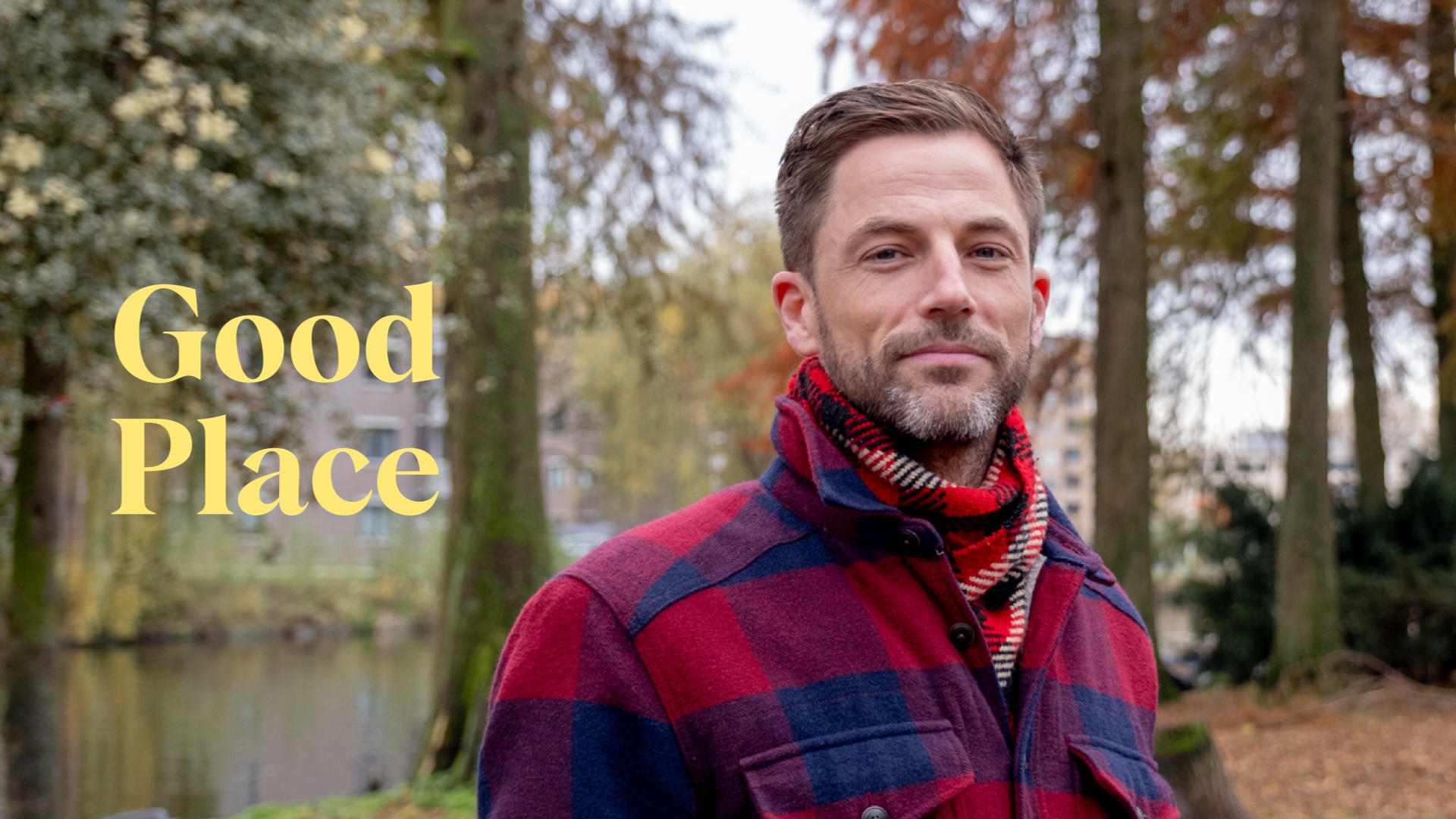
A research-driven strategist on the invisible wall that keeps a long-term expat an outsider, the daily habit that actually explains thirteen years in one city, and why "I'm in a good place" is usually the easy answer, not the honest one.
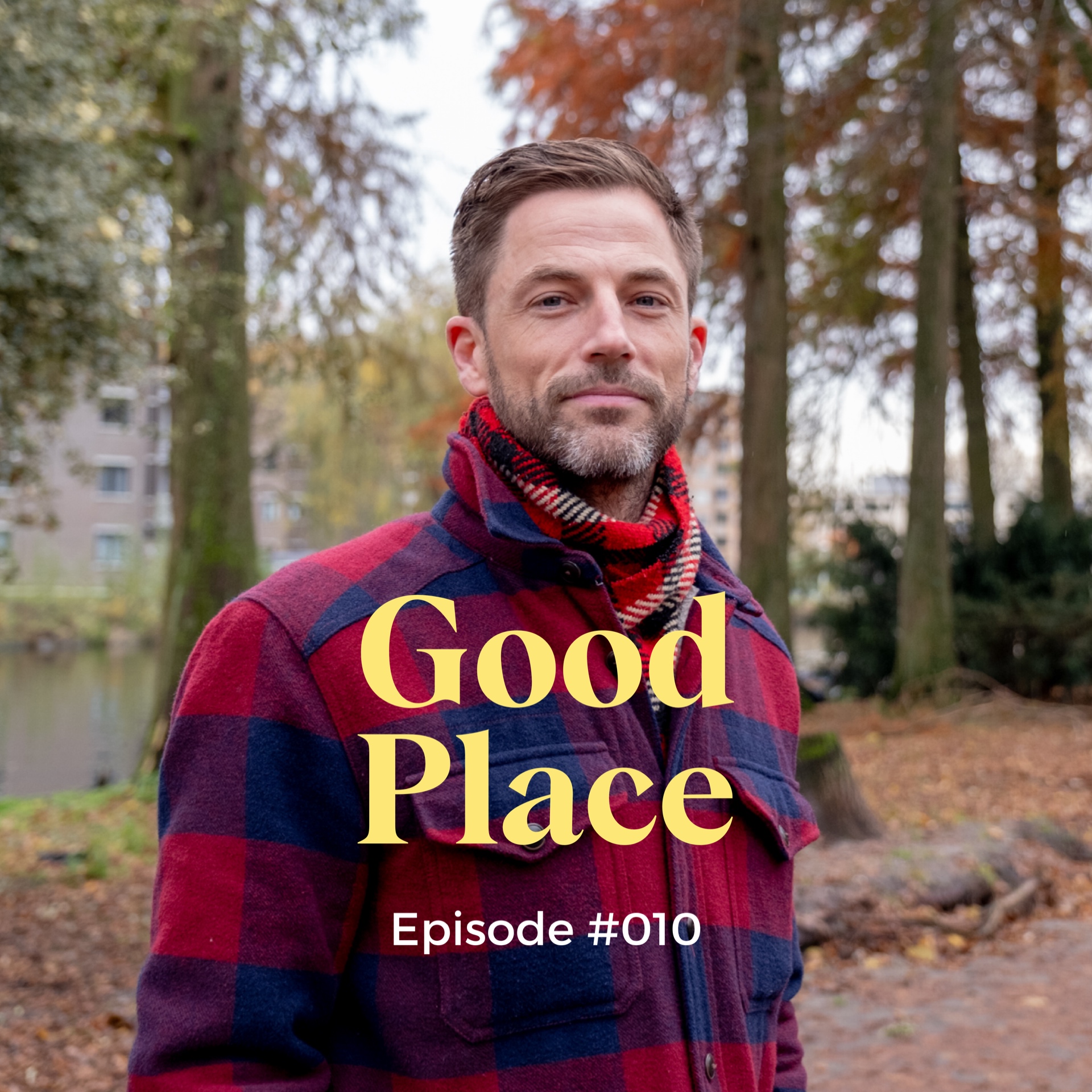
Ben Culpin has lived in Amsterdam for thirteen years. He didn't plan to stay this long. Before that he'd lived in New York, Barcelona, Paris, and Hong Kong, after growing up in St Andrews, a Scottish town of three streets famous for golf, a good university, and the opening shot of a film most people half-remember. By the time he landed in Amsterdam in 2010, straight out of university, he already had five cities' worth of comparison points. He's still working out what that comparison adds up to.
The cliché reasons, and the one underneath them
Ask Ben why he stayed and the script arrives fast: Schiphol fifteen minutes away, a dynamic and welcoming culture, a city that simply runs well. He got through all of it before pausing to admit it wasn't really the answer. The real one was smaller and more physical, a daily forty-minute bike ride that he'd stopped noticing until he left it behind. Every time he goes back to the UK, he feels his body stiffen within days, the wind-in-your-face feeling gone, a low-grade grouchiness creeping in that he's come to recognize as its absence.
It's a modest thing to build thirteen years around. But Ben was clear that it's the one piece of the Amsterdam story that's held steady while everything else shifted.
A village, not a monstrosity
Having actually lived in New York, Hong Kong and Paris gives Ben's comparison some weight. He called those cities, fondly but without romance, monstrosities, places he loves that also take a visible toll on the body and mind. Amsterdam, by contrast, he described as a dynamic international village, large enough to offer real ambition and global work, small enough to still feel human-scale. If he ever left, he said, the only real competitor would be Barcelona, mainly for the ocean and the mountains, the kind of humbling natural scale he grew up with in Scotland and still quietly misses.
The wall you can't quite see
The part of our conversation Ben returned to most was integration, and the particular difficulty of a city where everyone already speaks your language. In Spain, learning Spanish was close to mandatory; not enough people spoke English to get by otherwise. In Amsterdam, there's no such pressure. English works everywhere, which sounds like a convenience and functions, he said, like an invisible wall. He hasn't chosen to be part of an expat community. By default, he is one anyway.
He described the particular sting of a small, recurring moment: someone stops him on the street to ask a question in Dutch, and he has to choose, fumble through an answer in a language he's studied on and off for a decade, or admit he doesn't follow and switch to English. Either way, he said, there's a flicker of disappointment on both sides, his for not being fluent after this long, theirs for assuming he would be a stranger. He's tried learning Dutch in fits and starts, volunteering, deliberately balancing local and international guests on his own podcast, anything that might close the gap by a few more degrees. He's honest that none of it has fully worked yet.
Dutch friends come with a password
Ben's closest Dutch friendships, he noted, almost always trace back to one specific entry point: a Dutch person married or partnered to an international. It's a kind of special pass into a social world that otherwise runs on its own logic, including, he said with some amusement, a cultural relationship to scheduling that still catches him off guard. Dutch plans get made weeks ahead, sometimes literally on a shared calendar stuck to a kitchen wall. His international friendships work the opposite way, a same-day text, a spontaneous "what are you doing tonight." He's learned to hold both registers at once without fully belonging to either.
Over thirteen years, his social strategy shifted from casting the widest possible net, saying yes to nearly every event, toward something narrower and more deliberate: fewer people, chosen more carefully, around shared values rather than shared proximity. He misses some of the people that approach left behind. He doesn't regret the shift.
Finding family where you didn't expect it
Ben doesn't have children or a partner, but family, he said, has been on his mind more than usual lately. Two brothers, a sister, five nieces and nephews between them, all scattered, none of them close enough for the casual Sunday visit some people build a whole life around. What's filled part of that gap, unexpectedly, is a friend's child he's godfather to in Amsterdam, a small slice of chosen family that he described as one of the best surprises of the past few years, proof that the structure he was missing could show up in an unplanned shape.
He drew a clear distinction between people who move for ambition and people who stay near family wherever that family happens to be, even in a city with no museums, no particular charm, nothing to recommend it except grandparents nearby on a Sunday. Neither choice is wrong, he said. Both come with a cost the other doesn't pay.
The answer nobody wants to give
When I asked if Ben was in a good place, he didn't reach for the easy yes. He named it directly: a lot of people, asked this question, default to a confident "yes, and here's why," because admitting otherwise in public feels risky. He pushed past that instinct deliberately. He is in a good place today, he said, and in a good place generally, but he hasn't always been, not for a couple of years running, and he thinks presenting constant wellbeing as the honest baseline does a disservice to anyone listening who isn't currently there. Being in a good place, he said, is transitory. Treating it as a fixed state you either have or don't makes it harder for everyone else to say the truth out loud.
He was specific about what still shakes his footing: the financial uncertainty of self-employment, days without confidence, the ongoing effort of defining success on his own terms rather than borrowing someone else's. He doesn't experience that as failure. He experiences it as the actual texture of an honest life, which he thinks gets edited out of most answers to this exact question.
A definition still in motion
Ben used to hold onto a line he's no longer sure he believes: that changing your scenery doesn't change your situation. He's since noticed the opposite can also be true, that a place can simply fit a chapter of life better than the last one did, without that meaning anything was being run from. His current definition of a good place has nothing to do with amenities. It's a balance: feeling he contributes something that matters, having room to pursue his own ambitions, and still being present enough to be, in his words, the best possible son, partner and friend he can be. When those things fall out of balance, he said, that's when the good place disappears, regardless of which city he's standing in.
His closing answer, when I turned the question back on myself, was the most striking line of the conversation: a good place is being in harmony with the full range of what you're capable of feeling, not just the comfortable parts of it. Not resolution. Just honest range, acknowledged rather than edited.
Watch the full conversation on YouTube, or listen on Spotify. Want to go deeper into building your own sense of belonging, wherever you live? The Good Place to Start workbook series walks you through it — get it here.
And you? When was the last time you admitted, out loud, that you weren't in a good place?