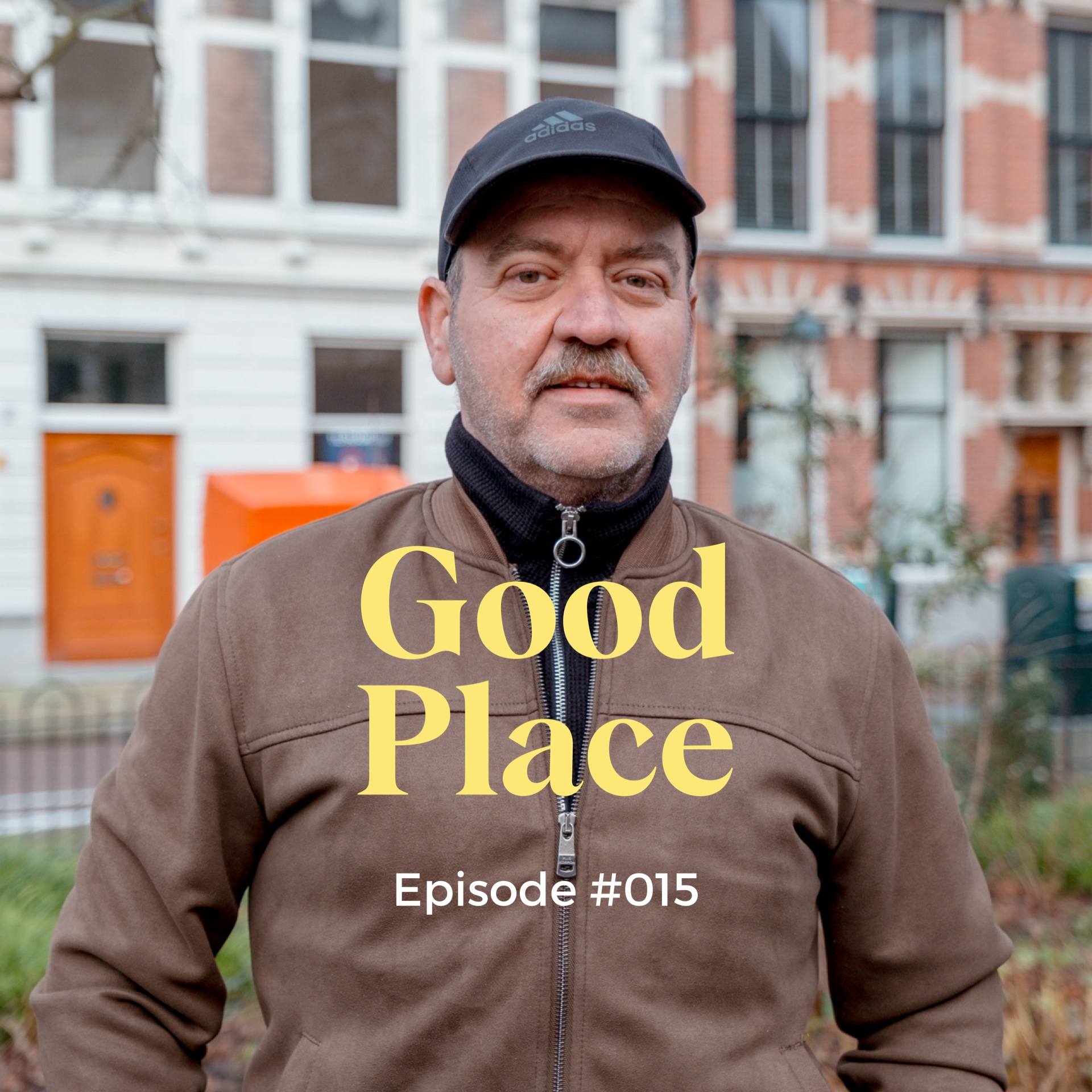
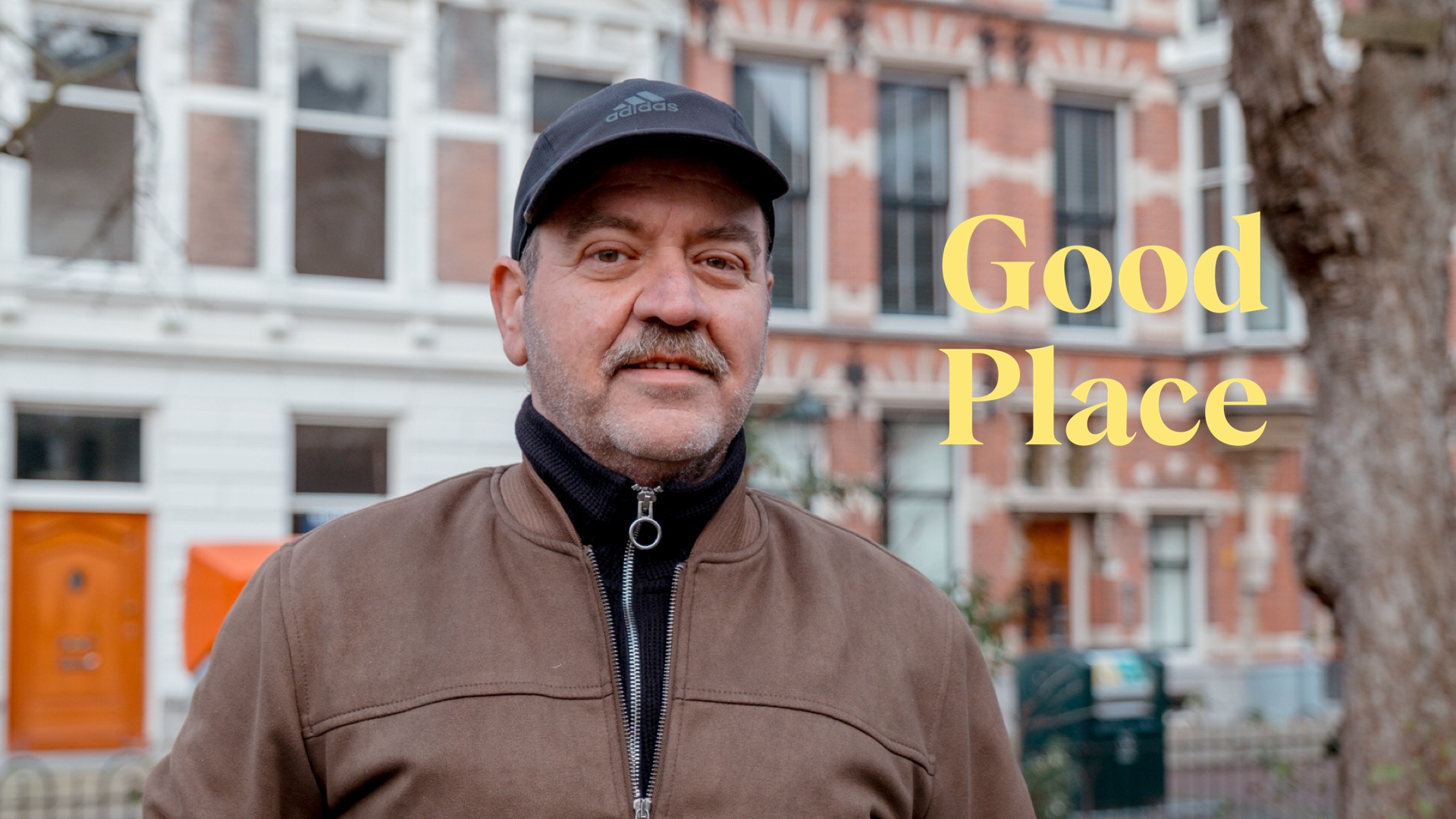
An Iraqi-Dutch father on a family split by war, decades without his mother, a Dutch passport earned through her, and what safety looks like once you've lived without it.
Marwan Berzinji and I met because of a car wash. He was cleaning a car on my street from a small cart, and the company's name, a sustainable car-washing service, caught my attention before he did. We said hello. My dog Toby made a friend. He gave me his card, which sat on my desk for weeks until I asked his employer for his number. Months of rain-cancelled recordings later, we finally sat down on a bench in The Hague on the 30th of December, the last interview of the year.
A family that war pulled in two
Marwan's story begins with a love story. His father, an Iraqi student, came to the Netherlands in the 1960s to study soil science and met Marwan's Dutch mother. They married in 1963 and moved to Iraq, where life as a Western woman in a very different culture was not easy for her, as she later told him. Marwan was born in the Netherlands in 1972 while his father finished a PhD, and the family returned to Iraq.
Every summer through the 1970s, his mother took the children to visit her parents in Holland. In July 1980, eight-year-old Marwan decided not to go. His mother and older sister travelled without him. On the 4th of September, the war between Iraq and Iran began, and they could not return. His parents divorced. His sister stayed with their mother in the Netherlands, and Marwan stayed with his father in Iraq. For years there was no contact at all, not a letter or a phone call, and neither side knew whether the other was alive.
Eighteen years, and a photograph
In the late 1990s, as his father's health began to fail, they decided to find his mother. A family friend travelled to Germany and, through a chain of connections, located her in the Netherlands. She returned with news, and with pictures. Marwan's mother learned that the child she hadn't seen since 1980 was alive, had graduated, and was well. They finally met in person in 2015, in Ankara, thirty-five years after the last summer. His father died in 1998.
A passport through his mother
Dutch law gave Marwan something he hadn't known to ask for: citizenship through a Dutch mother. The paperwork was an obstacle course. His birth certificate carried a different name than the one he had used since his father changed it in 1986, and he had to prove, with court documents and a copy of the newspaper notice, that they were the same person. With his sister and brother-in-law's help, and the kindness, he stressed, of the staff at the Dutch embassy in Ankara, he was granted citizenship in 2021, and then Dutch passports for his three sons.
He had good reasons to leave. He worked as an interpreter for the Coalition forces between 2003 and 2006, in an area known as the Sunni Triangle, then served as head of security at a technical college in Kirkuk, but he was threatened for his work with the forces. He and his wife agreed: there was no future for their children in Iraq. They arrived at Schiphol on the 4th of November 2022. His mother, sister, brother-in-law and cousin were waiting. It was the first time most of them had met his wife and sons.
The windows
When I asked Marwan to describe a good place, he started with a small, visual detail. Walking out of their new home in The Hague, he and his wife noticed that the windows had no bars. In Iraq, he explained, windows have iron frames and houses often have security cameras. Here, nothing. They read it as a symbol: this is a community that feels safe. He didn't say it with relief so much as with care. This is something we have to look after, he said.
What he still needs
Marwan is clear-eyed about what isn't working. He is the only earner in a family of five and found work almost immediately, but it is not the work he has skills for. He speaks Arabic, Kurdish, Turkish and English fluently and spent years in security, understanding the people he worked with. He would love to use that experience, perhaps in organisations that support refugees. But job interviews return to the same barrier: Dutch.
He wants to learn it, but he cycles at least six kilometres a day for work, and by the time he's home there's little energy left for study. As a Dutch citizen, he said, he isn't eligible for the integration support a refugee would receive. He doesn't feel entitled to it. He just notices the gap: a newly arrived citizen, a family of five, and a language barrier nobody has built a bridge across. His boss and his neighbour Karen, he said, have gone out of their way to help, and his brother-in-law taught him how to navigate a country where everything, from banking to email, is digital.
His sons
The children are thriving. They attend a school that teaches Dutch to newcomers, and now speak it better than their father. The older ones work weekend shifts at a restaurant. One of them told him that the most grateful thing he had ever done for them was bring them to Holland. Marwan said it was the best thing anyone had ever said to him.
Age is just a number
His closing thought was for the new year, recorded on its eve. In his first year in the Netherlands, starting over at fifty with a new language, a new job and a new country, the thing he had learned was that age is just a number. You can do everything, he said. Don't think about your age.
Watch the full conversation on YouTube, or listen on Spotify. Want to go deeper into building your own sense of belonging, wherever you live? The Good Place to Start workbook series walks you through it — get it here.
And you? What's something about your own neighbourhood that you've stopped noticing, but a newcomer would see straight away?