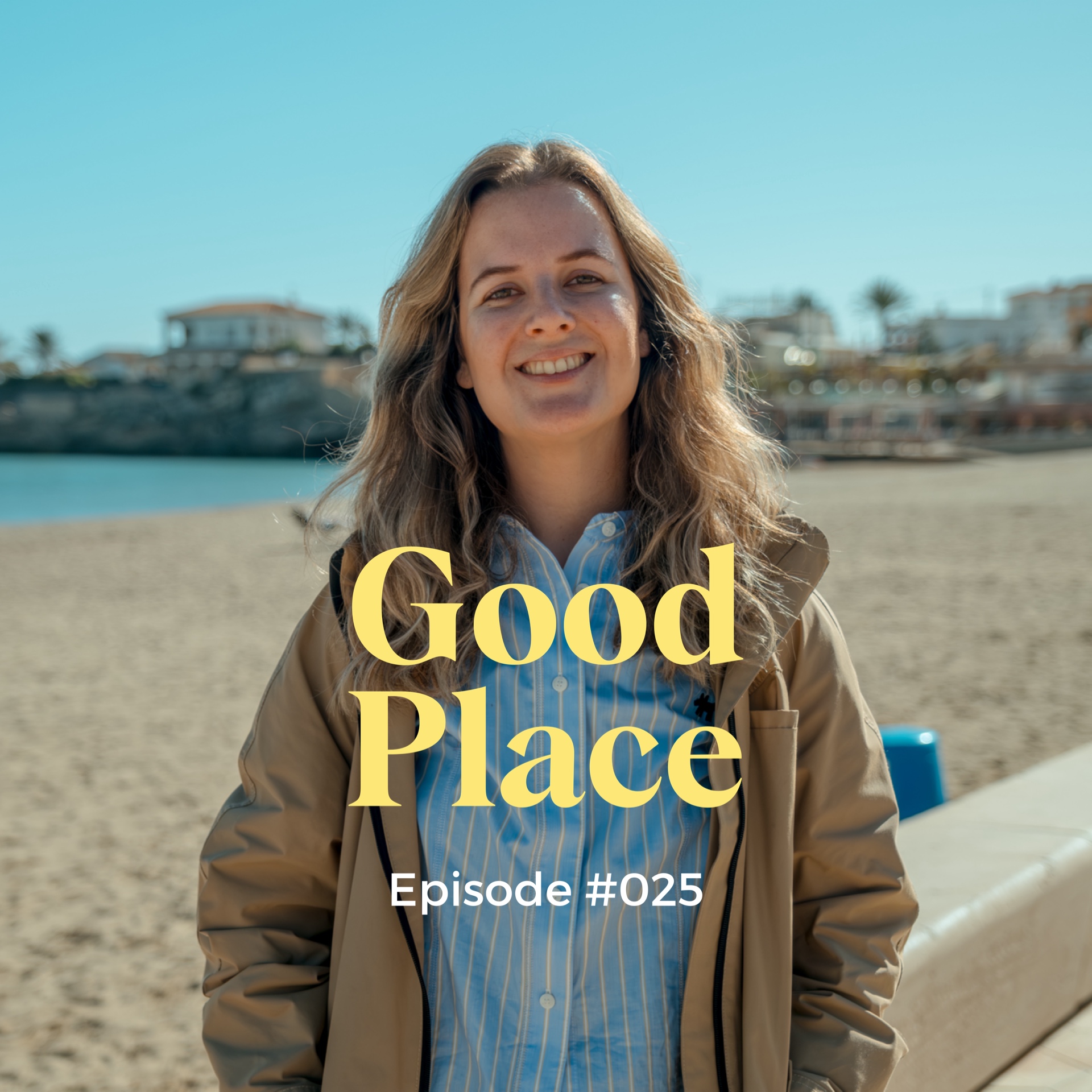
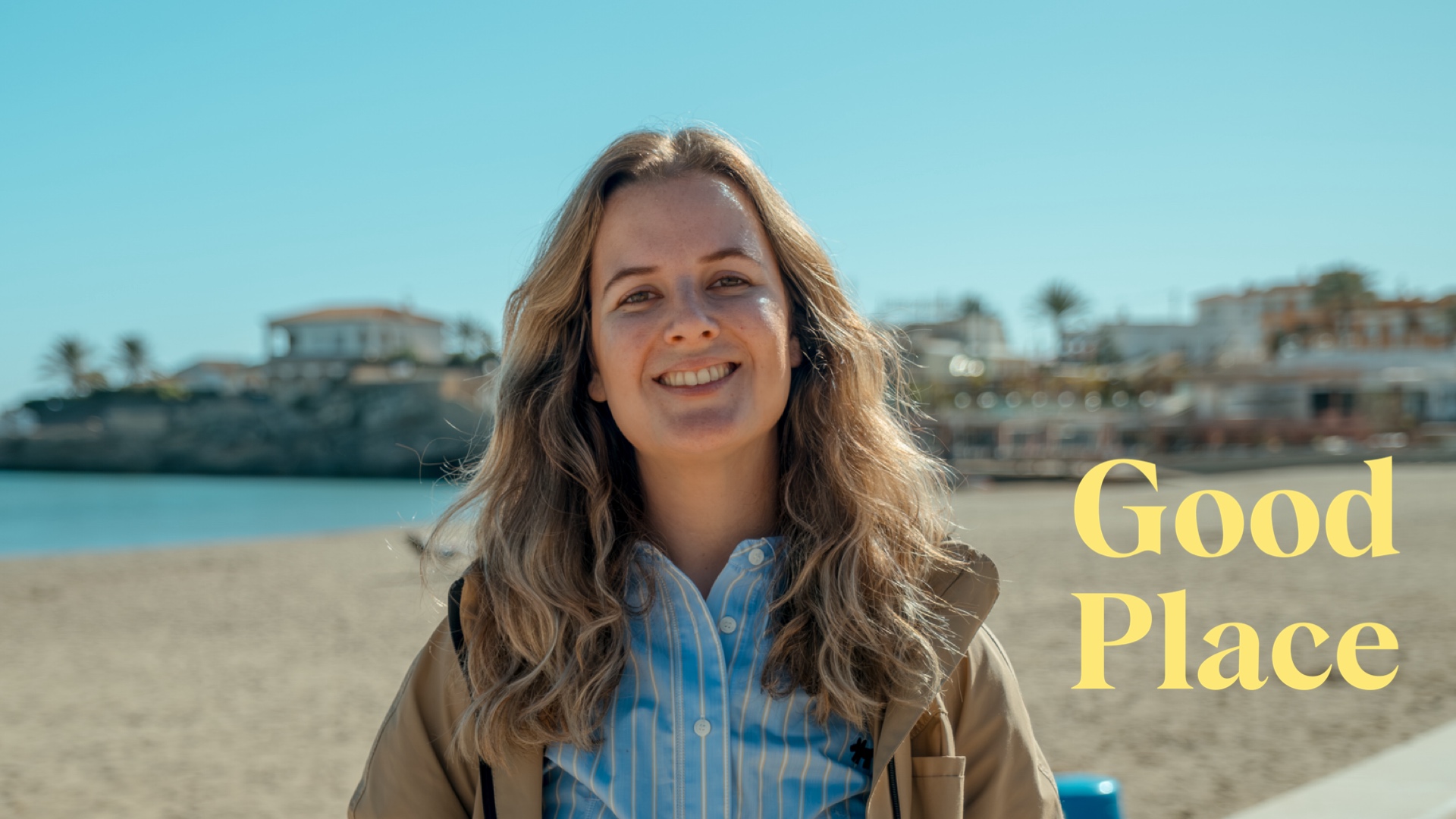
A Spanish diplomat-in-training on growing up in a neighbourhood, why home is the thing that lets you leave, and what a flood of newcomers is doing to the places she loves.
Maria Ibañez and I met on a boardwalk in Jávea, with the Mediterranean behind us and coffees in hand. We'd found each other through Instagram, because I was there on holiday with my family and she was there too. She swims in that sea every day, even in the cold. She's currently studying for the Spanish civil service exam to become a diplomat, which has kept her in Spain for four years, and she told me she was desperate to get out of her books and talk to someone.
A neighbourhood, not a city
Maria was born in València and grew up there and in Jávea, where her family kept a place for weekends and holidays. What she remembers about her childhood is a particular feature of Spanish life: you don't grow up in a city, you grow up in a neighbourhood. You go to school there, your schoolmates are your neighbours, and the waiter in your local café knows your order. She grew up in the centre of València, near a park, which isn't always easy to find in Spain, and she's aware that this kind of familiarity is being lost as areas gentrify. In Spain, she said, "we're pretty fond of it, and we try to keep it".
She also noticed a difference when she lived abroad. In Germany and the Netherlands, friends meet in the park, bring a few beers and organise birthday parties there. In Spain, you hang out in the bar. During the pandemic, when bars were closed, her group of friends discovered the park and liked it, and then went back to the bar.
The best thing about Spain is coming back to it
Maria has lived in the Netherlands for a couple of years, in Germany for a year, and in Thailand for six months, where she met her American boyfriend in Bangkok. Each place, she said, felt like home, at least for a while. But she's frank about Spain: objectively, if there were such a thing, it would be a good place. It has the weather, which you don't appreciate until you've lived somewhere cold, and an enjoy-life philosophy that other places seem to have lost to work culture or cities that aren't built for people. Her favourite thing about it, though, is coming back. She wants a job that lets her do that: leave, compare, return, and think, "I had forgotten how wonderful this is."
If she passes the exam, she'll be trained in Madrid and then posted abroad, returning to Spain between postings. Her boyfriend, who is from Los Angeles and has lived with her in València for three years, definitely doesn't want to live in the United States. He fell in love with European city life while living in Berlin, and now works for a Spanish company on a Spanish salary, which he isn't thrilled about, but he loves being in Spain.
Two kinds of good place
When I asked Maria to define a good place, she gave me two. The first is the place you belong to, where your family is and your childhood memories are. For her, that's València and Jávea. The second is the place you choose, and for that she's open-minded. She's a city person: she loves cities for the people in them, of all backgrounds and ages, choosing to live together. A good place is lively and invites you in, where you feel safe, can learn about yourself and make connections. Climate is something she can give up if the rest is right.
She loved Bangkok, which most people couldn't tolerate, and she's ready for more.
The freedom of a home to return to
What I took from the conversation was a point she made twice. Having a place to come back to makes you free to try other things. "It doesn't matter if I at some point realise I actually don't love it," she said. "You can always come back." She doesn't see that as a luxury, but she knows that not everyone has it. She thought of refugees, for whom returning home is no longer an option, and said that if you want to understand their situation, you have to start with that basic thing. It leaves you, she said, a bit like an orphan in the world. She added that someone with an unhappy childhood might feel something similar.
It's part of why the job appeals to her. A diplomat promotes their country, but also supports compatriots living abroad, helping make their experience easier. She also likes that it lets you live somewhere for two or three years and get to know it deeply, which isn't the same as travelling.
A coast that's changing
Maria has watched Jávea change. When she was little, it was already international, with tourists and retired northern Europeans seeking the sun. Now, she's seen more young families, many of them Dutch, and four co-working spaces in the old town, something she discovered two years ago when she and her boyfriend rented a flat there to work remotely.
València has changed even faster. It used to be less international than Madrid or Barcelona, but in about five years, she says, rents have nearly doubled, and it's attracting remote workers who find it a little less intense than the other big cities. She thinks Spaniards are proud when people choose to live there, but they also see the cost. In 2023, she said, Spain became the world's top tourist destination, overtaking France, and the country has handled that well in some ways and badly in others. Wages haven't risen to match. Most of her friends in their twenties and thirties are struggling with housing, and she's lucky that her boyfriend used to work for an American company. Free movement within the EU is wonderful, she said, but salaries and conditions haven't converged, which creates tension. We need to find a way to make it work for everybody.
Get out in the street
Her closing message was a burst of positivity: life is short and the world is big. It doesn't have to mean going to another country. Get out in the street, meet the people in your city, talk to strangers, get together with friends, and squeeze every drop out of it. She thinks there should be more people chatting on public benches, in front of a camera or not.
Watch the full conversation on YouTube, or listen on Spotify. Want to go deeper into building your own sense of belonging, wherever you live? The guided Find Your Good Place series walks you through it: get it here.
And you? Do you have a place you can always come back to, and what would you try if you knew you could?