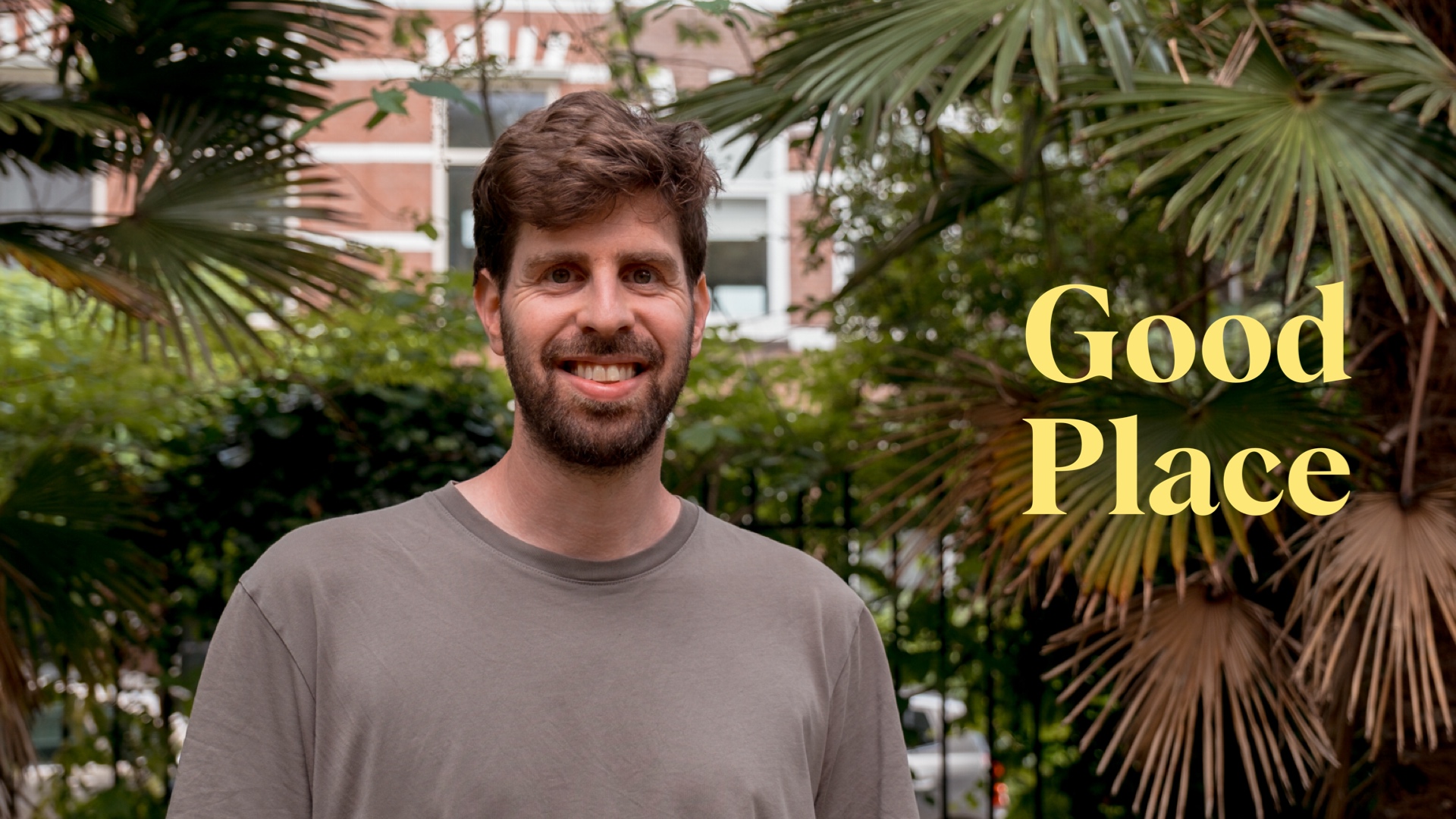
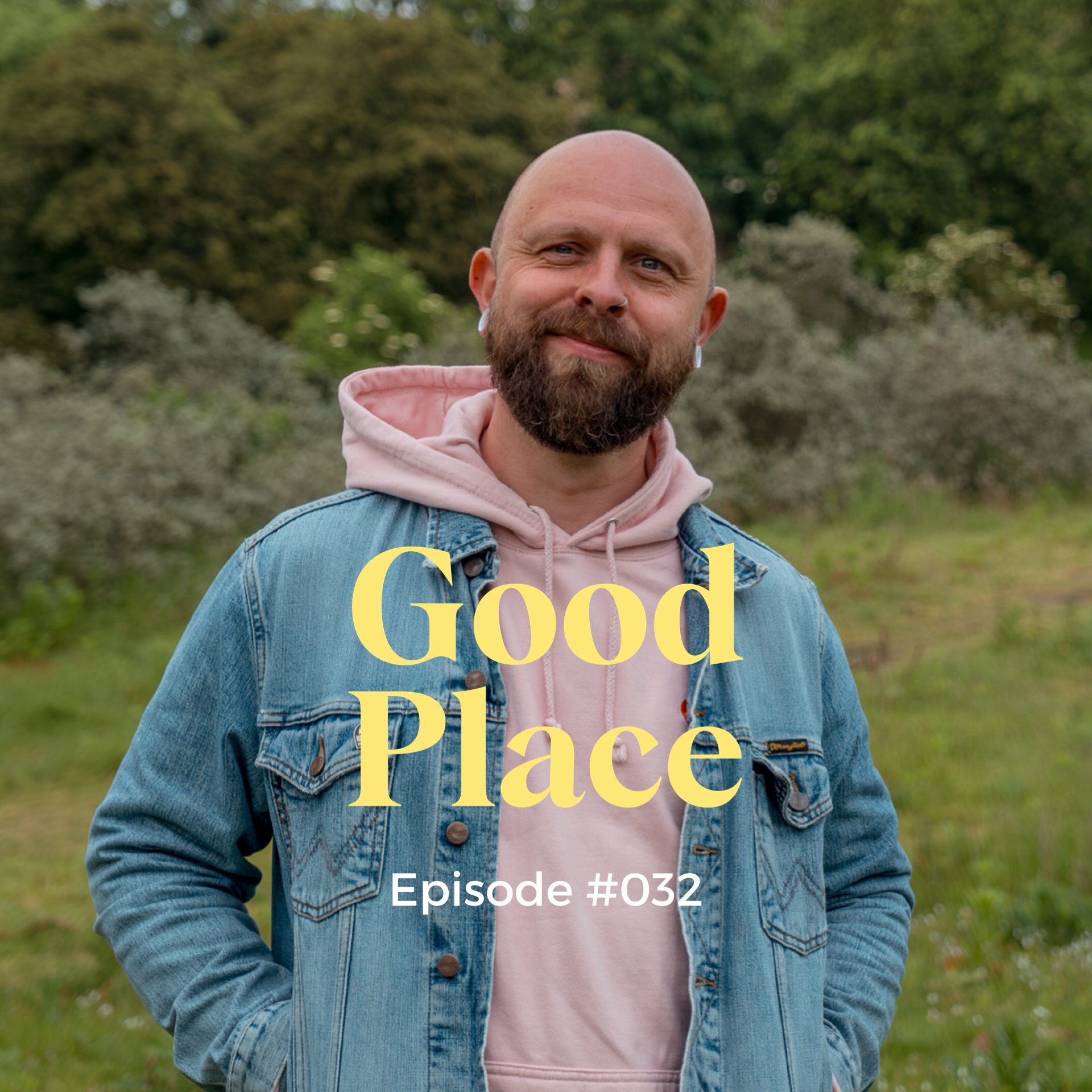
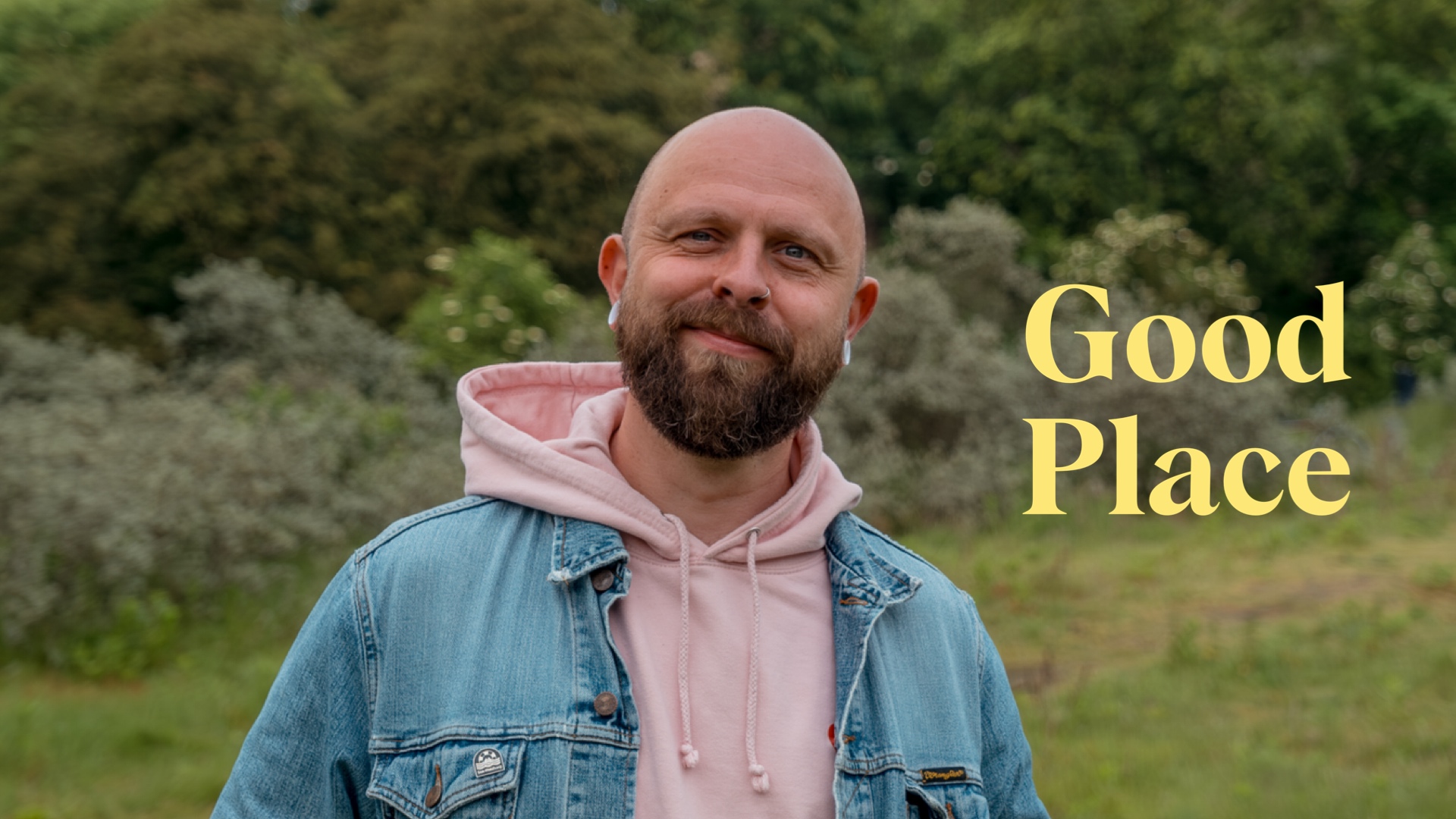
A designer and photographer who has lived in The Hague for half his life on "everyday magic", the free photo-walk group he started to meet people, and why photography is a way to look for the good in the place you live.
This was take two. The first time we tried to record, it started to flood, so we went again on a bright, dry morning in the Westduinpark, where Highland cattle wandered in and out of the background. Bart-Jan Verhoef and I had met once, on a photo walk, and it felt as if we'd known each other for years. This is my thirty-second conversation on a public bench, and, he pointed out, he'd been holding the microphone for most of it.
Half a life in one city
Bart-Jan is forty-two, a designer by trade, and lives in The Hague's Fruitbuurt with his wife and two children. He realised the week before we met that this year he's lived in The Hague for half his life: twenty-one years. He grew up in Apeldoorn, in the east of the Netherlands, among forests, left at twenty for a degree elsewhere that he didn't finish, and then moved to The Hague to study at a college here. His wife grew up just around the corner from where they live now. They've talked about moving several times, but when they got semi-serious about it, they couldn't find anywhere they'd prefer.
What keeps them is balance. The beach and the dunes and nature reserves, but also a city with theatres, good restaurants and a bakery at the end of the street. For a self-described forest person, he admits that was a surprise: for years, he assumed he'd move east again.
A walk to meet people
In 2017 Bart-Jan started a Meetup group for photographers, with a first walk in a park with a few people. He had always gone out by himself, didn't know other photographers, and met many online but wanted to bring that into real life. It was, he said, scary. He's an introvert, and he worried about whether people would enjoy it, or wonder why they'd been brought on a silent walk. They did enjoy it, and it grew. Now the group is very international: only about a quarter of its members are local Dutch, and the walks are all in English. People who've moved somewhere new, he thinks, are open and looking for people to meet, and they come curious: some are professionals, many are beginners, and almost all want to meet people as much as improve.
He's pleased that it no longer feels like he's hosting it. People propose walks. There's a WhatsApp group where they post last-minute plans, like the night they all stood around until half past two waiting for the northern lights. He hopes it will become a shared collective thing.
Everyday magic
What he photographs, he told me, is "everyday magic": the magic of ordinary things. A park that everyone walks through on the way to the beach looks completely different at sunrise or sunset, with a pink sky, when it's quiet. He loves the hour before sunrise, when it's dark and the world slowly wakes up, "with the promise of a day ahead". He isn't a natural early riser: his children woke at five for their first few years, and the habit stuck. Even now, his first thought when the alarm goes off is that he won't get up. But you never regret it, and meeting other people helps. "A kind of Dutch 'stok achter de deur'," I said: a stick behind the door.
The fear of asking
For about a year, Bart-Jan has been photographing more people. The group did a street-portrait workshop, where each participant had to approach three strangers in the city centre in forty-five minutes. He found it frightening and very useful. On the day, everyone said yes, and since then only one person has said no. He now carries a note on his backpack: "Do you want a free portrait? Just ask." Tourists approach him. An Egyptian family on holiday asked him to photograph them, and he emailed them the pictures. People are surprised it's free.
I told him that I'd recently asked strangers for interviews and got three to five refusals in a row. He's learned that, in general, you find you have more in common with people than you expected.
Looking for the good
When I asked what a good place is, he said it's where you feel at home and connected, both to the place and to the people. And photography, he told me, is his way of making that happen. It has given him a deep appreciation for where he lives. It forces him to look and to take in his surroundings, to ask: what do I like about this? It's a glass-half-full approach, I said, a way of focusing on what a place has rather than what it lacks. And the same applies to the people who join his group from abroad: it helps them connect with the place they now call home.
He also finds it good for his mental health: a meditation, a way to get out of his head. Some days he returns with nothing and formats the card, and it still counts.
An open invitation
The photo-walk group is free and inclusive. All it costs, he said, is time, and perhaps some sleep, which, as he pointed out, is not a bad price for a sunrise.
Watch the full conversation on YouTube, or listen on Spotify. Want to go deeper into building your own sense of belonging, wherever you live? The guided Find Your Good Place series walks you through it: get it here.
And you? What would you notice about your own neighbourhood if you went out at sunrise?