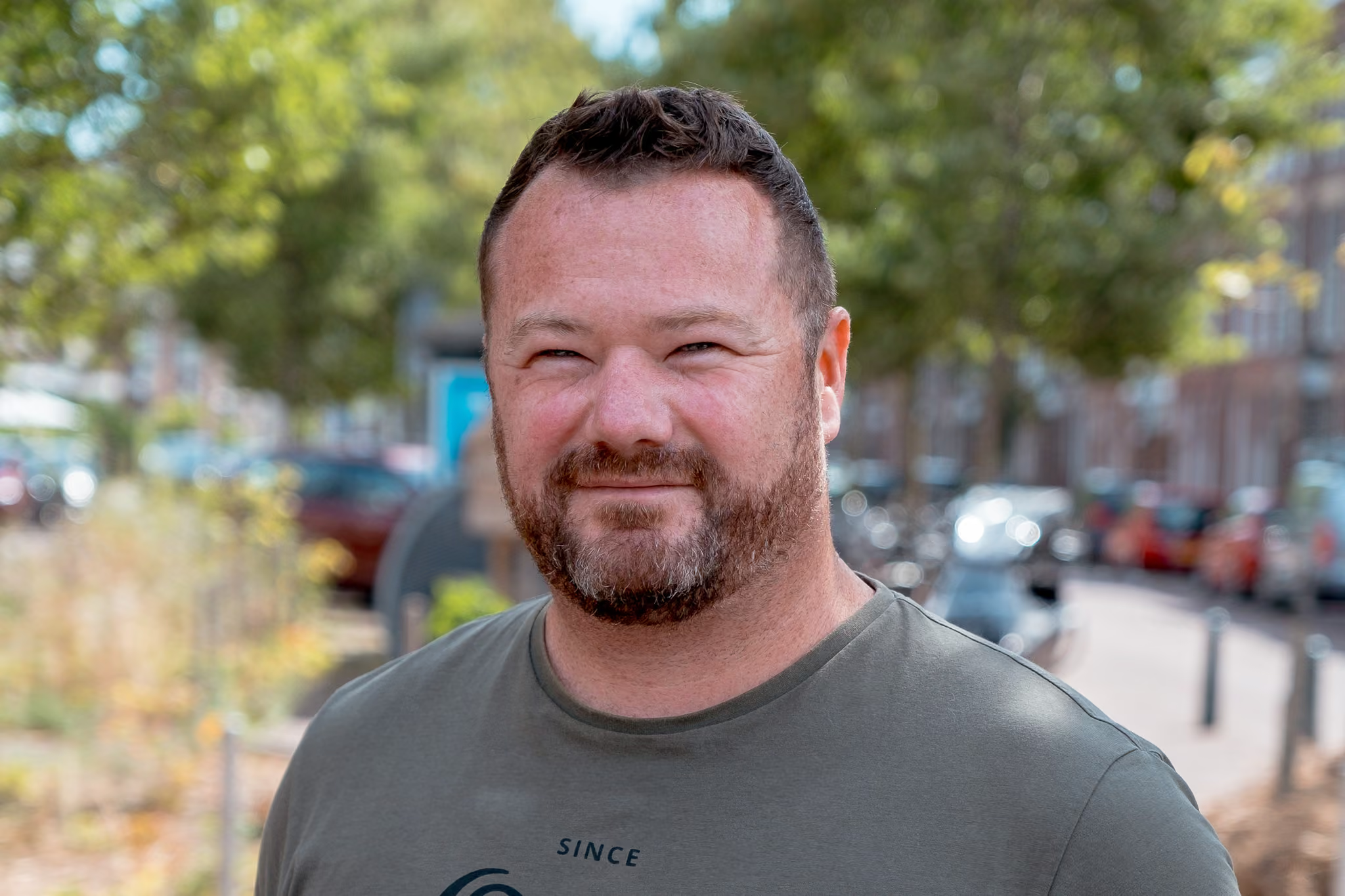
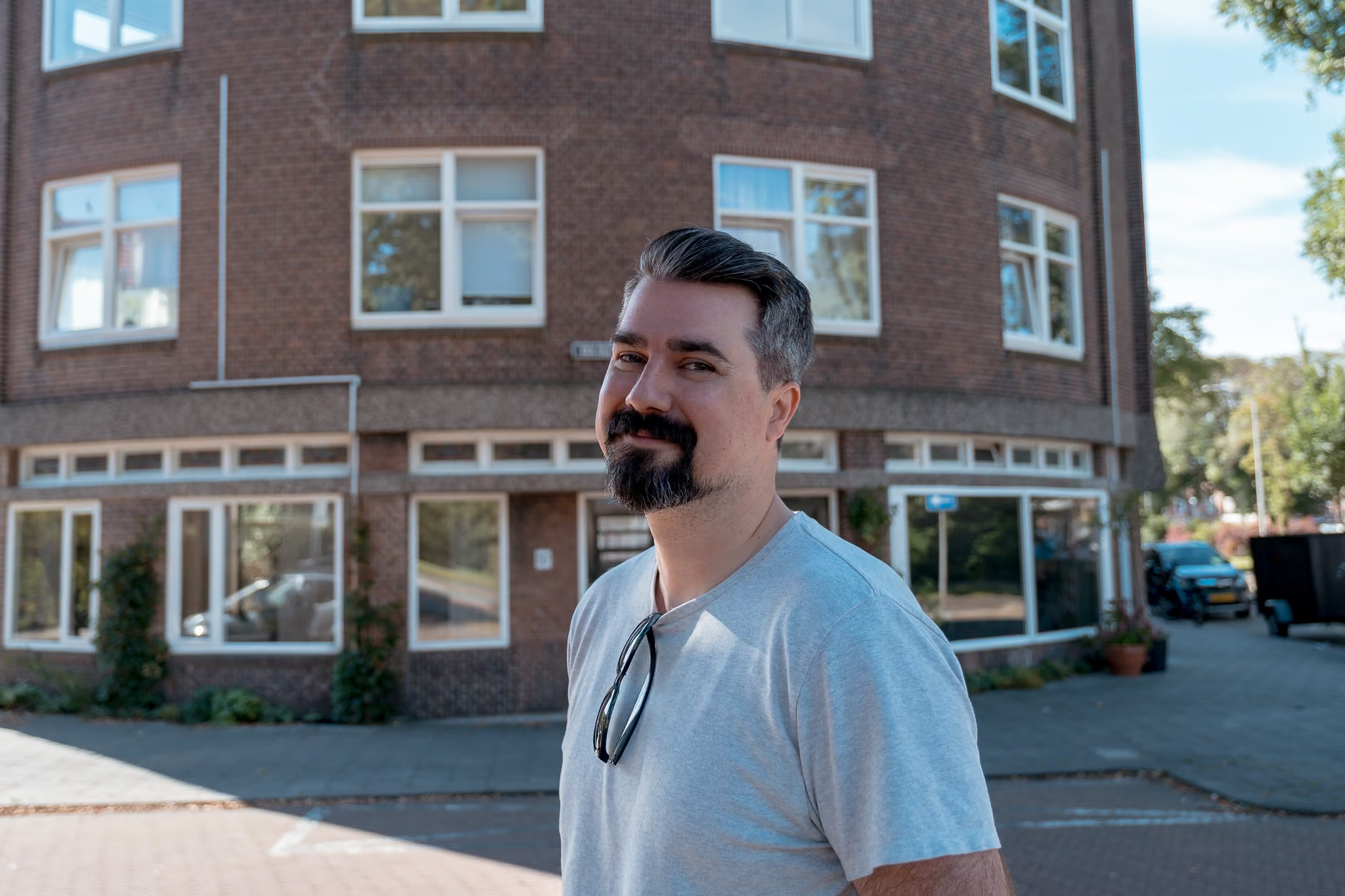
Craig Thomson didn’t plan to live in the Netherlands. His wife, who works for the Canadian federal police, got a posting with Europol. The question “where’s The Hague?” came before almost everything else. Three months later, he was living there. Four years on, he’s still working out what comes next, and he’s made peace with not knowing.
From downtown noise to a quieter life
Craig lived in downtown Toronto before the move, a city of seven million people, bars open late, dinner available at 2am if you wanted it. He didn’t dislike that life. But he noticed something had shifted even before he left. “You get a little older, your choices change.” He wasn’t seeking the suburbs exactly, just something a little more tame than downtown traffic and noise.
The Hague gave him that without him fully choosing it. Fewer people, less traffic, far less crime and homelessness than what he’d grown used to. The adjustment wasn’t instant. He remembers how quiet a Saturday night at 11:30pm felt the first time, compared to the honking and late bars he knew. “You don’t even make it to 2am anymore,” he said, almost surprised at himself. Now he’s the one suggesting an early night and a nightcap instead. “Who needs it,” he said of the 24/7 culture he used to take for granted.
What makes the shift interesting isn’t that Craig traded excitement for calm. It’s that calm turned out to suit him better than he expected, and he only found that out by living somewhere that offered it.
Two homes, and the trouble with explaining both
Ask Craig where home is and the answer gets complicated fast. Canada will always be home, he says, born and raised there for over thirty years. But he’s been in the Netherlands for four, made friends, built work, built a life. “I think I have two homes now.” His mother didn’t let the ambiguity stand: when he mentioned flying out from a visit to Canada, she corrected him sharply. “You are home. This is your home.”
In practice, Craig simplifies. He tells people he’s from Canada, since it travels better than “The Hague” ever will. He tells them he lives “just outside Amsterdam,” even though that’s not quite true, because it’s easier than explaining a city most people haven’t heard of. He’s stopped correcting the people back home who still ask how Amsterdam is. “It’s great, you would love it,” he tells them, and lets it go.
It’s a small compromise, but a telling one. Having two homes doesn’t just mean holding two places in your heart. It means constantly deciding which one to simplify for whoever’s asking.
Making friends in your thirties, with an app for that
The friendship Craig describes building in The Hague came with none of the shortcuts he’d had in Toronto, where his closest friends came from years spent working alongside each other, as he put it, “friendship through misery in the same place.” No shared workplace, no overlapping school years. Just him, his wife, and a deliberate search for people to build something with.
He and his wife found an app, built for exactly this: couples meeting other couples, not romantically, just to see if a friendship might take. Craig is candid about how strange it felt at first. You build a small profile, list your interests, swipe through other couples the way you might swipe through anything else. “Do you like Formula One? No? You’re out.” Of six couple-dates, three turned into real friendships. Two were pleasant and went nowhere. One just faded.
What helped more than the app, in the end, was a dog. Taking the puppy out led to the conversations that mattered, including the one that became his closest friendship in the city, with a fellow South African expat. There’s something fitting about that: the structured, effortful search worked some of the time, but the accidental version, a dog and a passing hello, worked just as well.
A contract that keeps extending, and a decision that’s finally due
Craig’s move began as a three-year posting tied to his wife’s job. It became four. It’s heading toward five, and for the first time, the couple is facing a real decision rather than an assumed timeline. About twelve months remain on the current arrangement, and what comes next isn’t settled: stay, if sponsorship and work can make that possible; go elsewhere in Europe; or return to Canada, which now feels less like a default and more like one option among several.
His own work shifted under him during the pandemic. He’d planned to find a role in real estate development in Amsterdam. Hiring slowed to nothing. He didn’t speak the language. Instead, he started reaching out to former employers, picked up a contract with the Canadian embassy, and slowly built an independent consulting practice serving companies back in Toronto, remotely, from a city he hadn’t chosen for its career prospects. “At one point you think it’s never possible,” he said, “but you make it happen.”
Life isn’t linear
Craig grew up believing in a fairly standard shape for a life: finish school, work in the nearest big city, meet someone, have kids, retire with a cottage somewhere familiar. Most of the people he knows back home still hold some version of that shape, and struggle to place him on a map when he describes where he’s ended up. “They can’t wrap their head around the fact I moved across the world.”
Living in Europe undid the assumption for him. Once you watch people casually relocate between countries, the fixed endpoint starts to look optional. “The world’s a big place. I don’t have to limit myself to one city, one country, one continent.” He’s stopped expecting a single answer to where he’ll end up, and started treating the question as one he’ll keep revisiting. Portugal, Germany, staying put: all still open.
He used to agree with the idea that changing your scenery doesn’t change your situation. He’s no longer sure he believes it. What he’d tell someone stuck in a life that isn’t working isn’t to sell everything and bolt. It’s narrower than that: don’t assume you’re locked in just because you’ve been somewhere, or doing something, for a long time. “Don’t be afraid to take educated risks.”
In a good place, and willing to say so
When I asked Craig if he was in a good place, he didn’t hedge. Fourteen years with his wife, no issues there. Work finally stable after a slow few years. Travel whenever he wants it, Italy in two weeks, most of Western and Eastern Europe already behind him. “I have no complaints. Life is great.”
He was almost sheepish saying it, aware that admitting things are going well can feel like bragging. I’d push back on that instinct. If the point of asking people whether they’re in a good place is to learn something honest, the answer matters as much when it’s straightforwardly good as when it’s complicated. Craig’s version of a good place isn’t dramatic. It’s a quieter street than the one he left, a marriage that’s held steady across a hard transition, and a decision still ahead of him that he’s no longer afraid to make slowly.
Watch the full conversation on YouTube, or listen on Spotify. Want to go deeper into building your own sense of belonging, wherever you live? The Good Place to Start workbook series walks you through it - get it here.
And you? What would it take for you to stop believing your life has to follow one straight line?