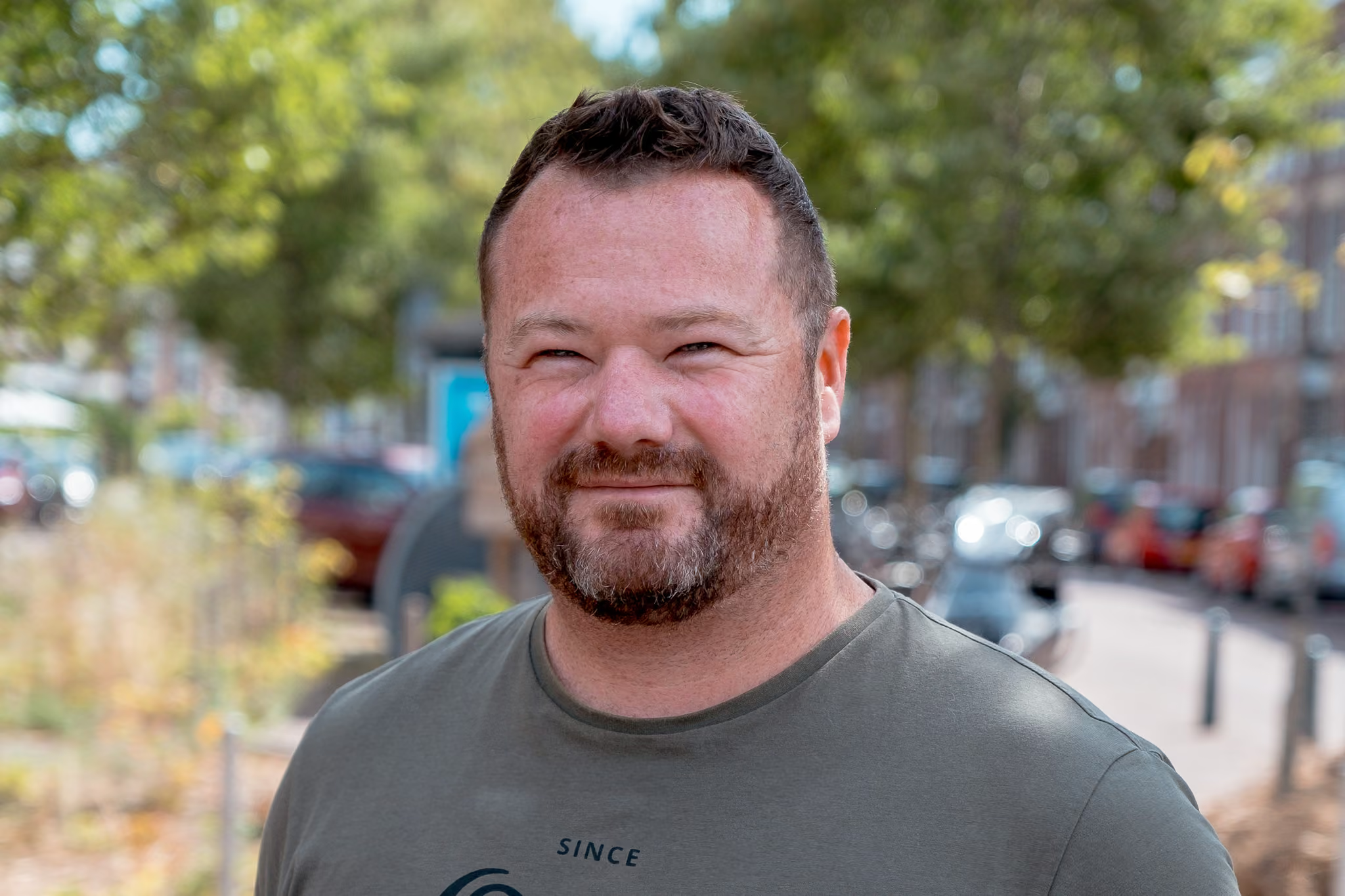
What a South African data analyst learned about walkability, safety and belonging after moving to the Netherlands. From the first-ever Good Place Podcast conversation.
Some cities you understand through their landmarks. Others you understand through what you no longer have to think about.
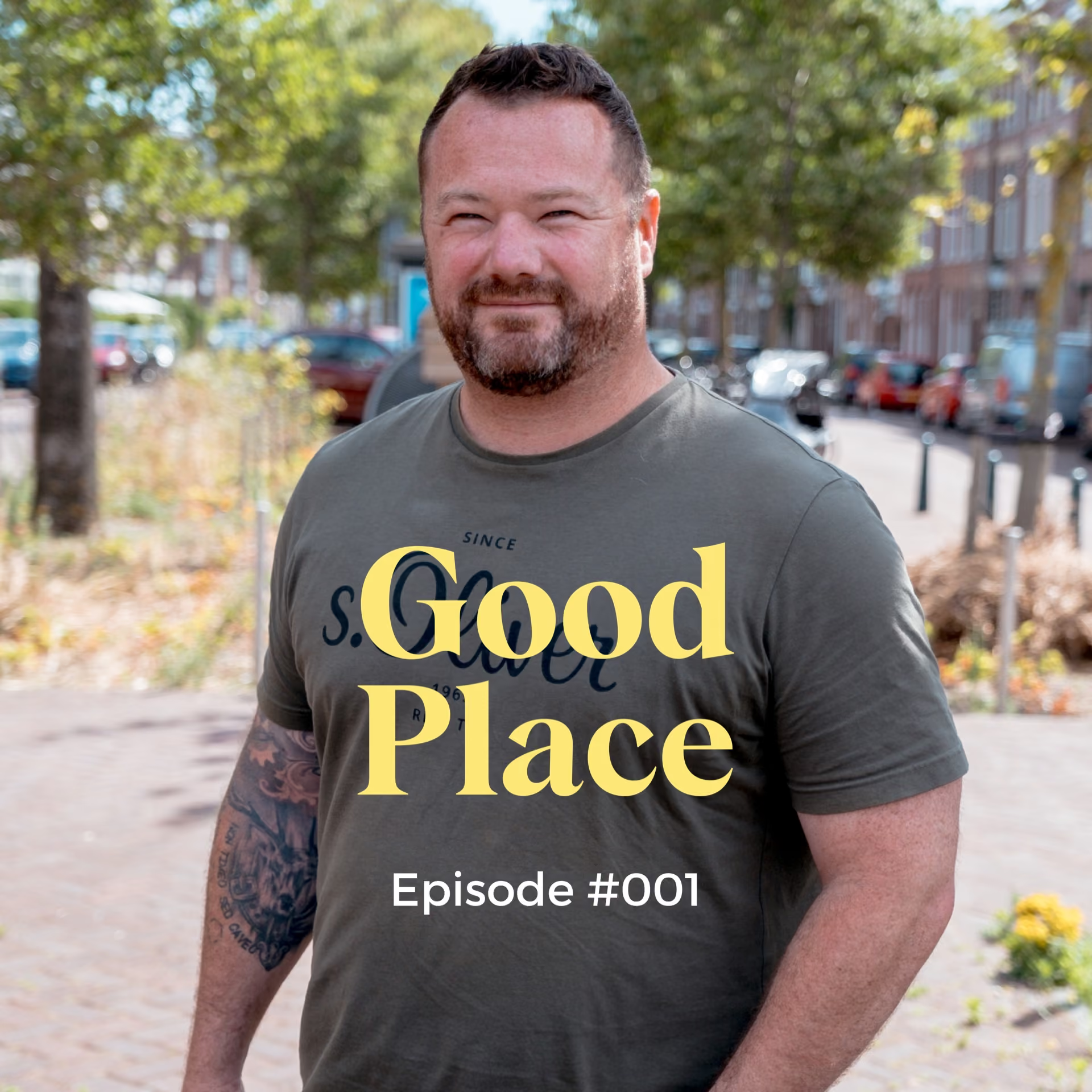
When I sat down with my neighbour Tyron Strachan on the public bench for the very first Good Place Podcast, he had lived in The Hague for three years. He had come from Johannesburg for a corporate job near Schiphol. His wife, an educational psychologist, had found the city’s international schools a good fit for her work. Their story isn’t a dramatic escape. It’s quieter than that: a list of small things that slowly rearranged a life.
A city you can walk out into
Ask Tyron what changed most and he doesn’t start with the museums or the architecture, though he loves both. He starts with the door.
“I love the fact that I can walk two, three minutes and I’m at a restaurant, or five minutes and I’m at a choice of bakeries or the cheese shop.” In Johannesburg, he explained, everything meant getting in the car. Here, his wife suggests ice cream on a summer evening and they simply walk out with the dog. The beach is a five-minute cycle away. In Johannesburg, the closest one is seven hours off.
What he describes isn’t really about exercise or convenience. It’s about spontaneity. A walkable city lets you say yes to small impulses, like a quick beer, a Friday market, or a sandwich, without planning your evening like a logistics operation. Tyron now has a weekend routine he never had in South Africa: fresh produce at the market, then cooking for the weekend. Good public transport and a city that welcomes dogs into restaurants add to the sense that daily life has been designed with people in mind.
Safety is the infrastructure you stop noticing
The most striking part of our conversation was also the quietest. Tyron takes his puppy out at six in the morning and lets him walk freely. While he was away on a boys’ weekend, his wife took the puppy out at midnight. He was careful to say that not all of South Africa is the same, but of Johannesburg he was clear: “I don’t think we’d be recording this video very easily on a park bench.”
Later that weekend, he and other South Africans in the group realised none of them had once worried about their partners’ safety. That is what safety looks like when it works. It becomes invisible. Growing up in the Netherlands, it is easy to take it for granted. Tyron didn’t, because he knows what its absence feels like.
He made a related point about public money. Seeing tax spent visibly on good infrastructure, he said, makes him feel happy about paying taxes. That is a kind of trust between people and their city, and it’s something few places manage to build.
The part nobody puts in the brochure: making friends
Tyron was honest about what the city cannot give you. “The first year and a half was really tough.” He and his wife did make friends, but not in the way they had in South Africa, where people share cultural shorthand and understand each other faster. Making friends is hard at any age, he noted, and harder when you move as an adult.
Then he told me about the shift. Two years earlier, their closest friends were an hour’s drive away. Now a few good couple friends live a few metres from their door.
This matched my own experience of moving to The Hague after fifteen years in Amsterdam. On our street, people say hello. When we had our child, the neighbourhood turned up with attention and offered to cook for us. Belonging, it seems, doesn’t arrive at the scale of a city. It arrives at the scale of a street, one hello and one shared dinner at a time.
Expat or local? A question of invitation
The Hague is known for its expats, so I asked Tyron whether he uses the word for himself. He hesitated. To him, “expat” suggests a fixed stay, such as a three-, four- or five-year contract. He has no plan to leave. He wants to integrate, and in the next few years to become a Dutch citizen.
Would his Dutch neighbour call him a local? He wasn’t sure, and that uncertainty is the interesting part. Language plays a role. His Afrikaans gives him a head start on Dutch, and English gets him through daily life, but switching between the two without thinking isn’t yet natural. As I put it during our conversation, the word “expat” doesn’t feel like an invitation to become a local. It can keep people at a distance. Whether someone belongs may depend less on paperwork than on which word we reach for.
Can you ever go back?
The title question was the one Tyron had thought about most. His answer: not to Johannesburg. If life ever pulled them back to South Africa, he imagined somewhere like the Garden Route or parts of Cape Town, a smaller, walkable town near the beach. He called it “a very big decision.”
That suggests something about what home means once you’ve lived somewhere that fits. It stops being a place on the map and becomes a set of conditions: can I walk, do I feel safe, is there water, are there people close by. Tyron wasn’t describing a country. He was describing a daily rhythm he now knows how to recognise.
A good place isn’t a perfect place
I closed the conversation with the question that gives this series its name: are you in a good place? Tyron’s answer was easy and honest. “I think I’m in a good place, one of the better places I’ve been in the past ten, fifteen years.” He still wants to change a few things, and he jokes that one day he and his wife might open a restaurant. But, he said, “you’ll never have a perfect life, a perfect place, but I definitely think I’m in a good place.”
What sits behind that answer is small and human: a walk with the puppy after a hard day at work, a debrief with his wife in the forest, and the feeling of still being a tourist in a country there’s so much left to explore.
A good place, in the end, isn’t only physical. It affects your mood, your wellbeing and the people you share it with. Tyron’s is made of walkable streets, safe midnights, neighbours a few metres away and a life stage that lets him enjoy it.
Watch the full conversation on YouTube, or listen on Spotify. Want to go deeper into building your own sense of belonging, wherever you live? The Good Place to Start workbook series walks you through it — get it here.