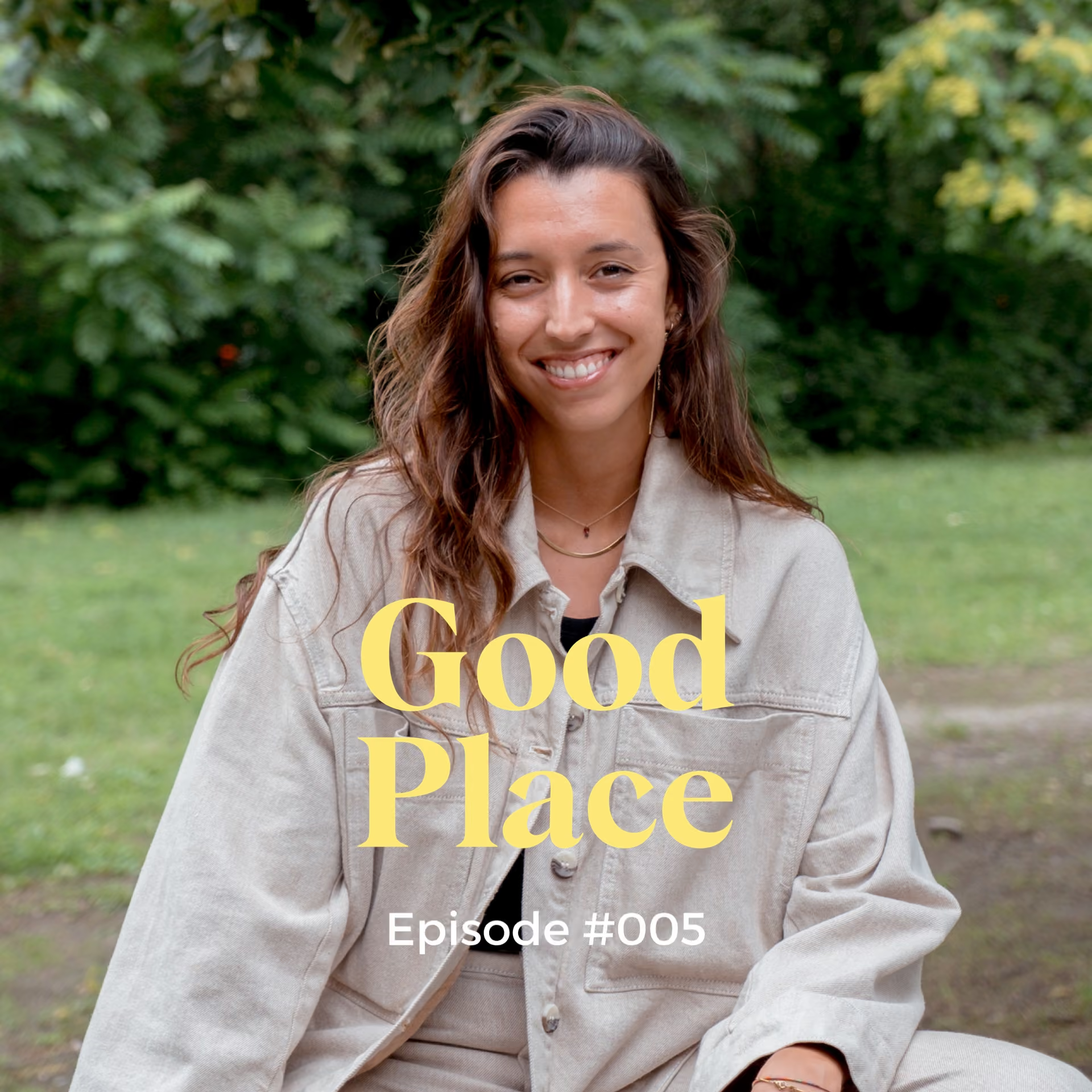
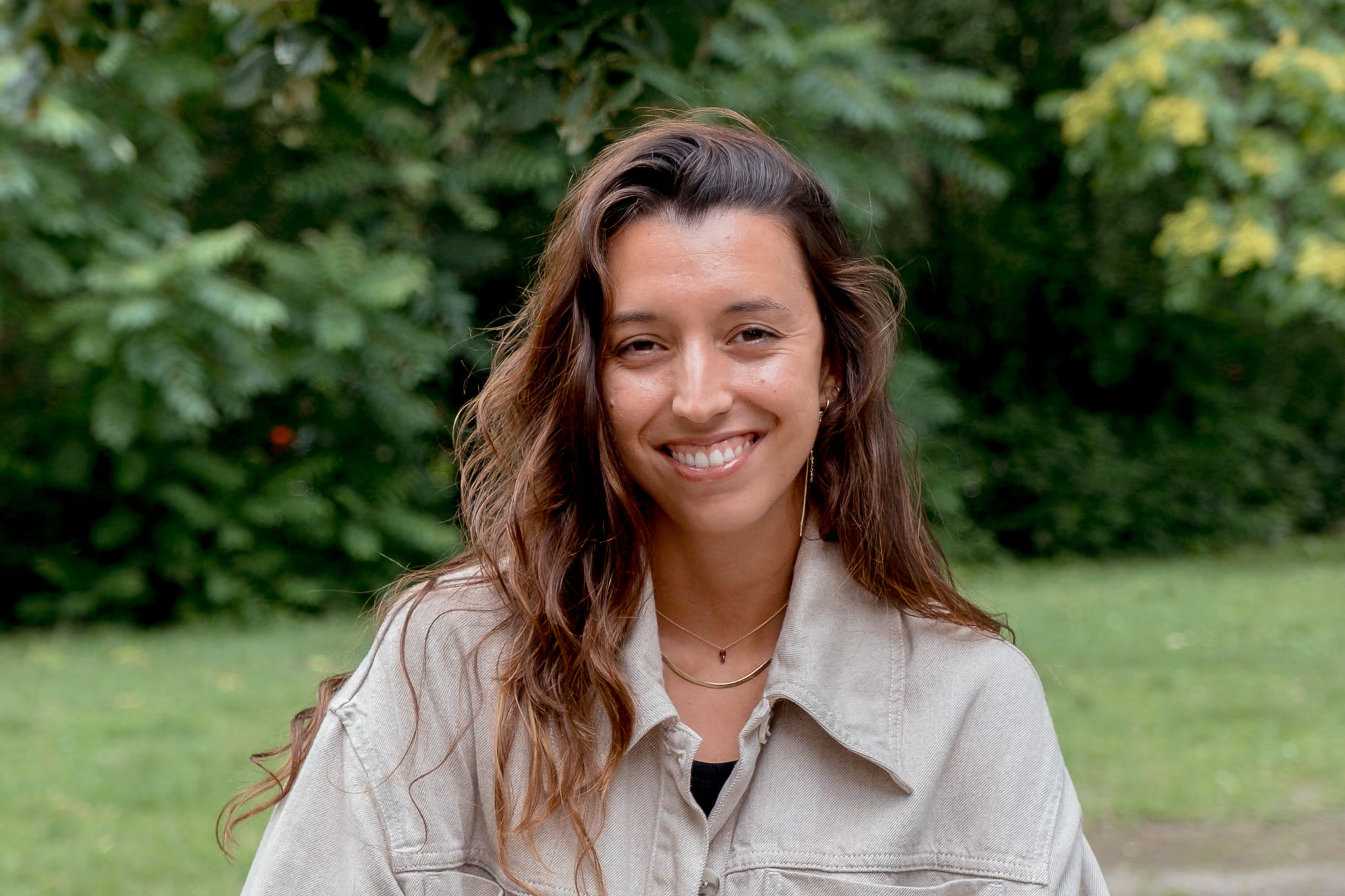
A digital marketer on a ten-year crush on a city, the decision that turned out easier than expected, and what it means to feel at home before you’ve even finished unpacking.
Marta Aguilar met Berlin before she met her boyfriend. That order matters. Ten years ago, on a first visit, something about the city caught her and didn’t let go, “like a crush,” she called it. She went on to spend a year studying in Amsterdam, which only confirmed what she already suspected: the north of Europe was where she felt most herself. When a relationship eventually brought her back to Berlin for good, four months before we spoke, it wasn’t really a hard decision. The city had already said yes to her, years earlier.
A decision that didn’t feel like one
Ask Marta how she chose Berlin and she resists the framing. She didn’t wake up one day and decide to move abroad. She fell in love, with a person this time, who happened to live in a city she’d already fallen for once. Work lined up. The personal side lined up. “All the factors around it made it super easy,” she said. It’s a useful corrective to the idea that a big move requires a dramatic leap. Sometimes it requires noticing that several things you already wanted have quietly arranged themselves in the same direction.
Two cities, read differently
Marta is careful not to overstate the differences between Madrid and Berlin. Both are large, metropolitan, fast-moving European capitals. But where Madrid carries a strong Spanish identity at its core, she finds Berlin harder to pin to any one culture. Even Berliners, she told me, describe their own city as a kind of microcosm inside Germany, something separate with its own personality.
The differences she named were physical before they were cultural. Berlin is greener. Parks sit within blocks of each other, forests and lakes surround the city, and the air itself feels different to her, cleaner, less dry than Madrid’s. She’d already discovered cycling as a way of moving through a city during her year in Amsterdam, and Berlin gave her a version of that too, imperfect compared to Amsterdam’s infrastructure, but enough to change her daily rhythm. “You get to know the city a lot better on a bike,” she said, able to connect neighborhoods that feel like separate towns rather than surfacing from an underground line and wondering where she’d landed.
Starting from zero, and finding it moving
What struck me most was how Marta talked about building a social life from nothing. She had real advantages, a boyfriend with an established circle, a couple of friends who’d already made the same move from Madrid. But she was honest about what starting over actually involves: the bartender who doesn’t know your order yet, the park without a dog you recognize, the café where nobody greets you by name.
She’d had all of that in Madrid, where she’d lived her whole life, and admitted she’d taken it for granted. Building it again from scratch in Berlin felt, to her surprise, good. Small recognitions, a familiar face at the café, a dog she’d started to know in the park, carried more weight than she expected because she was earning them for the first time in years.
Being newly arrived turned out to be its own kind of social shortcut. Berlin’s expat population is large enough that “I’m not from here either” is usually enough to start a real conversation. Marta described meeting people from Spain, from across South America, from Italy, all connected less by shared origin than by the shared experience of having left somewhere else. Most conversations happen in English. She’s learning German anyway, slowly, because she likes the idea of adapting to the place she’s chosen rather than simply passing through it.
Why her friends stay in Madrid
I asked Marta the harder question: why do so few of her friends ever leave Madrid? Her answer wasn’t about fear or lack of curiosity. It was about a city that already gives people most of what they’re looking for. Madrid is dynamic, culturally alive, full of long-established friend groups that go back to childhood. Job opportunities concentrate there, along with Barcelona and Valencia, enough that leaving can feel unnecessary rather than impossible. Her friends travel constantly, she said, but travelling and living somewhere else aren’t the same decision. One friend moved to Paris for two years, loved it, and still never doubted she’d end up back in Madrid. “There’s no place like home,” as Marta put it, describing a conviction she doesn’t yet share.
When I asked whether she could already make that same claim about Berlin, staying forever, she didn’t hedge in the other direction either. She can see herself there long-term. She can imagine a family there. But she’s choosing not to seal the question shut just four months in. “We’ll catch up in a couple of years,” she said, “and I’ll let you know.”
A feeling before it’s a fact
Marta struggled, in a good way, to explain precisely why Berlin fits her so well. Not school systems, not salary, not any of the checklist items people reach for when justifying a move. “It’s a feeling,” she said, “almost like a sweet spot.” When we dug into what actually constitutes that feeling, it kept coming back to people: his friends becoming her friends, strangers on the street who start to feel familiar, the particular comfort of being recognized somewhere you didn’t grow up.
She also credited the city with something more personal: a jolt to her creative sense. A photographer outside her day job in digital marketing, she described Berlin’s faces, architecture and unfinished edges as a constant source of visual inspiration, different patterns, different aesthetics, a city that never quite finishes becoming itself. “There’s room to be rugged,” she said, “room to be not perfect.” She doesn’t experience that as a flaw. She experiences it as permission.
She was clear-eyed about what that rawness costs the city too, naming Berlin’s visible homelessness as something that shouldn’t be romanticized alongside the creative energy. Both things are true of the same streets. And beneath the unfinished buildings and ongoing construction sits a density of recent history she feels even without visiting the obvious landmarks: shopkeepers who were there before the wall came down, a texture of lived experience that few cities carry so close to the surface.
What a good place requires
When I asked Marta to define a good place, on the record, she didn’t reach for scenery. She described somewhere you can build a community: everyday comfort spots, people who recognize you, connections that go beyond small talk. She wants a city with things happening around her, culture, activity, life at street level, because she knows herself well enough to know she needs that. But the core of her answer was simpler than any of that. A good place is somewhere you feel recognized, socially, as yourself, with room left over to keep growing.
Four months in, Marta is still working out which parts of that she’s found and which parts she’s still building. What’s already clear is that she chose a city once, from a distance, a decade before she had any practical reason to live there. When the reason finally arrived, she didn’t need convincing.
Watch the full conversation on YouTube, or listen on Spotify. Want to go deeper into building your own sense of belonging, wherever you live? The Good Place to Start workbook series walks you through it - get it here.
And you? Is there a city you fell for long before you had any reason to move there?